Tales from the Crypt
1972
Rated: R
Genre: Horror
Country: U.K.
Run-Time: 1h 32min
Director: Freddie Francis
Cast
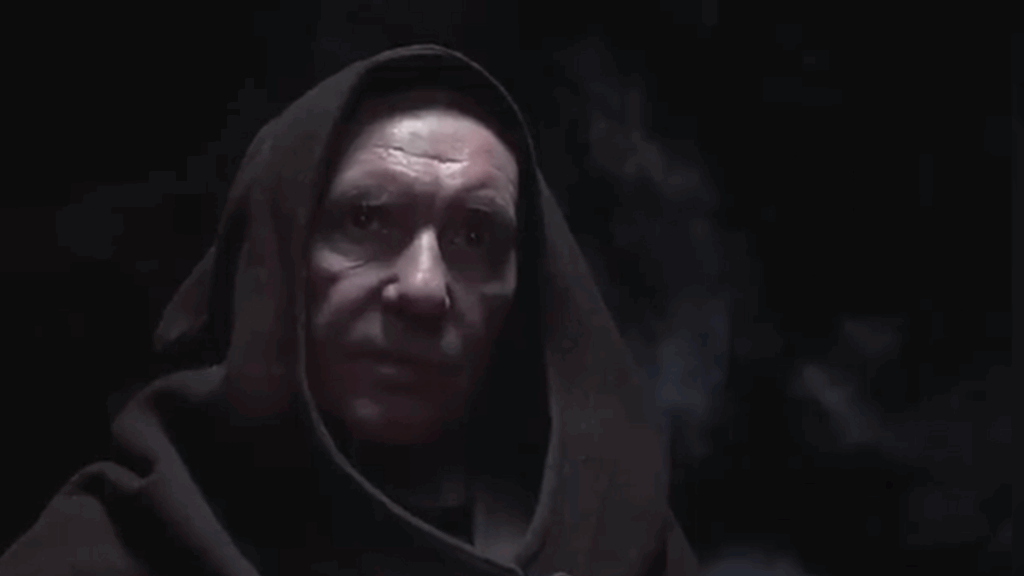
Ralph Richardson………….Crypt Keeper
…And All Through the House
Cast
Joan Collins………………..Joanne Clayton
Martin Boddey………….Richard Clayton
Chloe Franks………………Carol Clayton
Oliver MacGreevy ……Maniac Santa
Reflection of Death
Cast
Ian Hendry………….Carl Maitland
Susan Denny………Mrs. Maitland
Angela Grant………Susan Blake
Poetic Justice
Cast
Peter Cushing……………Arthur Edward Grimsdyke
Robin Phillips…………….James Elliot
David Markham………..Edward Elliot
Wish You Were Here
Cast
Richard Greene………..Ralph Jason
Barbara Murra…………..Enid Jason
Roy Dotrice…………………Charles Gregory
Blind Alleys
Cast
Nigel Patrick……………Major William Rogers
Patrick Magee…………George Carte
George Herbert………Greenwood
I love the idea of a horror anthology film. In execution, however, I most often find them disappointing.
As a kid, Creepshow was one of the first horror films I ever saw, and it left me emotionally scarred for years afterward. Of course, now as an adult, I understand how campy a film it truly is. And that’s part of the problem. Camp really isn’t my jam, and horror anthologies too often lean into it.
Horror anthologies also tend to be low-budget affairs, and to have a truly satisfying one, there really shouldn’t be a terrible entry. The weakest entry should still be at least good, even if it’s not exceptional. So no, I can’t get behind Trick ‘r Treat, Southbound, and All Hallow’s Eve.
That doesn’t mean I think every horror anthology is bad. I love Three…Extremes and give it a rewatch every few years. The same is true of V/H/S, V/H/S/2, and V/H/S/94. (And truthfully all of the others, though I won’t recommend them as films.) And if you count the theatrical version of Grindhouse as an anthology, well, that’s a pretty killer entry too.
Considering the genre’s potential, the horror anthology film has mostly been a letdown in the 2000s—even when horror itself was at a high point. But horror has experienced other high points, including the 1970s. And the ’70s, especially the early ’70s, was a time when British, Hammer Films–Production-inspired horror anthologies were booming: Asylum (1972), Vault of Horror (1973), From Beyond the Grave (1974).
However, the disputable standout of the group might be the 1972 classic Tales from the Crypt—which marks the first time the EC comic book was adapted for the screen. In fact, you can argue this was the start of a massive franchise that would include one British sequel, a popular HBO series, and three American films tied to the television series. And I doubt it will end there.
Tales from the Crypt is directed by Freddie Francis, an Oscar-winning cinematographer who turned toward directing British horrors in the ’60s and ’70s. And I have no doubt that having his hand on all the segments is partly what gives the film its consistent tone. So even though my ranking of the segments may differ from many others, it doesn’t really matter because there is not a huge drop-off between the best entry and the worst. In fact, having no bad segments (at least, in my very subjective opinion) is one of the requirements for any anthology film being recommended for The Midnight Selections.
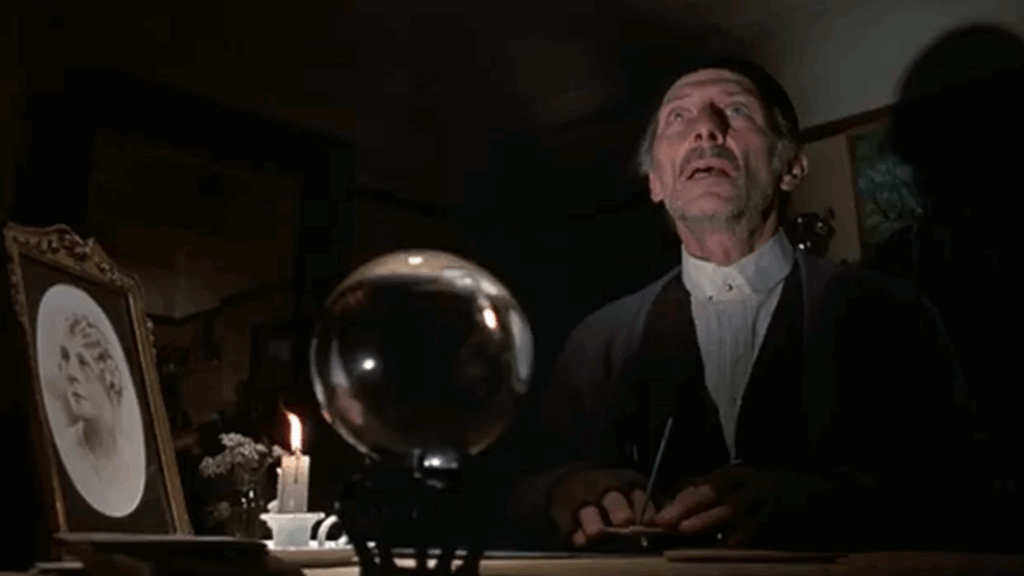
Tales from the Crypt starts with a relatively simple wraparound: five members of a group taking a tour of old English catacombs. The five linger too long in a room and end up getting separated from the rest of the tour, eventually finding a room occupied by this film’s interpretation of the Crypt Keeper. But like the old EC comics, the Crypt Keeper here, played by Ralph Richardson, looks very human. (The iconic skeletal Crypt Keeper wouldn’t make a screen appearance until the television show.) Then, one by one, the Keeper tells the tale of how each dies. And it turns out, the members of this group are definitely not paragons of virtue.
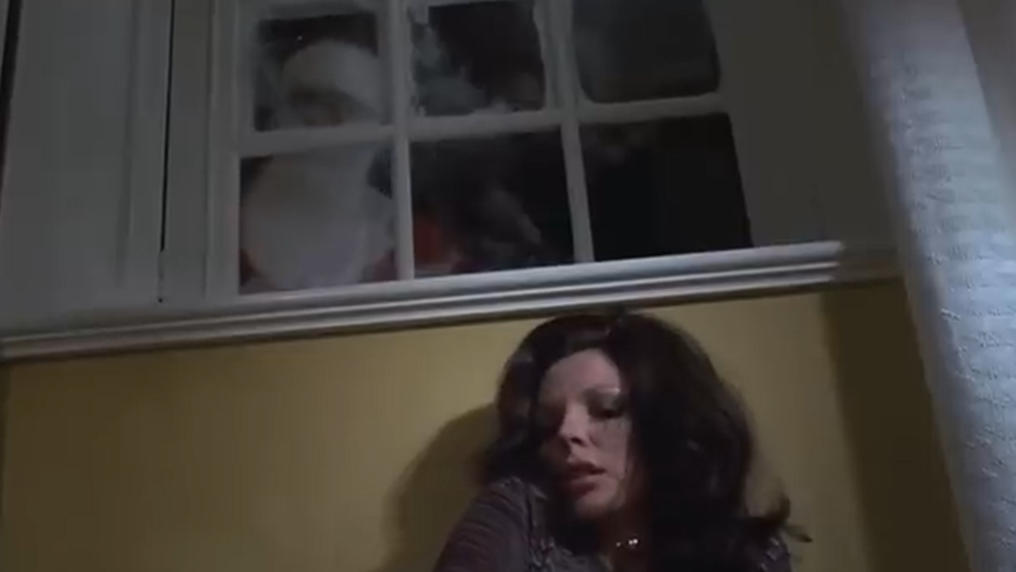
In fact, the first story, “…And All Through the House,” starts off showing how Joanne (Joan Collins), the only woman in the group of five, murders her elderly husband on Christmas Eve to collect the insurance money—all while ordering her daughter, who is anxious about Santa, to go to sleep. To further complicate matters, the radio announces that a homicidal man in a Santa costume is loose in the area.
“…And All Through the House” does a decent job setting the tone for the rest of the film, even if I personally found it to be the weakest entry… and that’s saying something, because it’s really not bad. In fact, many say it’s the best.
Like most Christmas horror, the yuletide backdrop both lowers expectations because this subgenre isn’t known for quality, while adding the expectation of holiday pandering. And on that front, this is a solid contribution, especially if you’re a holiday horror buff. (’Cause, let’s be honest… holiday horror is a pretty common guilty pleasure.)
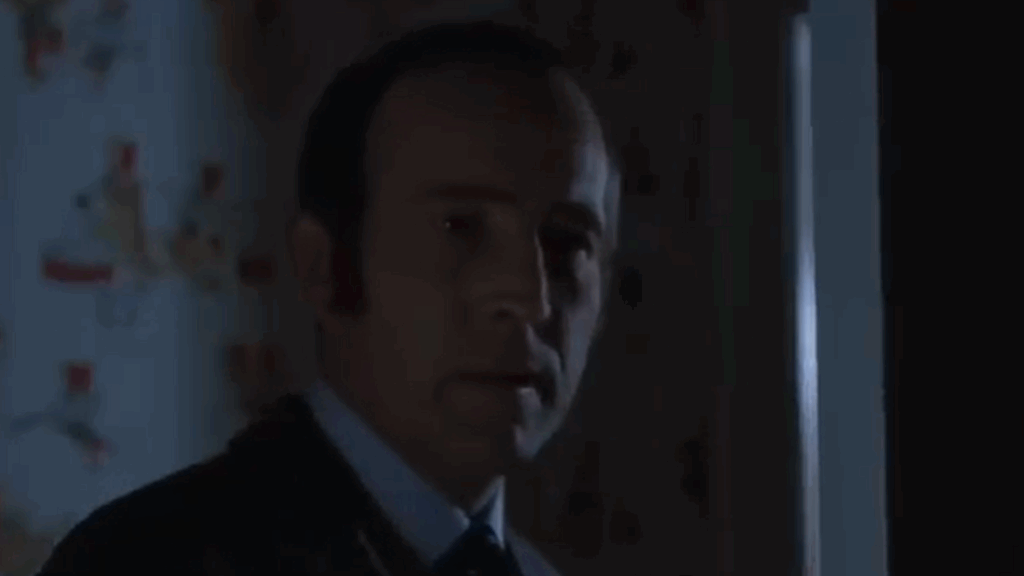
The next entry, “Reflection of Death,” is my favourite. Carl is an adulterous man (Ian Hendry) who is about to abandon his family to escape with his mistress, but his plan comes to an end after he gets in a car crash. But the story doesn’t end there…
…the camera suddenly flips to first-person perspective. The man was thrown from the car. He gets up and tries to get help, but everyone who sees him runs away in terror.
Story-wise, this is admittedly thinner than the next three entries, but I found it to also be the purest example of atmospheric horror cinema. A good anthology should have some scares, and this entry is a long setup for one of the best ones.
Next we get “Poetic Justice,” a classic tale of supernatural revenge. A wealthy father and son, James (Robin Phillips), live across from an old widower (Peter Cushing) whose presence, they feel, brings down their property value. The old man, who lives with a number of dogs and brings joy to the neighbourhood children, proves to be an unfortunately easy target for the son’s smear campaign as he destroys the widower’s life bit by bit, even going as far as spreading fear that he’s a pedophile.
This entry too has elements of a holiday horror, as Valentine’s Day ends up playing a substantial role in the segment’s plot. With nothing left to live for, the widower will inevitably take his life, but it’s James in the catacombs so the story won’t end there.
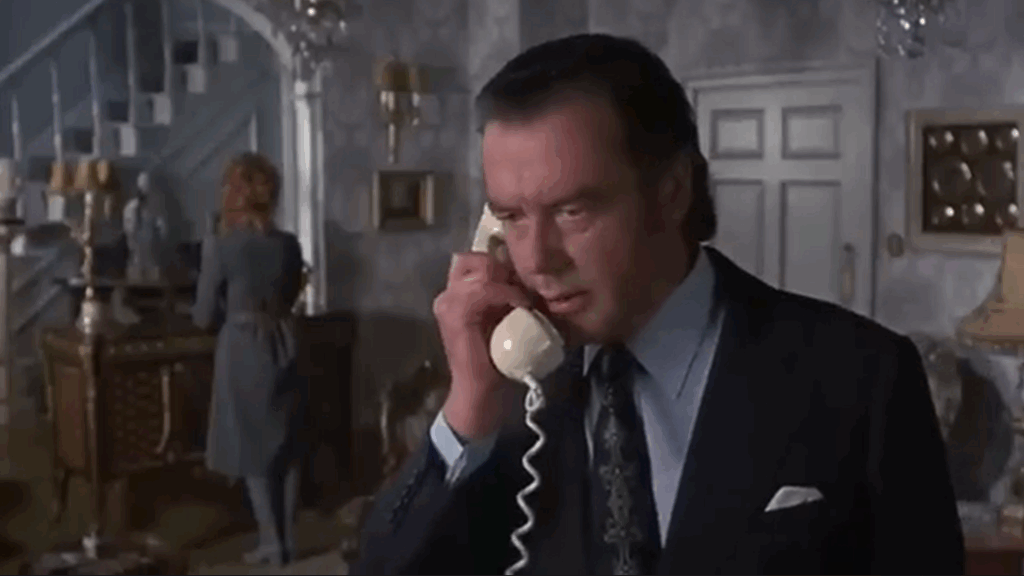
“Wish You Were Here” is a fun riff on “The Monkey’s Paw,” even going as far as to include references to the popular story in the plot. Unlike the previous entries, where we see the immoral actions of the characters, here there’s only a fleeting reference to Ralph (Richard Greene), our failing businessman’s previous work as an arms dealer. It’s a small detail, but not actually seeing Ralph’s sin is one of the reasons “Wish You Were Here” feels like the oddest fit in this anthology. But I like it, so this is a moot point.
It’s also the segment that includes the motorcycle rider with the skull mask, an image that has become tied to much of the film’s marketing.
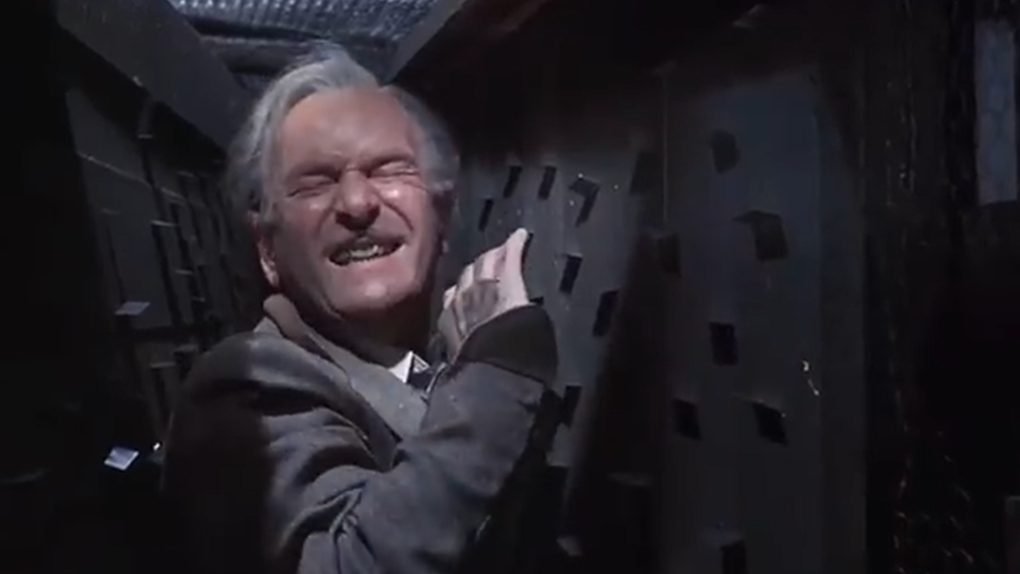
The final segment, “Blind Alleys,” deals with Major William Rogers (Nigel Patrick), a man who exploits his position as the director of a home for the blind to live luxuriously while cutting back on expenses for his wards. But when one ward dies of hypothermia because of the cold conditions, the blind finally decide to take matters into their own hands.
Their plan: make the Major suffer by turning his German Shepherd against him. And hey… let’s throw in some razor blades for good measure. (Actually, it’s a little more complicated than that.)
As far as final segments go, this one is great to go out on. It’s a slow burn, story-driven entry that relies less on dark comedy than segments like “…And All Through the House” and “Wish You Were Here.” It also replaces the ironic supernatural elements of the previous three segments with good old-fashioned mob justice. This helps to end the film in a more grounded, sadistic tone. And though it’s far from my favourite segment, it leaves a lasting impact.
Of course, the wraparound does have an ending, and a fairly predictable one at that, but it’s kept short. There is no pretending, as some anthologies try and fail to do, that the wraparound is somehow equal to the segments. But for this film, it is serviceable enough to get the job done and I respect that.
Like many horror anthologies, Tales from the Crypt is laced with dark humour, but it does so at a time before the ’80s began to fuse it with camp. In this film, the horror elements are fun, not treated like a joke. It’s still self-aware, but that straight face makes a difference. And since the ’70s could only rely on practical effects, this means that cheap CGI won’t take you out of the experience. (That’s my shot at the floating reaper in Southbound. It just looks sooooooo fake.)
So, if like me, you want your horror anthologies to also be good films instead of a guilty pleasure, give Tales from the Crypt a whirl. After fifty years, the quality of Tales from the Crypt holds up better than most horror anthologies made over the last four decades. Francis’s film is a masterclass in balancing story, jump scares and gore.
It’s also fascinating to see how the bones of a future franchise got laid to bury.