Ranking Every V/H/S Segment from an Adult Horror Perspective
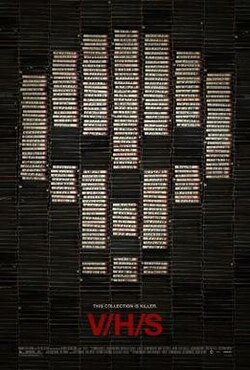
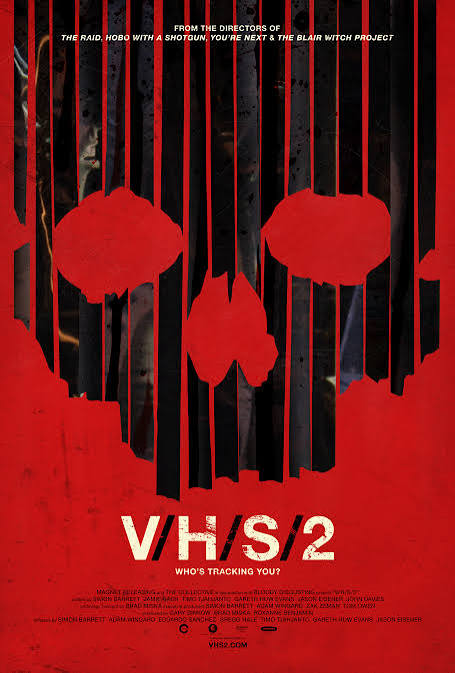
Ranking every V/H/S segment is something I’ve wanted to do for a while. I’ve been a fan of this anthology franchise since the first film. It combines my weakness for found footage as a horror filmmaking technique with my love of horror anthologies.
I was sad when V/H/S/Viral nearly tanked the whole franchise back in 2014, and thrilled when it returned on Shudder in 2021. I’ve pretty much kept my Shudder subscription for this reason alone. Watching a new V/H/S film has become one of my favourite October traditions.
Now that we’re nine films into the franchise, I think it’s time to throw my hat into the ring.
Over the years, I’ve looked at other rankings and read plenty of opinions from fellow fans. After a massive rewatch of the entire franchise, working my way from what I considered the worst film to the best, I gained a new appreciation for some segments I’d previously dismissed and confirmed why others still don’t work for me.
I didn’t use a points system to rank these segments. My criteria are pretty simple: did a segment give me a good horror experience, and did it make good use of the V/H/S format while doing so?
I’m not interested in being provocative for the sake of it. When I know my opinions go against the grain, I’ve tried to explain why. I’m also careful about what I say because I’m not particularly interested in spoiling the experience for those who haven’t seen these segments.
The ranking also includes the frame narratives and wraparounds, along with the one bonus Blu-ray segment. I’ve ranked “No Wake” and “Ambrosia” separately, though considering them together or apart doesn’t really change how I feel about them.
I also tried not to scatter segments from different films throughout the list just to create a false sense of parity. Some films are loaded with great segments. Others are loaded with duds. The franchise has always been a mixed bag from film to film, and that’s part of the fun.
With that in mind, this is ultimately a subjective exercise. Like everyone, I have my biases. I probably reward scares and extreme content more than some people do. I also like a good spectacle, but that doesn’t mean every spectacle-driven segment ends up near the top of this list. Horror doesn’t cater to just one style, and at the end of the day, each of these segments offers its own vision. I’ve tried to respect what each has added to the franchise’s legacy.
So, here it is: The Midnight Selections ranking of every V/H/S segment.
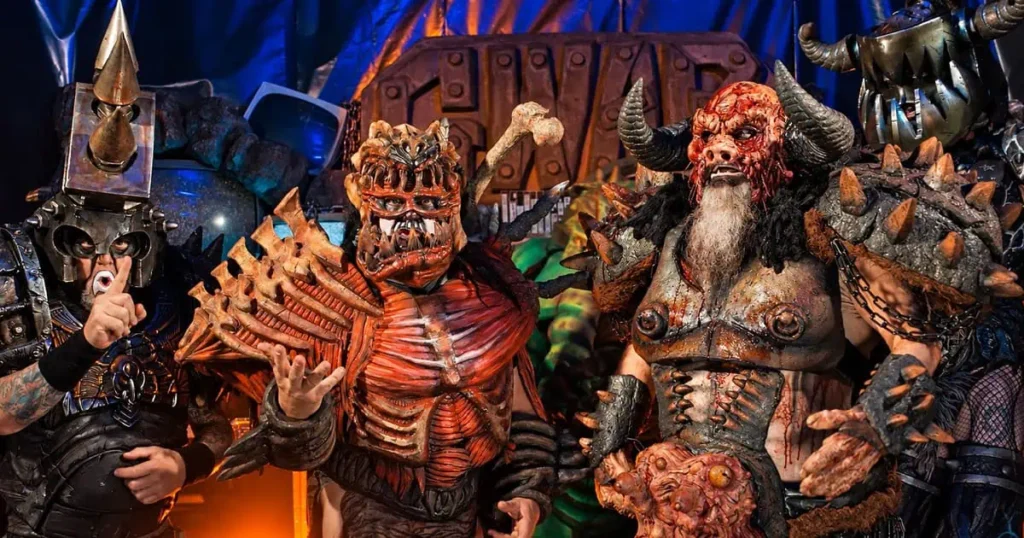
51. GWAR is… [Interstitials] (wraparound) — V/H/S/Mixtape
Wraparounds don’t have to be great. In fact, there’s a few in the V/H/S franchise that aren’t even particularly good, but they all know not to do damage to the segments they surround. Unfortunately, the wraparound segment directed by Tobias Forge and Flying Lotus called “GWAR is…” does.
Sadly, the ninth franchise instalment, V/H/S/Mixtape, doesn’t have much going for it. Its best segments only rank in the middle of the pack, while the music video and stop-motion filler do little to justify their existence. In fact V/H/S/Mixtape is bad enough that V/H/S: Viral no longer needs to be the default choice for the franchise’s worst entry.
Although Mixtape’s actual segments may be disappointing, none are outright terrible. Unfortunately, they’re let down by a wraparound that is tone-deaf and devoid of story. It’s essentially a series of sketch comedy routines performed by old men in rubber suits, desperately trying to be edgy.
The tonal whiplash between GWAR and the segments is enough to give a viewer whiplash, and it robs each segment of having any lingering dread.
The concept behind “GWAR Is…” probably sounded better on paper. Inviting GWAR to contribute to the franchise’s music themed installment seemed like a good pairing. I think a wraparound at a GWAR concert where audience members participate, but the gore turns out to be real would have been a great way to involve the band and showcase their music. Completely abandoning the found-footage concept and simply letting GWAR crassly riff and occasionally spew bodily fluids at the camera? Not so much.
Found footage is supposed to be immersive and “GWAR Is…” is like that unavoidable guest at a party who keeps getting in your face, constantly ruining any fun you could have.
50. Gorgeous Vortex — V/H/S: Viral Bonus Content
From time to time, a director either does not understand the found-footage assignment or goes rogue and simply does not care, but only Todd Lincoln has ever been relegated to the doghouse for it.
Now, I’m a completionist to a fault, so I’ll include “Gorgeous Vortex” on my list, but the truth is that you can watch every segment of every V/H/S film and still miss this one. That’s because it was cut from the release of V/H/S: Viral and later only added as bonus content at the end of the Blu-ray and DVD. In fact, you have to go pretty far down the V/H/S: Viral Wikipedia page before you find a single sentence acknowledging that it even exists. But if you are curious, you can easily find it on YouTube.
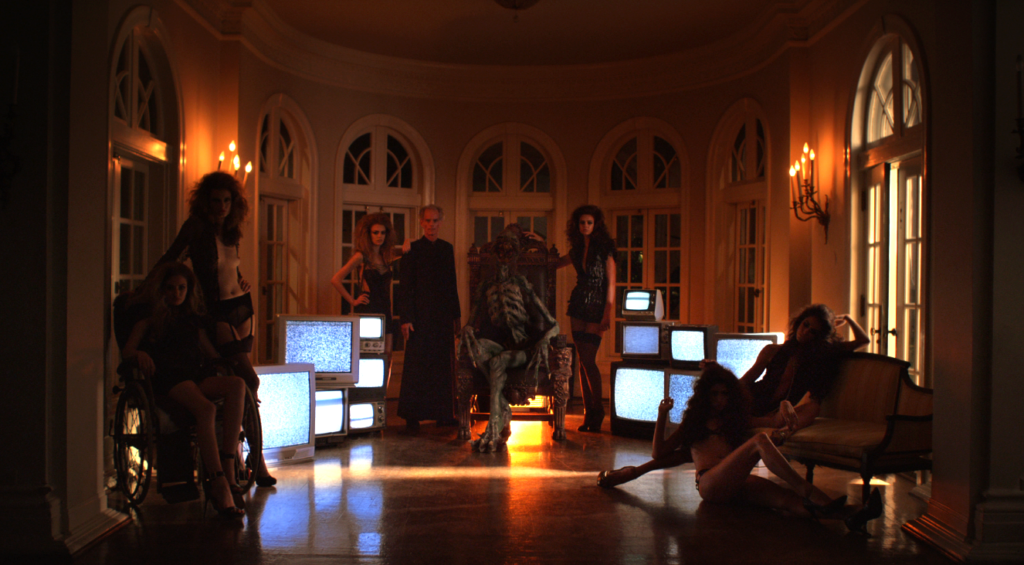
It’s hard to describe “Gorgeous Vortex” as anything other than the worst kind of arthouse slop. It’s like watching a music video made for a mediocre Halloween ambient track. It’s essentially a series of images without a coherent plot: a sexy woman; a shadowy cult wearing white masks and black cloaks; implied murders, abductions and rape; an old man going down on the sexy woman; the old man dead in a hotel room as she vacuums; recurring shots of a wooden dollhouse in a house still under construction; a cool-looking demon that is wasted sitting in a really expensive-looking chair; a pile of high heels set on fire; a cake with the top set on fire; the familiar V/H/S stack of old televisions showing nothing but static; and… that’s it. Good luck piecing this mess together.
“Gorgeous Vortex” fails to be compelling as surrealist experiment, and nothing about it would have made V/H/S: Viral a better movie. They were right to leave it on the cutting-room floor.
49. Another Cabin — V/H/S/Mixtape
I like stop-motion and claymation, but what do they have to do with found footage?
Come to think of it, what does Flying Lotus’s “Another Cabin” really have to do with music or sound, either?
Sure, there’s music playing in the background, but that isn’t really the focus here, is it?
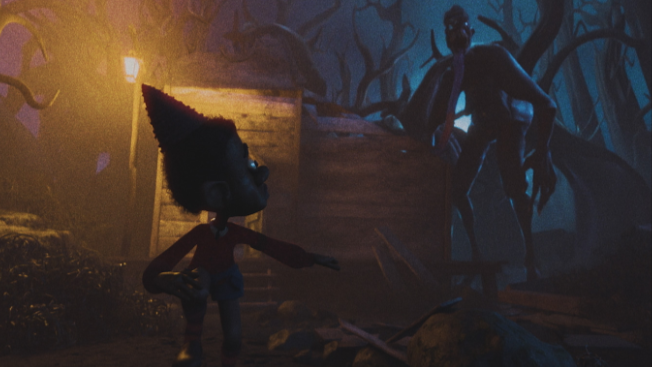
The story follows a grandmother who terrorises a boy until a giant monster shows up at their cabin, hungry for a meal. The boy and his grandmother are then forced to fight for survival by trying to sacrifice each other.
On the plus side, the segment is short, inoffensive, and keeps GWAR off the screen. But why Flying Lotus didn’t set this segment, say, at a concert or in a music store is beyond me. It’s claymation. The whole world is your playground. At least animate something related to the mixtape theme.
48. Premature Burial — V/H/S/Mixtape
I understand why they placed “Prematura Burial” on V/H/S/Mixtape, and unlike “Gorgeous Vortex”, at least it knows it’s a music video. I don’t even mind listening to three-minutes of death metal by Tobias Forge’s band Ghost. I just don’t get why he didn’t just make more like a proper found footage segment.
What we get is a music video that tells the story of a vengeful woman who drugs and buries alive a co-worker that has sexually assulted her. The parts of the video that tell the story are degraded to give it a V/H/S feel, but it’s not found footage. And unless you are a Ghost fan it doesn’t do enough to justify its inclusion in a V/H/S film.
To make this found footage, a better idea might have been to have the band in a room with cameras set up around them ready to shoot a video. Then have them play while a group of cultists force a bloody terrified man into a coffin and bury him alive.
I have a ton of other ideas too that would have made this a better fit for a V/H/S movie. Why didn’t Forge?
47. Vicious Circles (frame narrative) — V/H/S:Viral
Before V/H/S/Mixtape confused which installment is the worse, I would often try to argue the unpopular opinion that V/H/S/85 is actually not as good as V/H/S: Viral. As long as you don’t consider “Gorgeous Vortex” part of the experience, V/H/S: Viral‘s segments are not nearly as terrible as people make them out to be. But “Vicious Circles” does nothing to help the film’s reputation or my argument. Its most redeeming quality is that it’s a frame narrative, so expectations are usually lower, but since Viral only has three segments, “Vicious Circles” needs to do more heavy lifting. But it fumbles the ball.
In defence of director Marcel Sarmiento, it seems like he was tasked with continuing the cursed-video narrative started by the frame narratives of V/H/S and V/H/S/2 while tying it to the “viral” concept. Had he been given more freedom, who knows what this might have been.
A young man named Kevin constantly films his girlfriend, Iris, who increasingly seems uncomfortable being his subject. When they see a police chase happening in their community on the news, Kevin rushes outside to film it despite Iris’s protests. There, he sees Iris fall into a trance before she mysteriously disappears as an ominous ice cream truck passes.
There’s other craziness going on, too. The ice cream truck intentionally runs people over. People’s phones flash clips of Iris after she is abducted. Some people apparently become phone zombies with bloody noses. Wow, there’s a lot going on!
It’s clear all this chaos was a deliberate choice by Sarmiento, but it just makes a frame narrative with some genuinely good ideas feel tedious and nauseating. Like the sudden addition of the gangbangers. Or the random inclusion of a girl in the cab who is out for revenge. The longer it goes on, the less connected the between segments feel to what started out as a strong opening.
And then there’s a terrible, ambiguous ending, tacked onto the tail end of the revenge segment because… again…no “Gorgeous Vortex”. It’s supposed to resolve the story of Kevin and Iris, but it does little to leave the viewer satisfied.
46. Holy Hell (frame narrative) — V/H/S/94
The failure of V/H/S: Viral led Magnolia Pictures to lose interest in the V/H/S name, and the franchise went dormant for seven years. But during that gap, streaming services ensured that the original films continued to find new fans, and the horror streaming service Shudder eventually acquired the rights for its platform.
And so came V/H/S/94, the installment that would revitalise the franchise and keep it alive as an annual October event. And wow, did 94 ever deliver. It is probably the single most consistent effort of the bunch, and arguably the most gory.
Jennifer Reeder’s “Holy Hell” fits that gritty, raw vibe. And to its credit, it doesn’t do anything to hurt how solid V/H/S/94 is as an anthology film. But when all is said and done, “Holy Hell” is just a frame narrative, and good frame narratives are difficult to pull off. Personally, I think the best ones are the ones that don’t try too hard and simply keep things moving.
Unfortunately, “Holy Hell” tries to do too much. It follows a S.W.A.T. team raiding a warehouse they believe is full of drugs, only to discover that it is actually being used by a group of cultists to make snuff films. On top of that, it attempts to loosely connect itself to the ongoing frame-narrative mythology established in V/H/S, V/H/S/2, and V/H/S: Viral, while also trying to avoid the problems that plagued “Vicious Circles.”
To its credit, the individual segments are kept relatively short and the story is more cohesive than “Vicious Circles,” but there are still too many moving parts. Then, just to complicate things further, it introduces a character from the “Terror” segment, though the connection doesn’t really add anything to either story. This is followed by a betrayal reveal that falls flat because we don’t really care about any of these characters.
Like a lot of frame narratives, “Holy Hell” becomes less interesting each time we return to it, and this one is no different. That puts a lot of pressure on the ending to deliver with a bang, but the finale isn’t particularly memorable. It simply gives us one more act of violence before letting the credits roll. It does, however, help connect the story back to its beginning, which is kind of cool…I guess.
As far as delivering the right tone and atmosphere for V/H/S/94, “Holy Hell” is a success. As its own thing, it is nothing special.
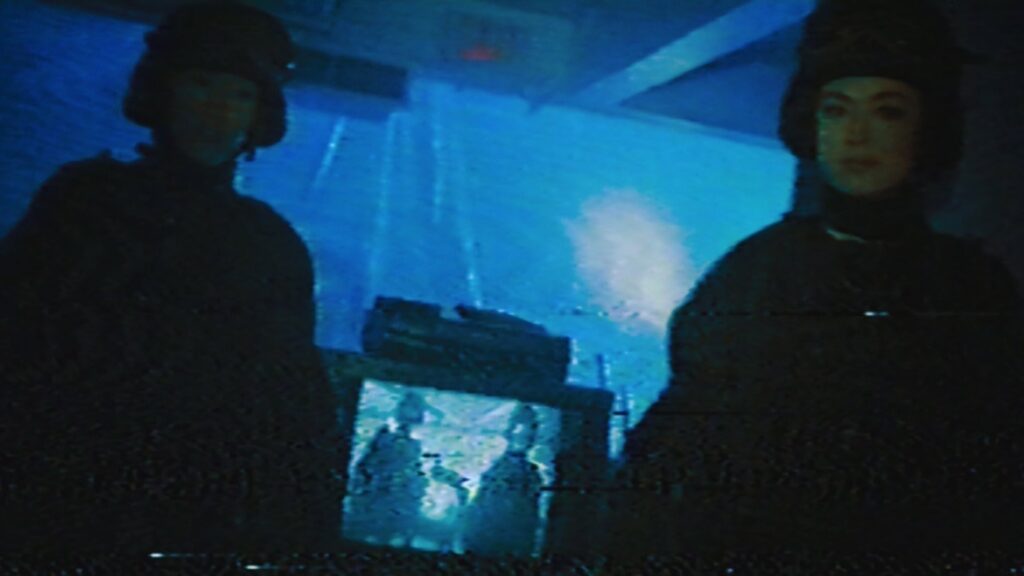
45. Stork — V/H/S/Beyond
I’ve always viewed V/H/S/Beyond as a mid-tier franchise instalment. In terms of quality, it doesn’t feel that different from V/H/S/99. There are highs. There are lows. It’s inconsistent, but fun in general. I’ve think the pivot towards themes instead of years was a good idea, and the sci-fi theme was a great place to start.
For those who think I’m just trolling, I promise I am not putting Jordan Downey’s “Stork” this low for shock value. I know it has a huge fanbase, and many consider it one of the best segments in V/H/S/Beyond. The action is constant. The zombie brooders look great. The final baddie looks fantastic. I won’t deny “Stork” any of that.
But I find it mentally exhausting in a way I find no other V/H/S segment to be. Really. No lie…I feel my eyelids getting heavy every time I put it on. Maybe it’s just the effect body-camera footage has on me, but I don’t think so. It probably has more to do with the fact that it feels like I’m watching someone else play a first-person shooter on their PC, and they won’t let me join in.
The story follows W.A.R.D.E.N., a specialised police squad that is investigating an abandoned house believed to be connected to a string of missing babies. As soon as they get inside, it’s game on.
There’s a lot of shoot, shoot, shoot, get chainsaw, use chainsaw, repeat. The brooders, which are essentially just zombies, go down so easily that they never feel particularly threatening. Things pick up after the reveal of the final big bad and we learn what has become of the babies, but even that boss battle is ultimately settled with a lot of bullets.
And I have other issues with the script too. Wouldn’t it have been more interesting if these were regular police officers who stumbled into this nightmare rather than a specialized task force that already has some idea how to deal with weird shit? And shouldn’t the guy whose baby was abducted have stayed alive long enough for us to see him wrestle with what his baby had become? Did the writers miss the course in Horror Writing 101?
You know, I thought at first I might be doing “Stork” dirty by placing it so low. But the more I write about it, the more convinced I am that I got this one right.
If I send it back now, maybe I can get a Steam refund.
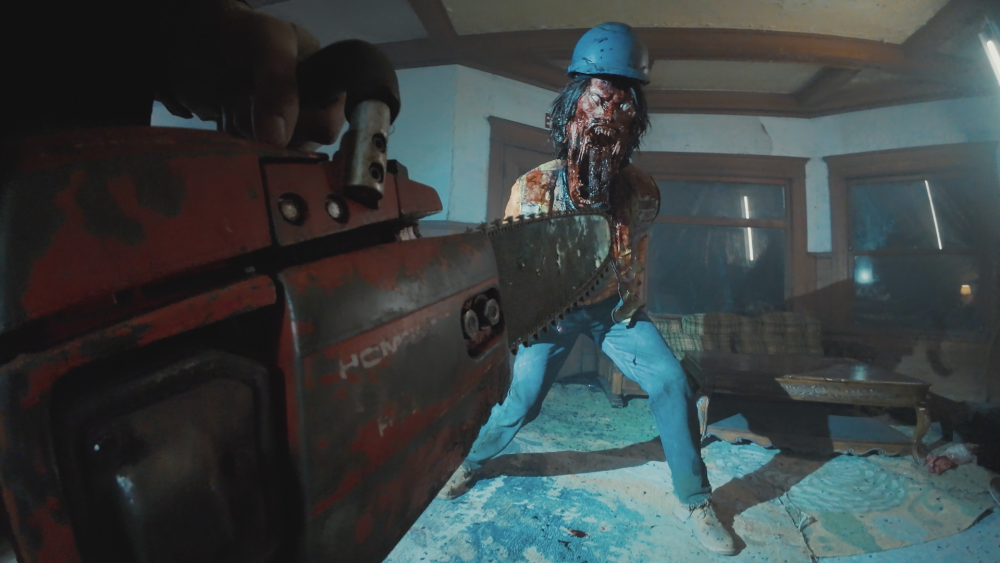
44. Tuesday the 17th — V/H/S
Despite the original V/H/S being a bit of a roller coaster ride in quality, one thing I like about the film is its raw, adult edge. For the first hour, the frame narrative, “Amateur Night” and “Second Honeymoon” each contribute to the film’s grounded, sleazy, voyeuristic atmosphere. But that groundedness grinds to a halt once Glen McQuaid’s “Tuesday the 17th” arrives.
“Tuesday the 17th” is meant to be a found-footage take on an ’80s slasher. The story follows a group of four twenty-somethings looking for a lake that one of them, Wendy, says she visits every year.
“Tuesday the 17th” benefits from a fantastic villain who is obscured by tracking errors within the camera’s frame. He is identified in the credits as “The Glitch”, a name that V/H/S fans have gladly adopted.
If this were simply a story about a group of friends who have a chance encounter with this strange, unidentifiable entity, it probably could have coasted to the middle of this ranking. But damn it, there is more to this story.
At one point, Wendy turns to one of the boys and tells him, “You’re all gonna fucking die.” Great moment! If Wendy was somehow in league with “The Glitch” and intentionally leading her friends to their slaughter, I’d be alright with that. Turns out, Wendy really is intentionally setting them up to die, and the revelation of her rationale just terrible, silly writing. Honestly, Wendy could have just been “The Glitch” and it would have been better than the story they went with.
And here lies the problem. In terms of writing, the dialogue in which Wendy reveals her true intention is a franchise low point. I mean, you already have a fantastic gimmick villain whose nature and origin are completely ambiguous. Why saddle him to another character’s unnecessary, nonsensical motivation.
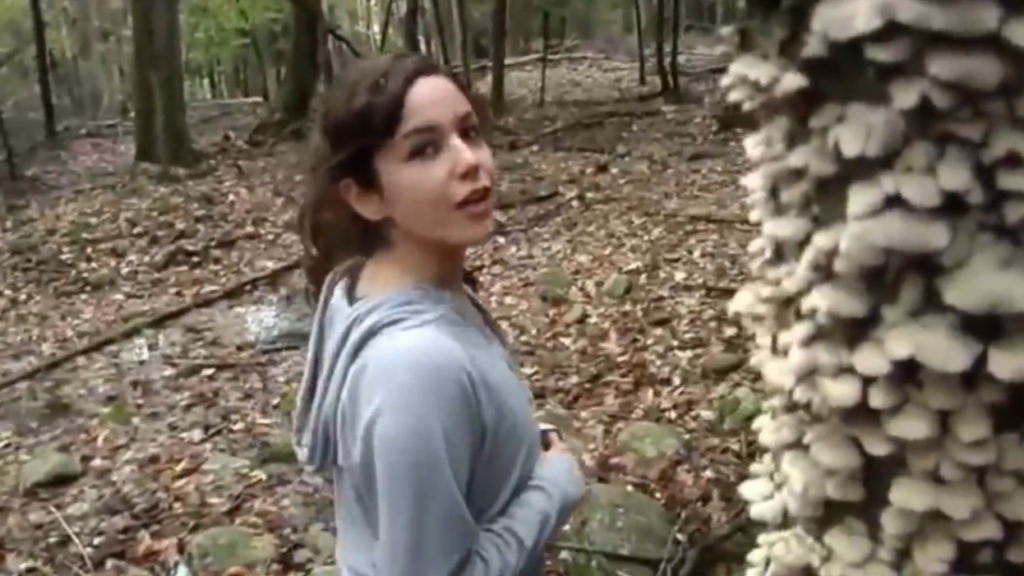
43. God of Death — V/H/S/85
The most disappointed I have been watching a new V/H/S film was when I saw V/H/S/85 for the first time. At least with V/H/S/Mixtape, I sensed it coming. Even on a second viewing, I find these segments difficult to rank because they all have their moments, but each misses the mark in a very different way. I mean, I’m still willing to give them all a participation badge, but I don’t need any of them to return for the second day of the tournament.
Sadly, that means ranking Gigi Saul Guerroro’s “God of Death” as 85’s lowest segment feels more like I’m putting it at the bottom because one of them has to be there more than for any other objective reason. I mean, I could fake disgust as there is a controversy about whether or not it is okay to center a fictitious supernatural horror around a real tragedy, the 1985 Mexican earthquake, while people who lost loved ones are still alive. But honestly, I’m not at all offended by that.
The real reason I ranked “God of Death” so low is because I actually zoned out for about two minutes while watching it, and I had no impulse whatsoever to rewind and see what I had missed. So that’s why I’m placing it here.
V/H/S segments often have a problem explaining why any of the footage is being filmed, but in this escape-from-a-collapsing-building-during-an-earthquake scenario, that problem feels especially glaring. Not that the people in the video, who pause far too often, seem like they’re really in much of a rush to get out of there.
I want to make it clear that I have no issue with subtitles, and I really want to root for the international entries. However, this segment from Mexico feels like it threw a lot of mud at the wall and hoped something would stick. On the plus side, the reveal of the evil god is well executed, and it looks great. I just wish it didn’t take so long to get us there. The end contains some fun carnage and there is even a nice boob shot. Yet, even then, the voice in my head kept on saying, “Just end this already.”
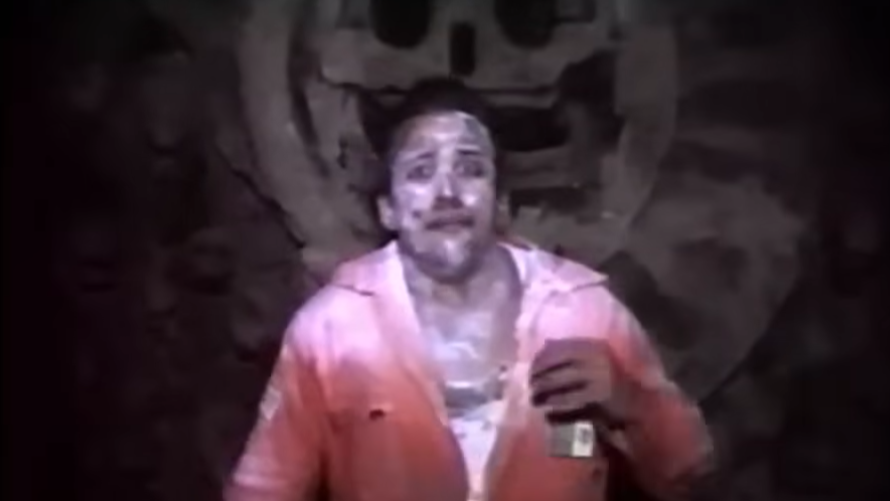
42. Shredding — V/H/S/99
I have a soft spot for V/H/S/99 because I saw it at the Toronto International Film Festival (TIFF), but I know it’s nowhere near the franchise’s best entry. In fact, I currently place it third last, ahead of only V/H/S: Viral and V/H/S/85. But the gap between it and those two entries feels pretty large because V/H/S/99 has far more standout moments. It also, along with V/H/S/Halloween, leans more heavily into dark humour than most entries in the franchise.
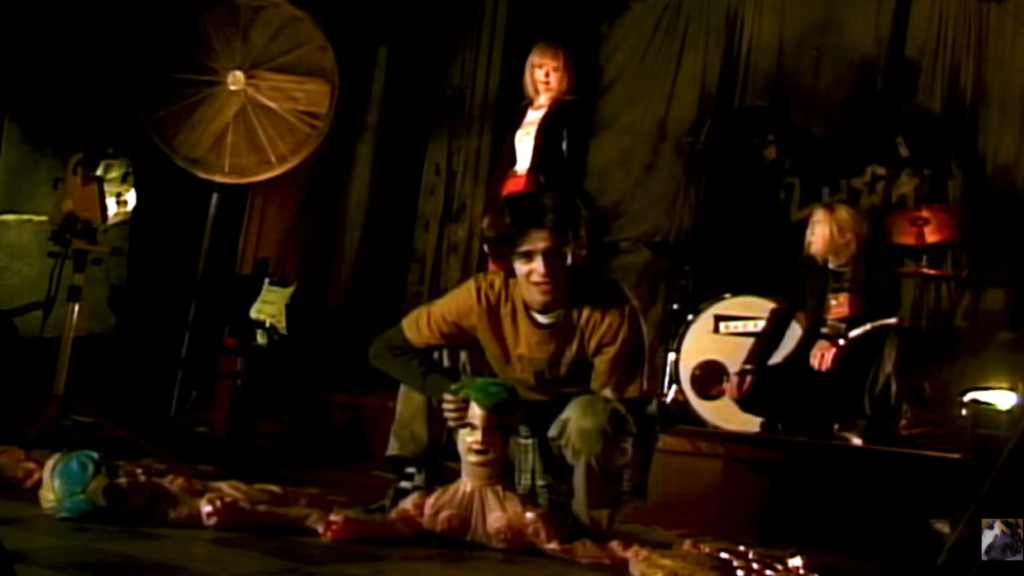
Maggie Levin’s “Shredding”, however, does not exactly leave the best first impression. The story follows a group of punks who break into a former underground venue that was closed after a deadly tragedy to film a video for their blog.
Too much of the segment’s runtime is spent with the other three members relentlessly teasing Ankur, the one member of the group who doesn’t want to enter a place where people were killed. The persistent pestering and Ankur’s constant whining suck a lot of the fun out of the segment’s build-up. I mean, I get it. He tries to act all punk, but he’s really just a scared kid. The irony doesn’t need to be shoved down our throats.
Then, when Ankur, who is of Indian heritage, explains that he grew up hearing Hindu stories about supernatural spirits called bhoota, the exposition feels neither organic nor necessary.
Fortunately, the ghouls themselves look fantastic. I remember the close-ups of their faces actually giving me chills when I saw them on the big screen. The music in this one is pretty good too. It’s just too bad those strengths aren’t enough to overcome the segment’s many flaws.
41. TKNOGD — V/H/S/85
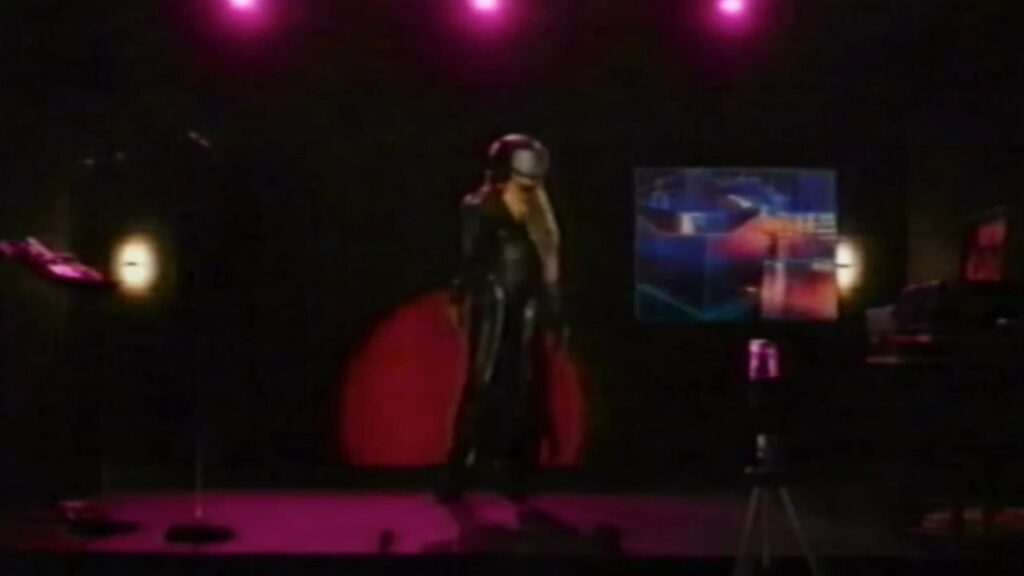
The first time I saw V/H/S/85, I thought Natasha Kermani’s “TKNOGD” was the worst segment the franchise had made. On a second watch, I have a much better appreciation of its dark humour, use of hubris and witty, self-aware dialogue.
It involves an unusual performance artist entering a virtual world to conjure up the world’s new God: the God of Technology. She tells the crowd that the new God will likely appear in the virtual dimension as a newborn. Spoiler alert: it does not look like a newborn.
I also like how the eighties vibe comes through pretty strongly in the tech guru’s video and the artist’s use of a sound mixer as part of her incantation.
The V/H/S franchise has been known for creating some memorable monsters and deities. Hell, in V/H/S/85, even the “God of Death” segment has a pretty cool-looking Aztec god. But in “TKNOGD,” this just isn’t the case, and that is mostly what keeps this one below average. It is too bad too because the early days of 3D animation always had a certain creepy vibe that could have been utilized here. The gore effects, however, are outstanding, and I like that I’m left guessing who those people were who would pay to see a show like this in the first place.
40. Abduction/ Adduction (wraparound) — V/H/S/Beyond
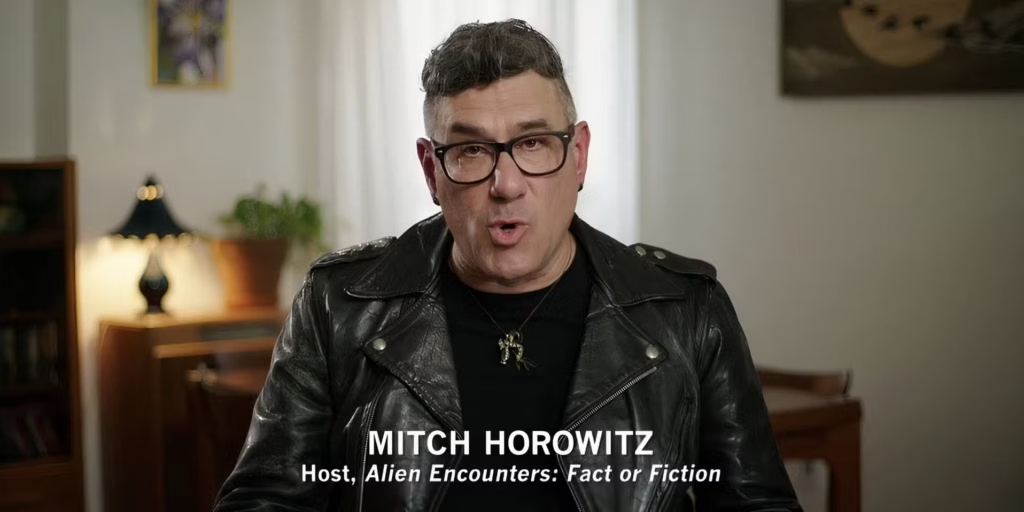
For a wraparound, Jay Cheel’s “Abduction/Adduction” isn’t bad. Its pseudo-documentary presentation, which uses real, recognizable media figures, does an admirable job of holding V/H/S/Beyond together.
It starts with a pretty decent mystery involving the history of two VHS tapes discovered at a flea market, which UFO believers cite as definitive proof that aliens have recently been to Earth, or more specifically, inside the Farrington House, a mysterious house in Toronto.
Some of the dialogue about the difficulties of determining authenticity, or the ways aliens change as a social construct, is surprisingly intelligent. In the case of “Live and Let Dive,” it also works as a great segue into the segment that follows.
But the further “Abduction/Adduction” moves away from the Farrington House mystery, the more its own narrative suffers for the sake of the anthology as a whole. When we get to the end of Beyond, the mystery of the tapes is reintroduced and there’s a rush to remind us that we are about to see something truly mindblowing, and perhaps a bit disgusting. It’s a lot of buildup for a fictitious “real” tape, and I’m not sure how the footage they are going to show can possibly live up to this much hype.
Spoiler alert: it doesn’t.
39. Gawkers (wraparound) — V/H/S/99
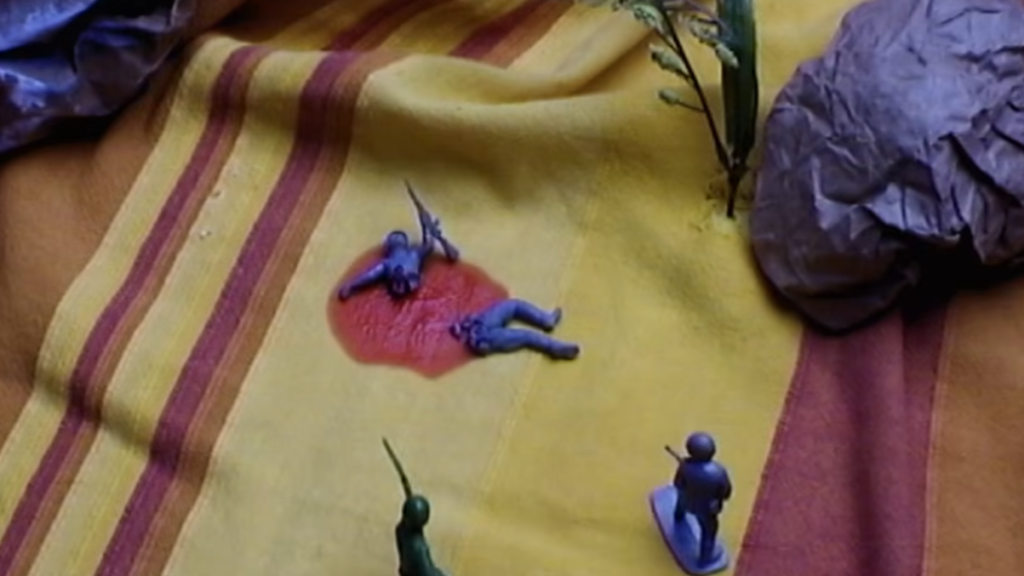
I have to put “Gawkers” a few spots higher than it probably deserves because of its connection to the wraparound segments. Those stop-motion clips involving toy soldiers are a clear, clean break from the cursed snuff-tape framing narrative established in the previous installments. I also think this switch from a traditional framing narrative to a more disconnected wraparound has allowed the filmmakers to make these segments stand more firmly on their own.
I give director Tyler MacIntyre credit for using a kid’s hobby as the connective tissue for his longer story segment. Some fans have complained about these in-between wraparound segments as being out of place in a franchise known for graphic horror, but I won’t. I’ve always considered dark humour to be horror-adjacent and the playful goofiness fits nicely with the general tone of V/H/S/99.
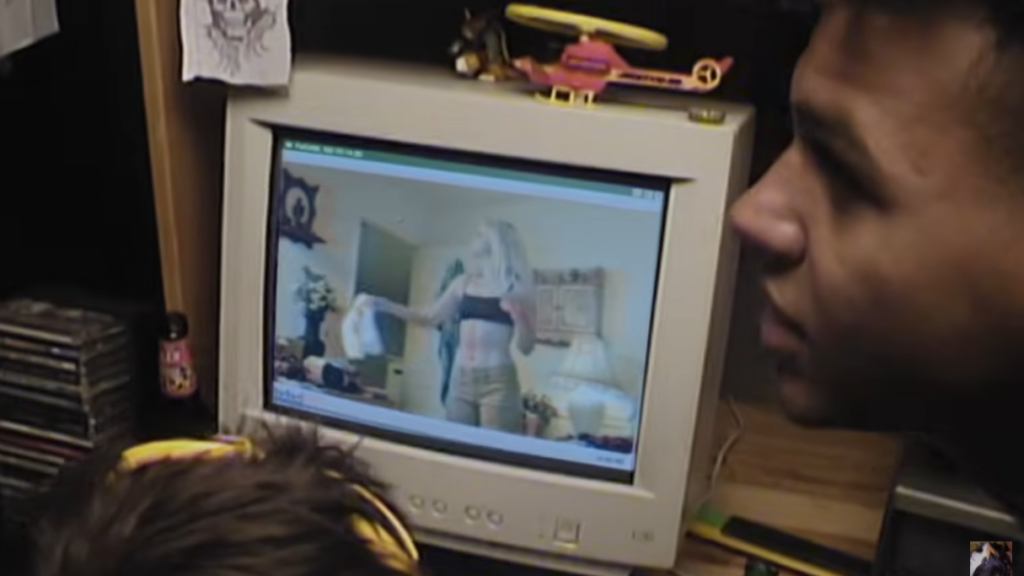
The actual segment itself, however, falls shy of V/H/S standards. It follows a group of teens who film pranks, stunts and girls they hope aren’t paying attention. That is, until the girl across the street catches their attention. But after some shenanigans with a web camera, they learn the hard way that their perverted obsession is not who they think she is.
Many V/H/S fans consider “Gawkers” to be a poor-man’s rehash of “Amateur Night”, which is actually surprisingly accurate as a criticism. We get a female transformation that pales in comparison to what “Amateur Night” delivers, and a less troubling voyeuristic plan. But even without the “Amateur Night” comparison, the segment can still be criticised for failing to build much tension or dread before the relatively short burst of horror at the end .
38. Dreamkill — V/H/S/85
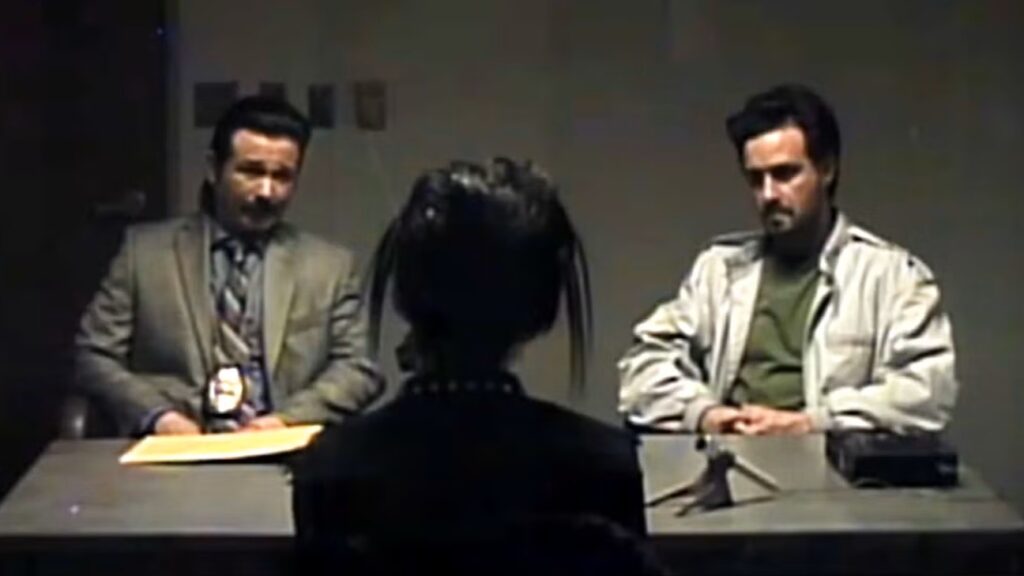
I want to make clear that I have nothing against Scott Derrickson as a director. Sinister is one of my favourite horror films of all time. But if I’m watching a V/H/S film, I want it to feel like a V/H/S film. Like “Dante the Great” in Viral, “Dreamkill” feels like a cheat that disregards what came before it.
Where I can give “Dreamkill” credit is in its gruesome kills, which are filmed on Super 8, just like the snuff films in Sinister. But that is also part of the problem. Derrickson has intentionally invited a comparison to his previous work. It’s blatant fan service, but it’s fan service that doesn’t serve him particularly well here. Sinister is great not because it is gruesome. It is great because it is genuinely scary in a way that few horror movies actually are. I’m perfectly fine with gore, but nothing compares to that lawn mower video jump scare which lets the gore exist in our imagination.
But my issue isn’t with the gore. It is actually one of the few highlights of V/H/S/85. My main issue is that “Dreamkill” is trying to tell a conventional story while pretending to incorporate a pseudo-documentary style. It implies that cameras are always present, but there is no answer to who spliced all of this footage together or for what purpose. A lot of the scenes caught on camera don’t make much sense either. Why would there be footage of an investigator walking into the house before heading to the crime scene?
There are other issues as well. Found footage requires a certain style of acting that feels natural enough to make us suspend our disbelief. That isn’t the type of performance we get here. It doesn’t help that Gunther’s goth look makes him difficult to take seriously as a character. And since when does a V/H/S segment kill its main antagonist?
I feel like the only reason Derrickson was allowed to break so many V/H/S conventions was because of the prominence of his name. Still, I would have rather seen his spot given to a newcomer who had more respect for what makes the franchise work.
37. Dante the Great — V/H/S:Viral
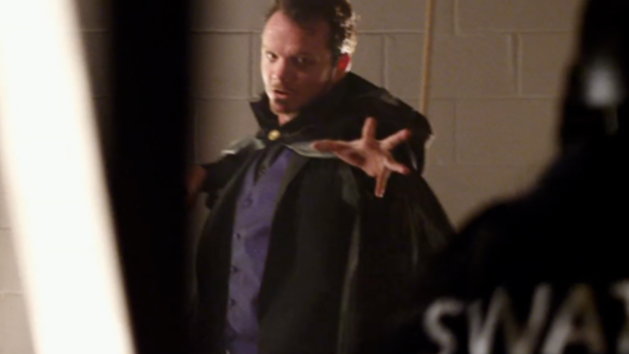
In my mind, “Dante the Great” will forever be linked to “Dreamkill.” Both cheat on the V/H/S franchise’s found-footage premise. And while “Dante the Great” includes fictional interviews to suggest that its footage is part of an investigative pseudo-documentary, much of what we see, particularly during its action-packed conclusion, would never realistically have been captured on camera.
And like “Dreamkill,” the acting isn’t always entirely up to snuff either…which is murder for a style of film that depends so heavily on immersion.
But honestly, I put Gregg Bishop’s V/H/S: Viral segment ahead of Derrickson’s “Dreamkill” for one simple reason: it’s fun. The concept of an evil magician with a demonic cloak feels fresh, and the low-budget magic effects are surprisingly well done. And the clash between the camp and the serious documentary style gives the segmentadditional charm.
This was the first segment to be put in a V/H/S movie to actively spit in the face of the franchise’s found footage premise, so it has gotten a whole lot of hate over the years. However, since the franchise has been rebooted, there have been so many other questionable uses of the found footage format that I am more willing to be forgiving. It’s now much easier for me to appreciate “Dante the Great” for what it is, a fairly decent, perhaps opening segment with some interesting ideas.
Sure, it’s a bit weak in the gore department, but at least it’s high on spectacle. And it does offer one genuinely effective jump scare.
36. Dance, Dance, Dance, Dance — V/H/S/Mixtape
How do you make a segment with evil Muppets just kind of meh?
Needless to say, Renee Zhan’s “Dance, Dance, Dance, Dance” didn’t resonate with me in the same way it has with others. It isn’t bad; it just feels like it’s trying too hard to recapture the what-the-fuckery of “Fun Size” from the year before, even taking the time to directly reference that segment.
But “FunSize” is genuinely subversive. If there’s anything subversive about “Dance. Dance, Dance, Dance”, it’s only on a superficial level that’s been covered before. With GWAR already running amok in the wraparound, the last thing V/H/S/Mixtape needed was to start off with more juvenile antics.
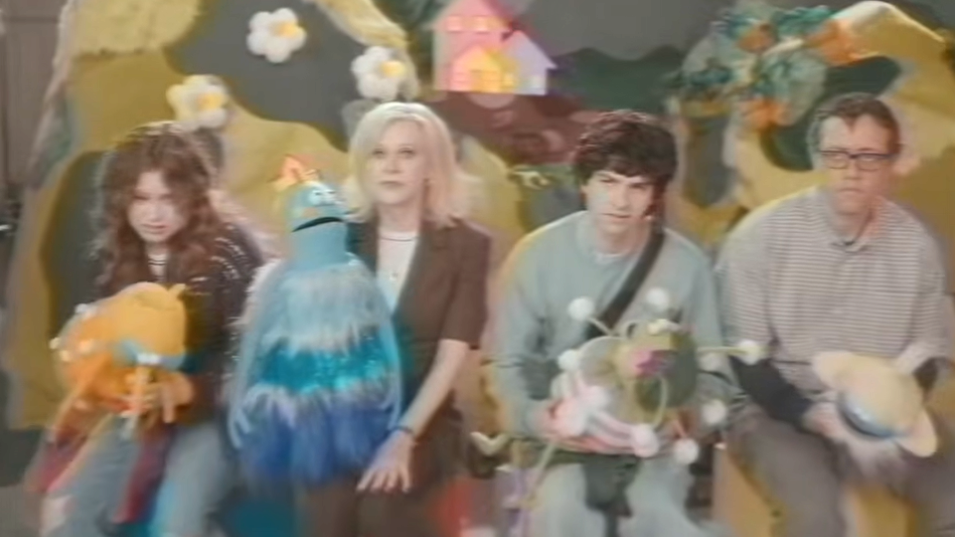
Part of the problem is that Riptide, Botulism, Skeeto and Hemlock have no real creep factor beyond their names. Perhaps that was by design, but it begs the question: was Jim Henson’s Creature Shop really the right group to commission for a V/H/S segment? I would have been happier with puppet designs closer to Channel Zero’s “Candle Cove”. Hell, even some of the Muppets in The Muppet Christmas Carol are freakier than these ones. Have you seen the Ghost of Christmas Past? Remember, this is the group that once brought to us The Dark Crystal.
The titular song might be dark lyrically, but it does little to bring out the segment’s creepy undertones. Instead, the atmosphere relies on mysterious glitches in the old VHS footage and George, a puppet designer who’s a little too attached to his creations. Fortunately, George is creepy enough to keep things moving.
The story follows Vanessa, a studio executive who clashes with George over her plans to reimagine the hit children’s television show The Curious Chorus. George is less than cooperative when the puppets are scanned to create 3D models. Later, he eventually takes Vanessa and her crew to see the show’s original set, an invitation she interprets as an olive branch.
Puppet chaos ensues, but it is not one of the franchise’s better spectacles. The fact that the Muppets behave with very familiar Muppet mannerisms hurts rather than helps. It’s almost as though the Jim Henson team were hovering over the production with a set of rules designed to remind people of their involvement, but in the process they remove most of the edge from the segment. I mean, the gore is great, but focusing on gore and Muppet nostalgia alone leaves the whole thing hamstrung. It’s a shame, because there’s plenty of untapped potential here.
I do appreciate though that it is clearly Hemlock that is holding the camera at the segment’s end. It’s a fun found footage detail.
And hey, there is a mid-credits callback that doesn’t feel like a waste. It is creepier than the actual segment was.
35. Bonestorm — V/H/S: Viral
I usually like the films of Justin Benson and Aaron Moorhead, so I was surprised the pair didn’t do more with their opportunity here.
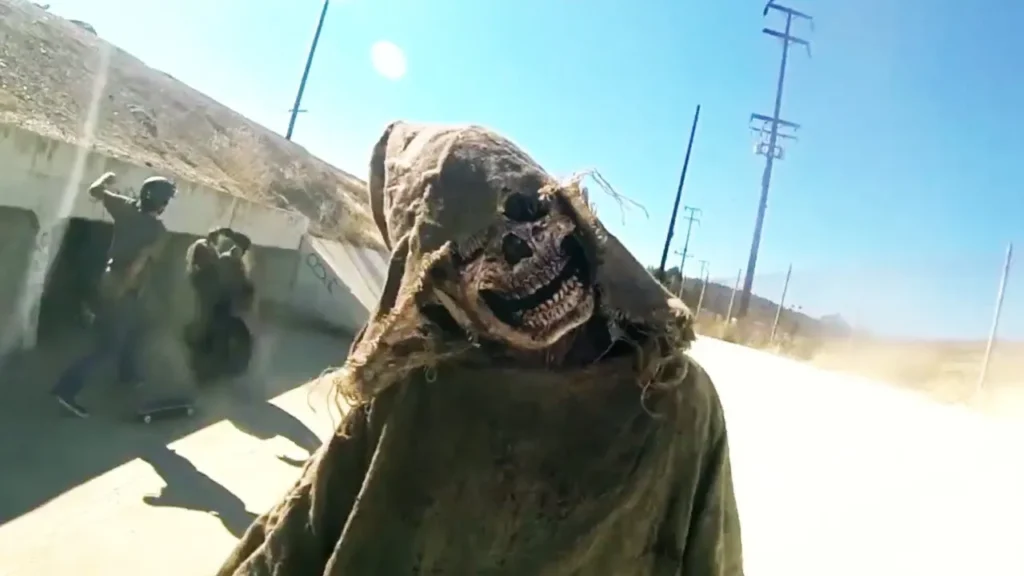
Don’t get me wrong. I don’t think “Bonestorm” is as terrible as many others have made it out to be. The plot, which pits a group of skateboarders against hordes of Tijuana cultists and resurrected skeletal cultists, takes advantage of the duo’s ability to create spectacle on a budget. But I also can’t deny that I’ve enjoyed the spectacle-driven segments in most other V/H/S installments more.
Benson and Moorhead do very little to generate atmosphere in “Bonestorm,” even choosing to set the story in broad daylight. After a while, the cultist kills start to become somewhat monotonous and the GoPro footage makes the action difficult to follow. The same criticisms I gave about “Stork”’s first-person perspective action apply here, but at least attacking skeletons with firecrackers is a little more original than zombies with chainsaws.
If “Bonestorm” has a saving grace, it comes from the banter and bond between the two main skateboarders. Benson and Moorhead are good at writing flawed heroes, and if you can get past their assholish behaviour, you’ll find there’s more to the two main skateboarders than meets the eye. This story is ultimately a test of their ride-or-die bond, and it is no accident that their fierce loyalty to each other doesn’t extend to their cameraman and driver.
34. Ambrosia — V/H/S/85
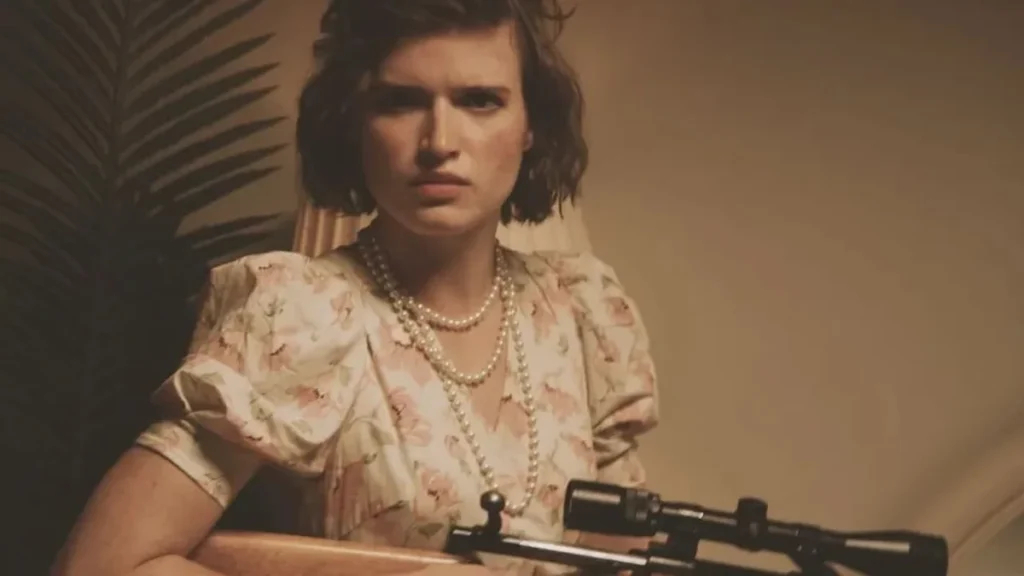
On paper, tying one segment so closely to another is a great idea. “Ambrosia” is a direct follow-up to “No Wake,” revealing who the shooter really is. In this way, the tie-in pays off. Director Mike P. Nelson also has the wisdom to let “Ambrosia” breathe in its own space. These are the good points.
Where “Ambrosia” starts to fall off a bit is in its reliance on gun deaths. With “No Wake” and “Dreamkill,” V/H/S/85 is already relying way too much on gun carnage. “Ambrosia” is probably the worst offender…which is funny because guns are not how I remember the eighties.
Fortunately, this segment is fairly short, so it doesn’t wear out its welcome. And the reviving water from “No Wake” provides an interesting subversion of the usual “everyone dies in the end” V/H/S trope. The irony wasn’t lost on me here.
But narratively, the “No Wake” crew’s revenge plan doesn’t make much logical sense because it implies the group has knowledge about the shooter and their family that they would have no easy way of obtaining. Worse still, this is a problem that could have easily been corrected at the writing stage because if you just had the shooter step in the lake, the water gun and van aren’t even really necessary.
33. No Wake — V/H/S/85
I have no idea how Mike P. Nelson got to do two segments for V/H/S/85, but it ended up being both a blessing and a curse.
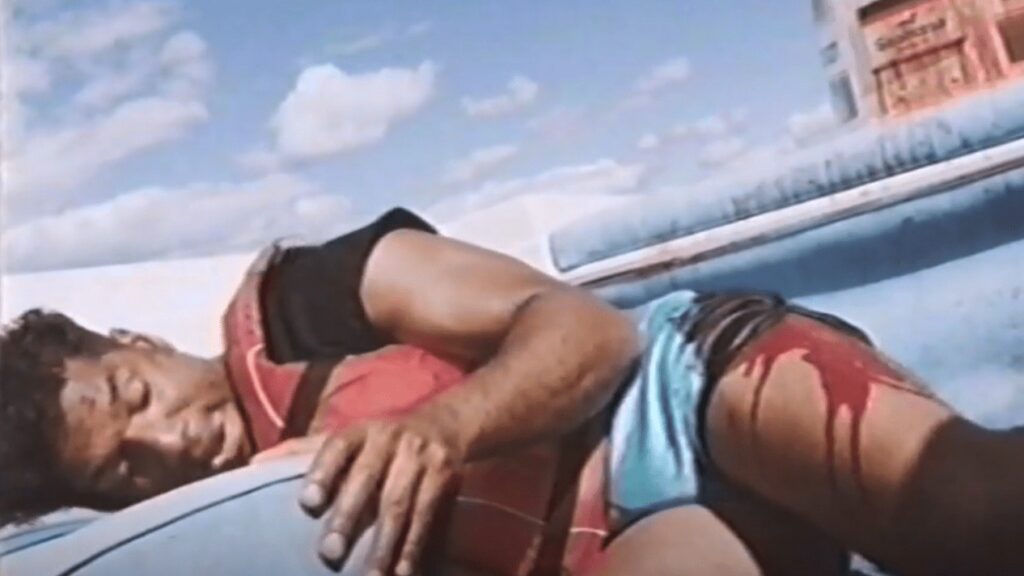
“No Wake” starts well enough. A group of twenty-somethings in an RV ignore a No Trespassing sign and end up at a lake with another sign warning them not to swim in the water. It’s a good setup for an opening segment in V/H/S/85.
Of course, members of the group enter the water, taking a motorboat out to try water skiing. But their fun is short-lived when they are picked off one by one by somebody on shore with a gun. But that’s not really why they should had stayed out of the water.
The gunshot wounds create some good opportunities for gore, and the identity of the shooter sets up a decent mystery that will pay off later in the movie. Unfortunately, this means the last third of “No Wake” is mostly there to set up “Ambrosia,” and the writing for this portion of the segment is not great. I’m not sure I’d be thinking about revenge given all the other problems this situation presents, especially since their revenge plot doesn’t even end up fully making sense.
And since nothing is resolved, nobody on the boat is truly dead, and these characters don’t physically make a repeat appearance in “Ambrosia”, the end result is a segment that feels anti-climactic. This would have worked better as a self-contained story.
32. The Music of Mr. Sze — V/H/S/Mixtape
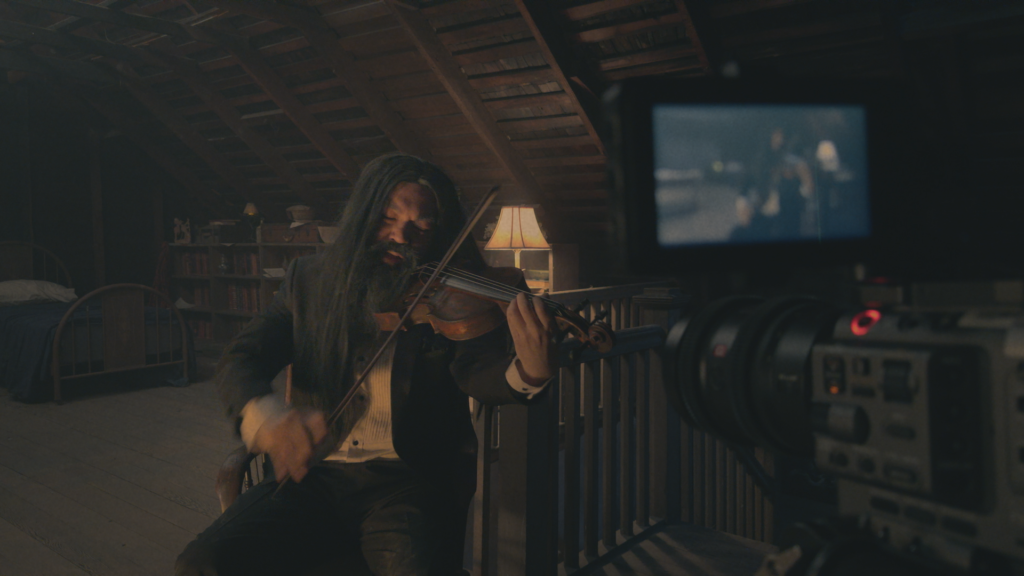
I like the set-up for Ernest Dickerson’s “The Music of Mr. Sze”. It starts strong. Phillip, a documentary filmmaker, wears glasses fitted with a hidden camera, hoping to document his daily life. There are plenty of weirdos in Phillip’s rundown apartment complex, but the person who catches his attention is a mysterious violin player named Sze.
Sze’s violin playing is incredible and genuinely fascinates Phillip, who hopes to record him. Once in Sze’s room, Phillip asks him to play a tune he heard the night before. But when he hums the melody for Sze, everything suddenly gets very strange.
If Dickerson had known how to maintain this momentum, “The Music of Mr. Sze” could have been V/H/S/Mixtape’s best segment. Then comes the reveal, and we’re treated to visions of trippy, Lovecraftian cosmic lore that send the story in a direction I suspect most viewers wish it hadn’t taken.
The final third of “The Music of Mr. Sze” collapses under the weight of its own ambition. The quirkiness that was endearing in the beginning starts to work against the segment, and the increasingly outlandish spectacle never quite delivers on its promise. It’s not that “The Music of Mr. Sze” lacks the kind of fun spectacle that V/H/S does so well. I just wish it had stayed more grounded… and found a more interesting purpose for the tall dude in the hallway.
For a franchise that often delivers memorable monsters, V/H/S/Mixtape has given us little more than Muppets, claymation and GWAR up to this point. “The Music of Mr. Sze” was Mixtape’s best chance to give us something awesome, but the end result is more eighties metal band goofy than genuinely memorable. Maybe that was the point, but after such a promising set-up, I wanted something a little more monstrous.
31. Total Copy (Wraparound) — V/H/S/85
I don’t generally have high expectations for the wraparound or frame narrative segments, but V/H/S/85’s “Total Copy”, directed by V/H/S veteran David Bruckner feels like the highlight of one of my least favourite V/H/S movies. It presents a science-fiction mystery involving an alien child named Rory that would have felt right at home in V/H/S/Beyond. I also appreciate the nostalgic In Search Of…/Unsolved Mysteries television documentary style. Back in their day, these shows were designed to scare the hell out of us with stories about strange occurances presented as if they were real.
Between segments, we watch as the alien child grows in size and power. But an interview with a former scientist in charge suggests that the lead researcher had become increasingly less objective and cautious, imposing a sense of humanity on Rory that really wasn’t there.
Admittedly, more could have been done to unnerve us during the five segments leading up to the epilogue, but at least it ends with the predictable bang we’d been waiting for before delivering one final, shocking punchline.
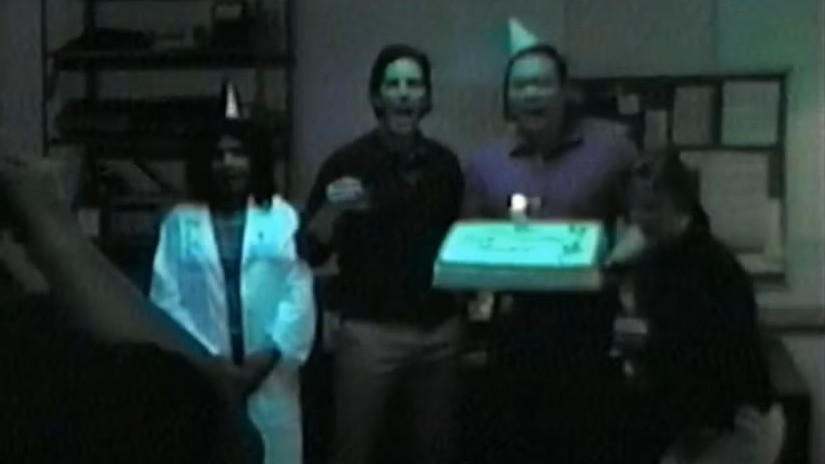
30. Diet Phantasma (Wraparound) — V/H/S/Halloween
V/H/S/Halloween is a strange creature. It combines the edginess of the original V/H/S with the dark humour of V/H/S/99. The fan reaction has been mixed, but those who love it, like me, really love it. I’d even consider it the second-best entry in the franchise.
With “Diet Phantasma”, Bryan M. Ferguson helps establish the film’s wilder tone. Whereas most wraparounds build tension towards a big finale, “Diet Phantasma” takes one gory joke and pounds on it between every segment. Yet, I never seemed to mind returning to it.
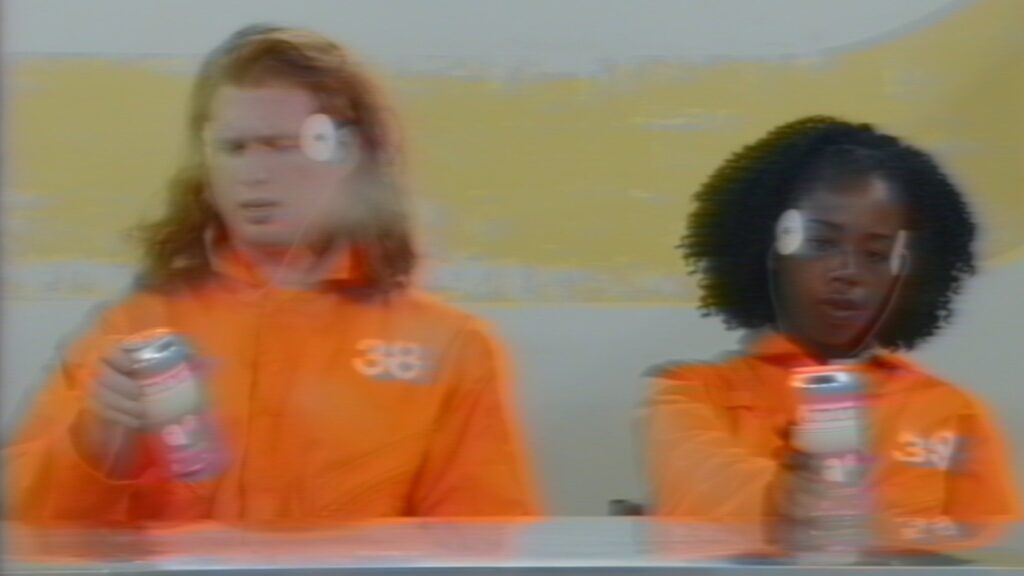
The story shows footage from a company in 1982 conducting taste tests with members of the public, who are asked to drink a new soda infused with a poltergeist’s extract. The hope is to find a formula that makes Diet Phantasma extra addictive, but the test mixtures are often too strong, causing the participants to die in horrific ways.
I give “Diet Phantasma” a slight edge over “Total Copy”, which similarly takes place in a research facility, because the character of Dr. Rothschild is a hoot. He openly lies to the participants and loses interest in each test the moment it fails, showing no concern for the carnage unfolding in the next room. At times, he even openly taunts the poltergeists. The deaths in this segment wouldn’t be nearly as fun to watch if such an entertainingly sociopathic character wasn’t at the helm.
Don’t forget to watch its mid-credit commercial.
29. Phase I Clinical Trials — V/H/S/2
V/H/S/2 mixes some of the raw energy of the first V/H/S with more solid and innovative found-footage storytelling. Many, myself included, consider it the best entry in the franchise because it delivers one memorable segment after another. You just have to get past “Phase I Clinical Trials” first.
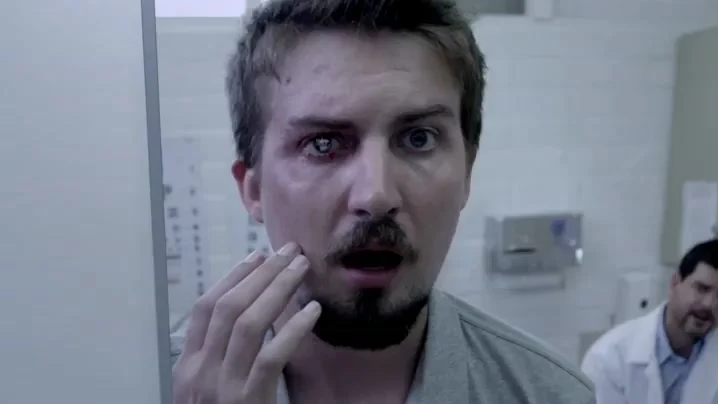
In its defense, Adam Wingard’s segment is arguably one of the scariest in V/H/S/2, excluding the frame narrative. There are two scenes involving a lump beneath the bed covers that are particularly unnerving. That alone gives the segment some value as an opening segment, even if it is widely considered the weakest of good crop.
The story follows a man who has been given an experimental mechanical eye to replace his blind eye, but is warned by the doctor that there may be occasional glitches in the technology. Once he gets home, he begins seeing glimpses of bloodied people throughout his house.
Beyond the lack of originality, my main issue comes down to the writing. The introduction of a deaf woman who can hear dead people after receiving a cochlear implant at the same clinic feels unnecessarily complicated, particularly because her exposition dump does little more than raise more questions. Why are these implants doing this to people? How did the woman figure all of this out? Why can’t this twenty-minute story just focus on being scary?
28. Dreamgirl — V/H/S/Beyond
Given the sci-fi theme, at least one segment in V/H/S/Beyond has to be about the dangers of our own creations. Fortunately, “Dreamgirl” is there to fit the bill.
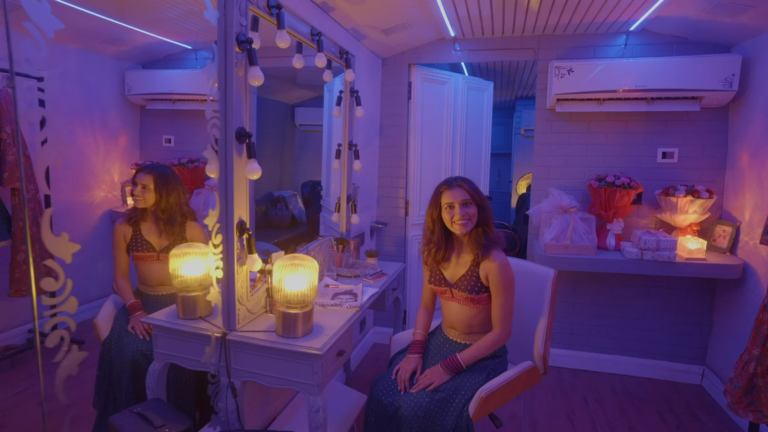
“Dreamgirl” follows Arnab, a member of the Mumbai paparazzi, as he goes to great lengths to get footage of Tara, the latest Bollywood “it” girl. Arnab uses an inside connection to sneak into Tara’s trailer and hides in her closet when she arrives with her agent. When he is inevitably caught, Arnab has a regrettable conversation with Tara that ends up triggering a robot uprising.
Miraculously, director Virat Pal manages to sneak a full Bollywood dance number into the segment, and it doesn’t even feel out of place. So the franchise can check that box.
“Dreamgirl” is often considered one of Beyond‘s better segments. The story is good, and the gore is really well done, so my one complaint probably feels nitpicky. But one thing really, really bugs me: why do all the people trapped in the studio simply run back and forth? Sure, it makes for a good visual, but shouldn’t everyone logically be heading for the exits?
If you think I ranked this one too low, that’s why.
27. Deathtone — V/H/S/Mixtape
RZA’s “Deathtone” is probably the segment that understands the sound-horror theme of V/H/S/Mixtape the best. It follows Lydia, a young musician and producer working in her dead father’s studio, as she listens to his final words in an attempt to create the perfect track and keep him part of her life forever.
We don’t know the full history of this father-daughter relationship, but it’s clear that having her father remain part of her life is terribly important to Lydia. Unfortunately, the usual methods of making music haven’t been working for her.
So she puts a murderous spin on his words and starts recording the sounds of people she butchers in various ways.
“Deathtone” has some good gore moments and a fun undercurrent of dark humour. The breaking body parts Lydia samples for sound is great. My main complaint is that it doesn’t really work as a found-footage concept. The story is fairly straightforward. In fact, Lydia’s reason for recording everything, that its one of her father’s instructions, doesn’t make sense except beyond helping RZA to check off the found footage box. Who is footage for?
To its credit, “Deathtone” knows what it is and follows through to its logical conclusion. For those who were not won over by the Muppets, this is often cited as Mixtape’s best segment, which is understandable. It ends the film on a good note… literally.
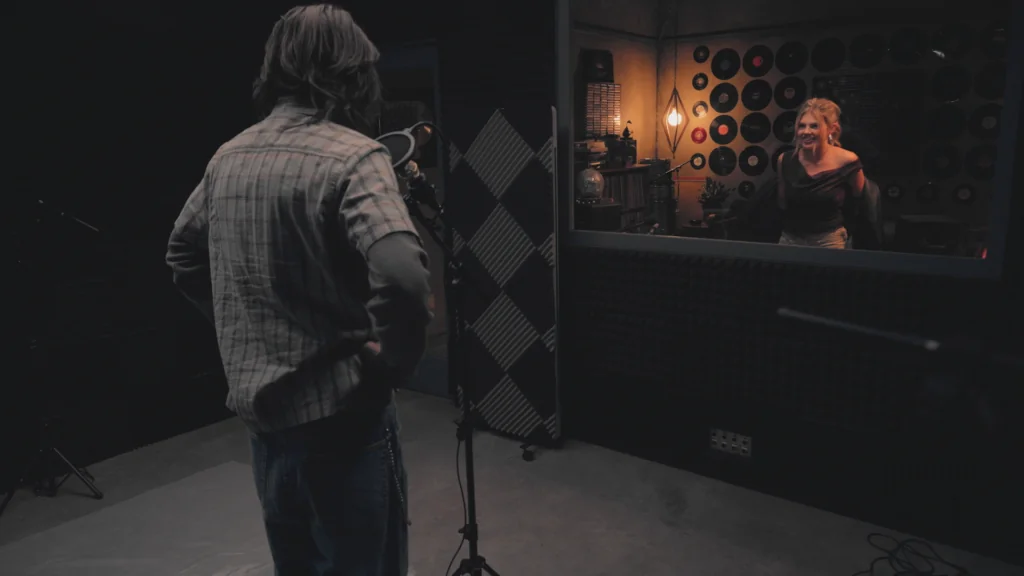
26. Heartbeat — V/H/S/Mixtape
Fans and critics have hailed “Dance, Dance, Dance, Dance” and “Deathtone” as early standouts of V/H/S/Mixtape, but I think that when the dust settles, it will be David Moreau’s “Heartbeat” that people remember best.
Even if I’m wrong, “Heartbeat” is my winner because it captures the raw, visceral found-footage horror of the first two V/H/S installments. After GWAR, Jim Henson’s Creature Shop and Flying Lotus’s stop-motion project, “Heartbeat” feels like an adult has finally walked into the room.
A couple travelling around Southeastern Europe decide to check out an abandoned military bunker near the Bulgarian border for their vlog. Once there, they break in and venture deeper into the bunker until they discover a room marked “Testing Chamber”.
They pick the lock and enter an anechoic chamber designed to absorb sound. A warning instructs them not to spend more than fifteen minutes inside, but as they play around, they hear a “click”.
The longer they remain trapped in the chamber, the more they become aware of their own bodily sounds, which grow increasingly maddening. This could have been a straightforward horror story, but Moreau’s script introduces a twist and an intentionally ambiguous ending that give the story more layers than it should warrant. Even a tattoo ends up carrying a deeper meaning.
“Heartbeat” isn’t perfect. Once the room locks, events escalate too quickly, leaving me wishing the segment had a little more time to breathe. Still, considering the disappointing mixed bag that V/H/S/Mixtape ultimately turns out to be, the grounded, human horror of “Heartbeat” is a welcome divergence.
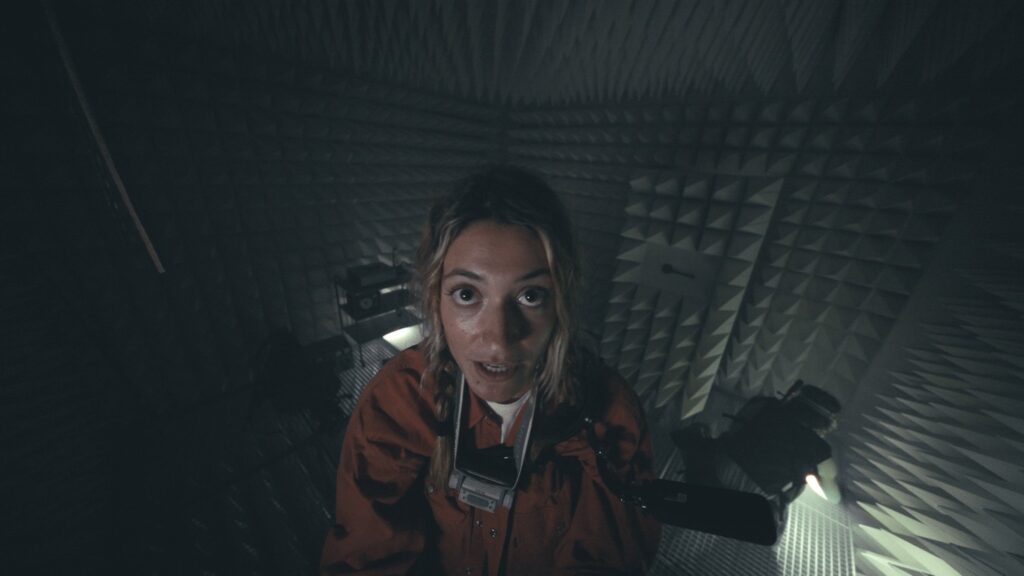
25. Tape 56 (frame narrative) — V/H/S
The first half of the original V/H/S has a darker, edgier vibe than the back half, and the opening segment of Adam Wingard and Simon Barrett’s “Tape 56” is a big part of the reason why. Six minutes into the film, we see a group of four low-life criminals pull a woman away from her boyfriend and lift her shirt and bra just to get her breasts on camera.
Their behaviour makes for a good parallel with the men in “Amateur Night”. They say the tapes can fetch them $50 on the underground market, but one of the men knows of a job that could get them plenty of money. All they have to do is break into a house and steal a V/H/S tape that he’s been told will be easy to identify once they find it.
They break into the house at night, worried that the owner might pose a problem. But when they find him, he’s already dead, sitting in a chair and facing a stack of televisions displaying static.
“Tape 56” begins the franchise’s pattern of frame narratives built around cursed tapes. But this one has a crude, creepy sleaziness to it that’s complemented by some genuinely scary moments, helping maintain that adult tone from the film’s very beginning.
There is an interesting meta aspect to “Tape 56” as well. There is a suggestion that the anthology segments we see are the tapes the men are watching, while some ominous presence has set the whole thing up in order to add this break-in footage to the collection.
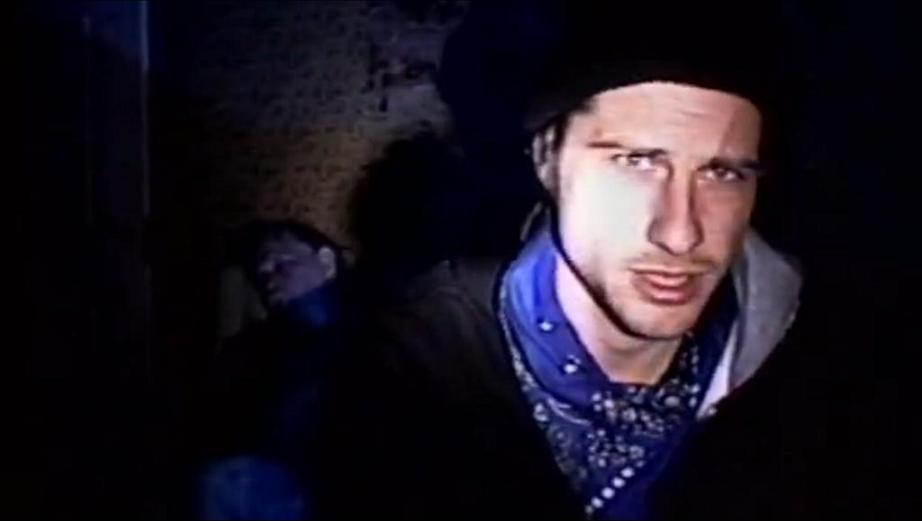
24. Tape 49 (frame narrative) — V/H/S/2
Simon Barrett’s “Tape 49” continues the cursed-tape story he and Adam Wingard started in “Tape 56”, but it does so this time with a more focused story and some additional gore.
This time, the story follows a dubious private investigator and his partner as they enter the house of a man who has recently disappeared and whose mother has hired them to find him. Once inside, they discover a stack of televisions reminiscent of those shown in the frame narrative of the previous film.
Before Viral would make a mess of this narrative, the cursed-tape story was much more focused and able to deliver on its scares. An apparently empty house at night, with snuff tapes just waiting to be found, creates a deliciously creepy atmosphere. That atmosphere becomes even more tense once we catch something hiding in the background, confirming that there is indeed something inside the house with them.
The addition of a video message from the missing son also provides some clues about the mysterious tape collectors in the two frame narratives. And I like that we get small nods to the previous frame narrative, including the inclusion of photos of the old man from “Tape 56” on the wall.
I prefer the attempt to use a frame narrative to scare over the dark humour of the later wraparounds, but this cursed-tape mythology was always likely to fall flat for a franchise with ambitions to go annual. I really wish it had ended with V/H/S/2.
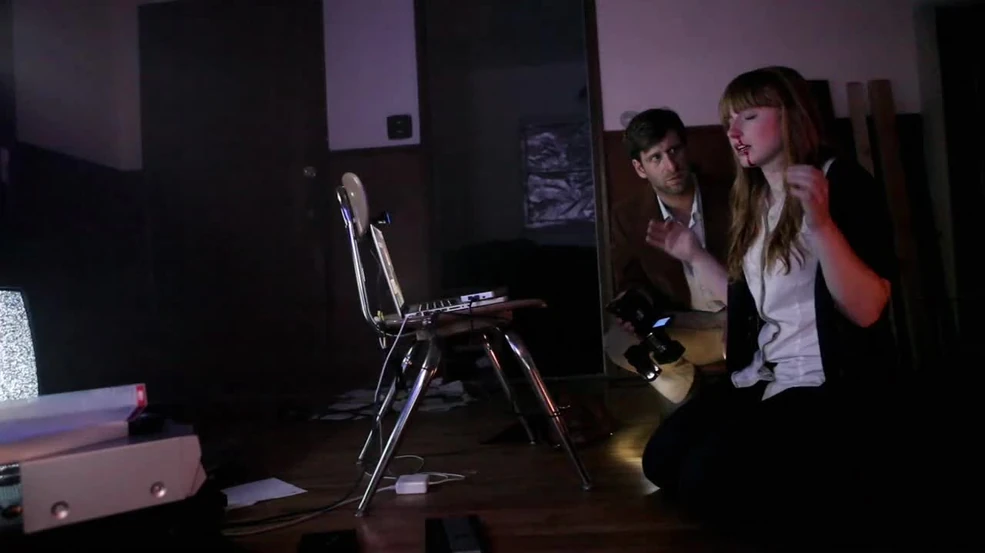
23. Ut Supra Sic Infra — V/H/S/Halloween
The title translates to “as above, so below”, but there is already a found-footage horror film with that name, so they wisely went with the Latin title.
“Ut Supra Sic Infra” is directed by Paco Plaza, who is no stranger to the found-footage genre, having co-created [REC]. So I’m surprised that it plays so loosely with found-footage rules, splicing together footage from two different timelines and even showing us footage from the room despite the police explicitly saying they found no footage of the room on the victims’ phones.
Whatever. I wouldn’t say that ruins the experience, but it does dampen it a little.
Despite this, I actually really like the story. The police have a suspect in a brutal mass murder, but they aren’t convinced he could have committed the crime alone. He even tries to confess, but the clear gaps in his memory make them question whether he really committed the crime at all.
To try to jog his memory, a group of investigators, along with his lawyer and a psychiatrist, take him back to the scene of the crime: an abandoned mansion in Madrid that was once home to a famous medium that communicated with the dead through a telephone.
“Ut Supra Sic Infra” is a good, grounded horror story, but it is tied to the franchise’s most unrestrained and outrageous film, V/H/S/Halloween, and in that company, it is hard to stand out unless you push the envelope. I just wish Plaza had pushed a little further.
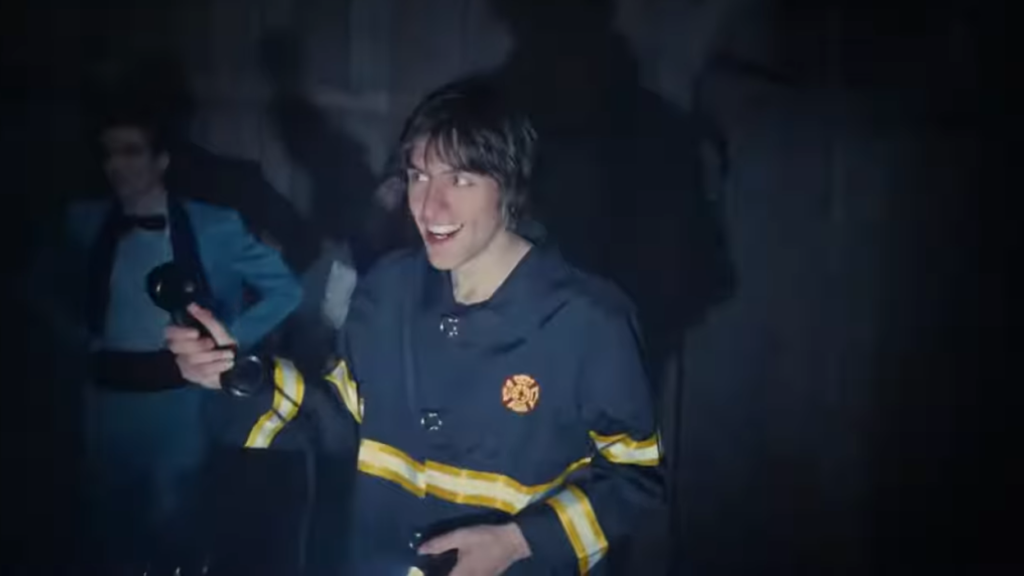
22. Fur Babies — V/H/S/Beyond
I don’t get the hate for “Fur Babies.” Directed by Christian and Justin Long, the segment is a good mix of dark humour and body horror.
Overzealous animal-rights activists go undercover to investigate a dog daycare owner after spotting several badly taxidermied dogs in the background of one of her promotional videos. They come hoping to find evidence that the owner, Becky, is abusing the animals. What they find is much worse.
Of all the segments, “Fur Babies” seems to stray the furthest from Beyond’s sci-fi theme. It shows people being transformed into human-dog hybrids, but the transformation itself is presented as a combination of brainwashing and the grafting of canine parts onto the captives. So it is better categorized as a grotesque body-horror story than true science fiction.
Where it shines is in Libby Letlow’s awkwardly chilling performance as Becky. In a franchise filled with malicious, supernatural monsters, it is nice to see a simple psychopath take the spotlight for once. This allows for some eerily fun interactions between Becky and her potential victims before she finally drops the hammer.
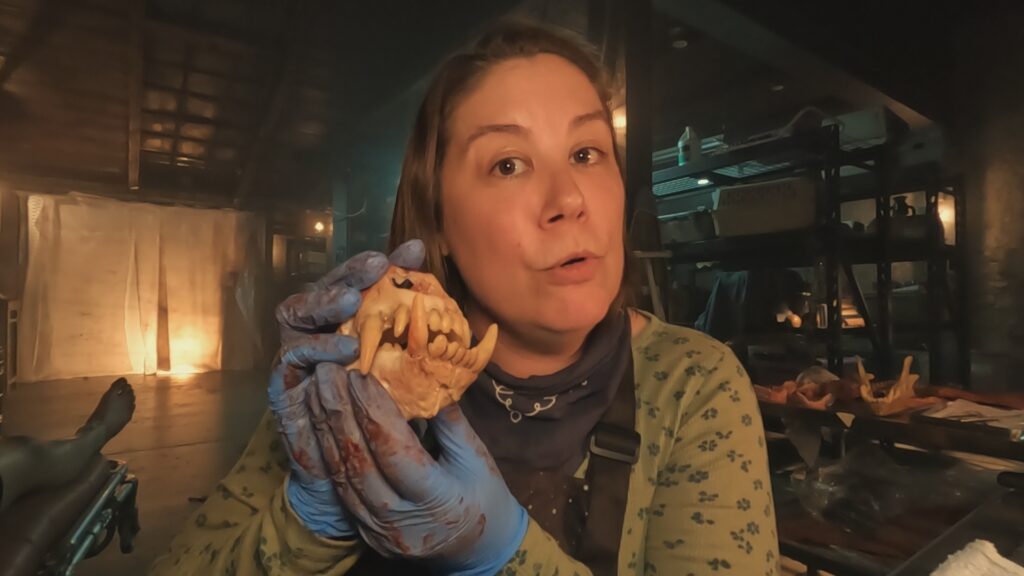
21. Suicide Bid — V/H/S/99
Director Johannes Roberts’ “Suicide Bid” is a solid addition to the franchise.
The story follows Lily, a college freshman, as she undergoes a devilish hazing ritual to join the prestigious Beta Sigma Eta. To earn her place in the sorority, Lily must spend the night buried alive in a local graveyard, with only a rope attached to a bell as her lifeline if she chickens out. That is, assuming the girls even want to dig her out after hearing the bell.
The girls don’t exactly play fair, but they aren’t intentionally sociopathic. First, they tell Lily an urban legend about another girl who disappeared after her initiators forgot about her for a week. They give her a box of spiders, telling her it’s a gift she should open only when she needs strength. Then they bang on her coffin with shovels to unnerve her once she’s inside.
But then things go sour in a number of unexpected ways, and Lily’s plight takes a turn for the much, much worse.
“Suicide Bid” has some good scares that help it stand out as one of V/H/S/99’s better entries, even if, at times, I found myself questioning the camerawork in the coffin.
Also, its early placement in 99 means it is eventually upstaged by the audacity of “Ozzy’s Dungeon” and the visual spectacle of “To Hell and Back.”
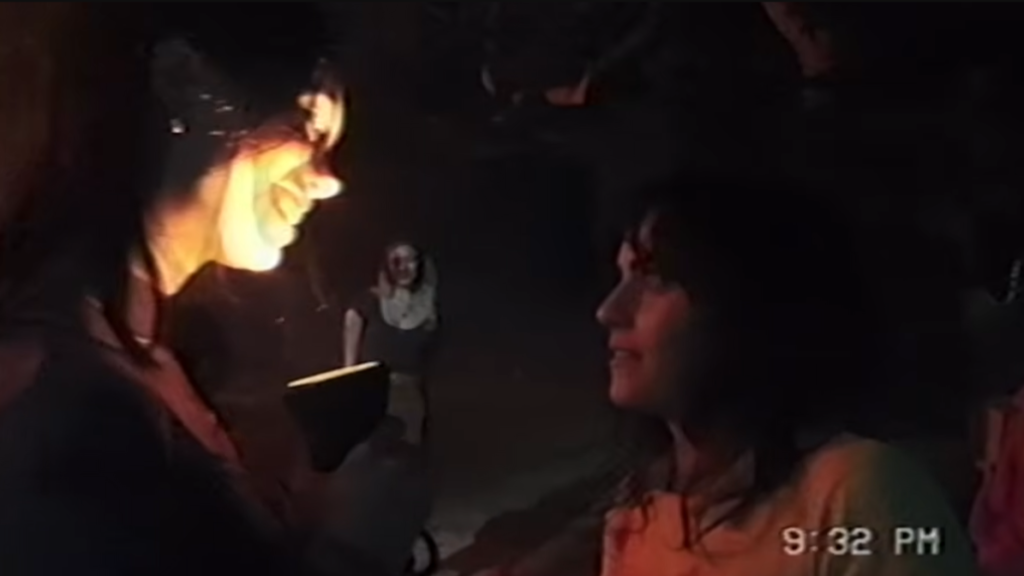
20. 10/31/98 — V/H/S
I’m actually shocked I’m ranking “10/31/98” this low. There was a time when I wouldn’t have. But time has not been kind to this one. After eight sequel installments, it’s clear that, over the years, this type of spectacle-based segment has been surpassed by others. Still, I’ll give the Radio Silence team credit for helping establish this style of found-footage chaos in anthology form in the first place. It is one of the things that has helped make the V/H/S franchise stand out.
But I can’t ignore that the setup for “10/31/98” is a little silly. Four men go to the wrong address, thinking they’re the first to arrive at a Halloween party, but nobody seems to be in the house.
I’m sorry, but they probably should have figured out they were in the wrong place long before they ever made it upstairs. But after they’re told, off camera, that an arm was seen coming out of the wall, they assume the house has simply been turned into a haunted attraction for the party. And apparently, that incorrect assumption is enough to keep them inside.
In their defence, there are voices coming from inside the house, which eventually lead them to the attic. There, they find three men chanting ritualistic gibberish around a woman who has been tied to a wall. And even then, they still aren’t convinced they’re in the wrong house.
At least not before all hell breaks loose.
Once the chaos starts, it’s hard to find much fault with the segment. Its placement at the end of V/H/S was intentional, and it has the kind of wow factor that sends the film out with a bang. I just wish the motivation that brought these men into the attic was better thought out.
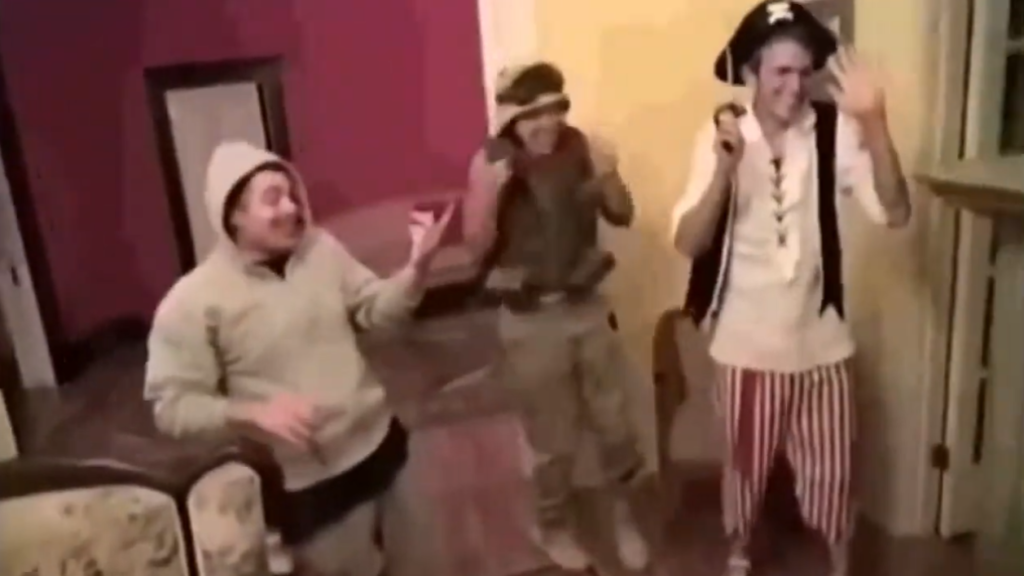
19. The Sick Thing That Happened to Emily When She Was Younger — V/H/S
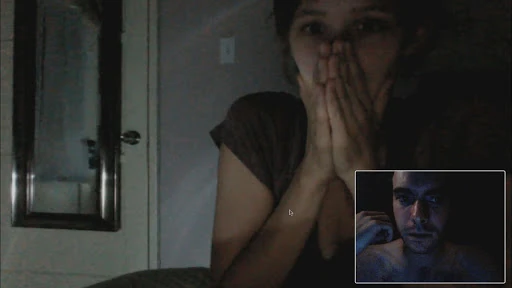
I’m surprised that Joe Swanberg’s “The Sick Thing That Happened to Emily When She Was Younger” is still, to this day, the only entirely Skype-like web conversation segment in the V/H/S franchise, especially considering V/H/S was released in 2012. That predates most of the best-known Internet-based horror films.
The story follows a doctor in training named James who talks to his girlfriend, Emily, through a series of video chats. Emily tells James about a bump on her arm, as well as noises she has been hearing inside her apartment at night. She confesses that she thinks her apartment might be haunted and tells James she’ll call him at night if it happens again.
“The Sick Thing That Happened to Emily When She Was Younger” is one of the V/H/S franchise’s scariest entries, but it’s also one of its strangest and most unique. It shows more than it tells, offering just enough of an explanation to satisfy our curiosity while leaving many of the details to our imagination.
Interestingly enough, “The Sick Thing That Happened to Emily When She Was Younger” has the unusual distinction of being one of the franchise’s rare segments where nobody dies. That doesn’t mean it’s entirely without gore, though.
In fact, this segment feels much more voyeuristic and exploitative than “Tuesday the 17th”, the segment before, bringing it more in line with the general sleazy, snuff tape vibe the original V/H/S film has. I’ll admit, it is not the flashiest segment, but it does manage to do a lot with a little, and I have respect for that.
18. Second Honeymoon — V/H/S
The V/H/S franchise has been home to many a monster, but my guess is that this wasn’t the original intention. I suspect the only rule given to the directors of the original V/H/S was simply to make around 20 minutes of found-footage horror. Knowing how horror anthologies usually go, every director opted to include some type of monstrosity or supernatural threat in their segment.
All but Ti West. The threat in “Second Honeymoon” is entirely human, making it a notable outlier in the franchise. This wouldn’t happen again until V/H/S/Halloween’s “Kidprint”, thirteen years later.
“Second Honeymoon” follows a married couple on a road trip down Route 66. It starts as a rather routine trip between a couple who have definitely passed the honeymoon stage of their relationship. He wants a cowboy hat. They use a coin-operated fortune teller at a Wild West-themed attraction. The first sign that something might be wrong comes when a strange woman shows up at their door late at night asking for a ride.
Except I’m lying.
There is a sense of unease lurking beneath those pedestrian scenes, long before the woman arrives at the door.
Soon after will follow a scene in which an intruder plays with the camera while the couple sleeps, switchblade in hand. It’s one of the franchise’s most memorable horror moments.
“Second Honeymoon” is a divisive V/H/S segment, but I like it precisely because it’s one of the franchise’s most subversive. Gore fans and devotees of the more spectacle-driven segments will likely find it lacklustre, because everything ultimately builds towards one quick, though brutal, violent action.
For people who watch these films only for spectacle, “Second Honeymoon” is easy to dismiss. But if you enjoy a slow burn, you’ll likely appreciate how Ti West turns our own genre expectations against us. We think we know what kind of horror we’re watching, only to discover that we’ve been looking in the wrong direction. On rewatch- and it really does take a rewatch to truly appreciate this one- those seemingly innocuous details take on a very different meaning, revealing just how carefully West planted the signs.
17. Coochie Coochie Coo — V/H/S/Halloween
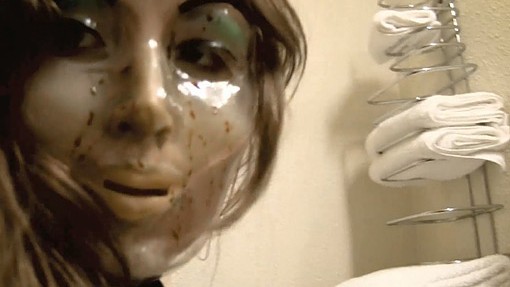
Dark. Disturbing. And deliberately off-putting. Anna Zlokovic’s “Coochie Coochie Coo” is a difficult segment to rank because it is just so icky.
Lacie and Kaleigh are two friends hoping to spend their last Halloween together before Kaleigh goes away to Yale. The two pull immature pranks while trick-or-treating around town, but just as they think they are finished for the night, they spot a mysterious house they somehow missed.
Once the friends enter the house, “Coochie Coochie Coo” turns into pure nightmare fuel. Who is this weird woman who lured them into the house with candy? What does she want? What happened to the door? As the girls stumble from room to room, the audience gradually pieces together the mystery behind the house and its collection of regressed adult babies.
Zlokovic does a great job developing the lore of her supernatural villain, known as “the Mother”, without dumping needless exposition on us. The disgusting things discovered within the house tell much of the story themselves. Milk trails. A fetus. An unusual breast pump. Everything points the girls towards a horrific revelation.
The V/H/S films often have their scariest segment at the start, and that is no different here. If “Kidprint” didn’t turn V/H/S/Halloween pitch black, “Coochie Coochie Coo” would be the most disturbing segment in the film. It also makes for an interesting companion piece to “Fun Size”, which shares many similar plot points but takes them in a very different direction. V/H/S/Halloween has some heavy hitters, but “Coochie Coochie Coo” does more than enough to stand out on its own.
16. Live and Let Dive- — V/H/S/Beyond
Radio Silence co-creator Justin Martinez returns to direct the alien-invasion spectacle “Live and Let Dive”.
Even before Beyond, aliens were pretty familiar territory for the V/H/S franchise. Aliens were included in “The Sick Thing That Happened to Emily When She Was Younger” from V/H/S, the spectacle-driven fan favourite “Slumber Party Alien Abduction” from V/H/S/2 and even in the wraparound from V/H/S/85.
For “Live and Let Dive” to work, Martinez was going to have to find a way to make it stand out. And to do this, he starts his story in the skies.
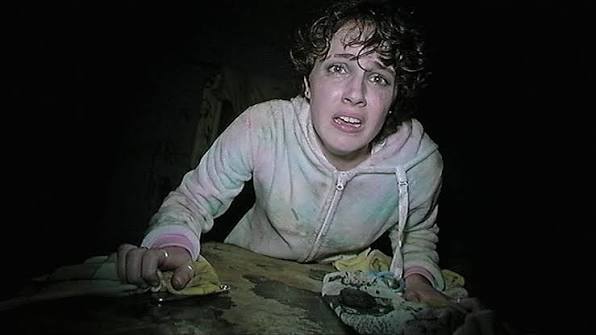
Zach celebrates his 30th birthday with his friends by going skydiving, but before they can make the jump, a strange unidentified object enters the sky. Realising the danger of staying airborne, the pilot attempts to turn back, but the alien vessel has no intention of letting them get away so easily.
The bloody massacre that unfolds as Zach tumbles back towards the ground highlights what makes the V/H/S series so great. The frantic first-person camerawork and practical gore put us for a moment in Zack’s situation, trying to make sense of what we are seeing, just as he would.
Things become more conventional once Zach lands in the orchard, but the segment still is a whole lot of fun to be had. My only criticism is that I wish the aliens looked less obviously CGI.
After the swing-and-miss of “Stork”, Beyond definitely needed another high-paced spectacle segment to keep this instalment from slipping into mediocrity. “Live and Let Dive” accomplishes this.
It also proves that the franchise still has a place for alien invaders.
15. Terror — V/H/S/94
I almost feel guilty placing “Terror” as the lowest-ranked V/H/S/94 segment (I’m not counting the frame narrative) because the truth is that 94 produced four bangers. Each segment has its own strengths, and none are a letdown, so where they get placed is more a matter of personal taste. It is almost the exact opposite problem I had ranking the segments of 85.
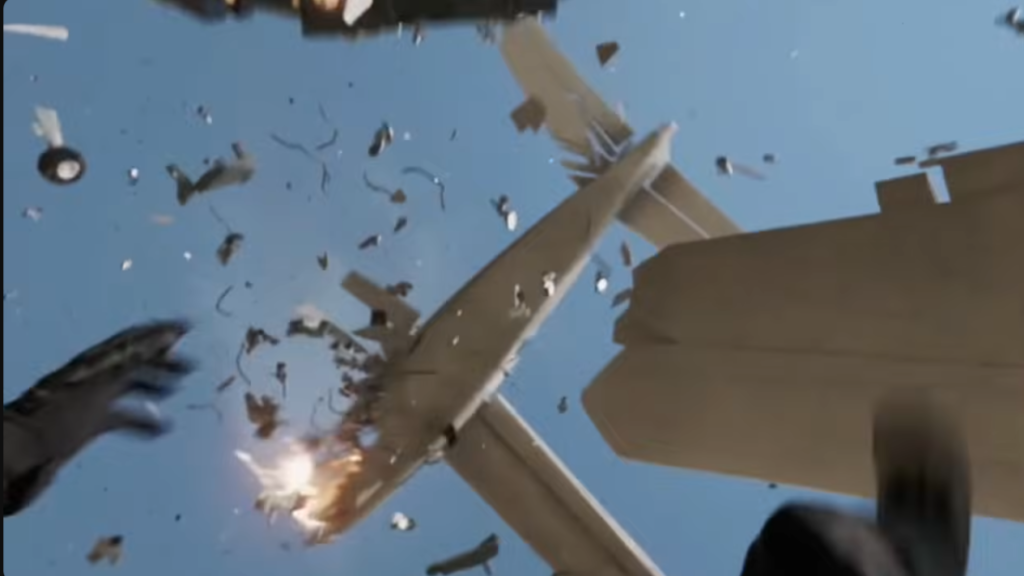
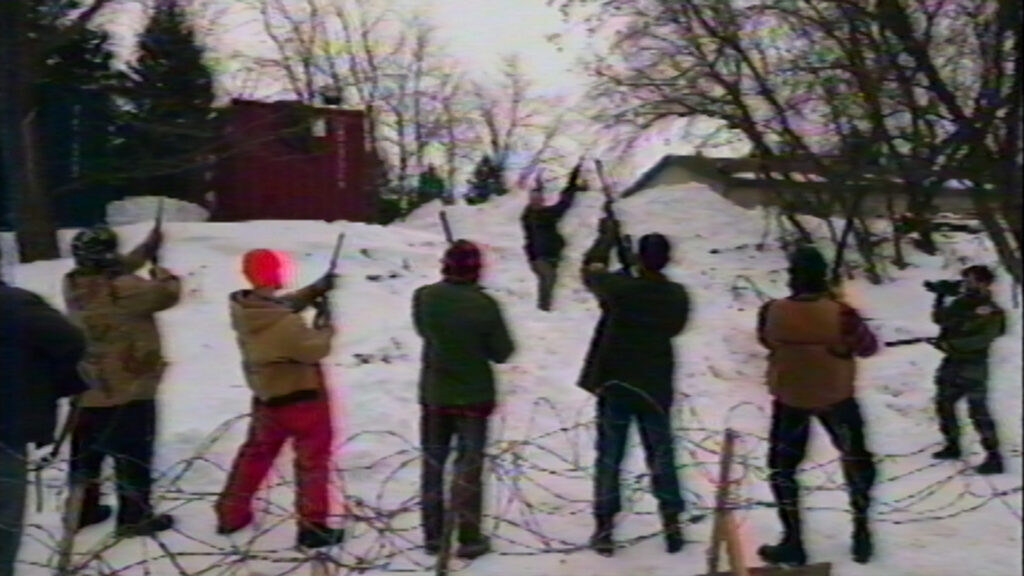
The story involves a group of white Christian nationalists in Michigan hoping to topple the Clinton administration with an act of terrorism. Their plan is to blow up a federal government building using a secret “weapon” they have acquired with immense destructive potential.
Oddly enough, “Terror” is actually a vampire story, and a really, really original one at that. The explosive blood inside a turned creature after it is exposed to sunlight is devastating to anyone nearby. We get to see the group experiment with a bunny, and the results are both horrifying and darkly hilarious.
Director Ryan Prows does a great job poking fun at what are ultimately a group of grown men playing soldier without turning them into silly caricatures. They seem like plausible people, and the deliberately low-quality look of the footage helps support that authenticity. To these men, this is serious work. And to be clear, the act of terror they are planning would be an utterly evil one. There is even mention of a daycare inside the building they are targeting.
The men discuss their plans with such assurance and confidence, yet we see how even blowing up a rabbit almost leads to disaster. So when things finally go awry, it feels like proper hubris. “Terror” is one of the franchise’s best examples of dark humour, and it ends V/H/S/94 with a bang… literally.
14. Slumber Party Alien Abduction — V/H/S/2
The fan success of “Slumber Party Alien Abduction” inspired its director, Jason Eisener, to make the 2022 film Kids vs. Aliens. But if I’m being honest, I’ve only warmed up to this one over time. On my recent rewatch, I found myself more comfortable with where I’ve placed it.
Aliens are a regular presence in the franchise, but the brilliant decision to put the camera on the dog gives it an edge over the others, including “Live and Let Dive”.
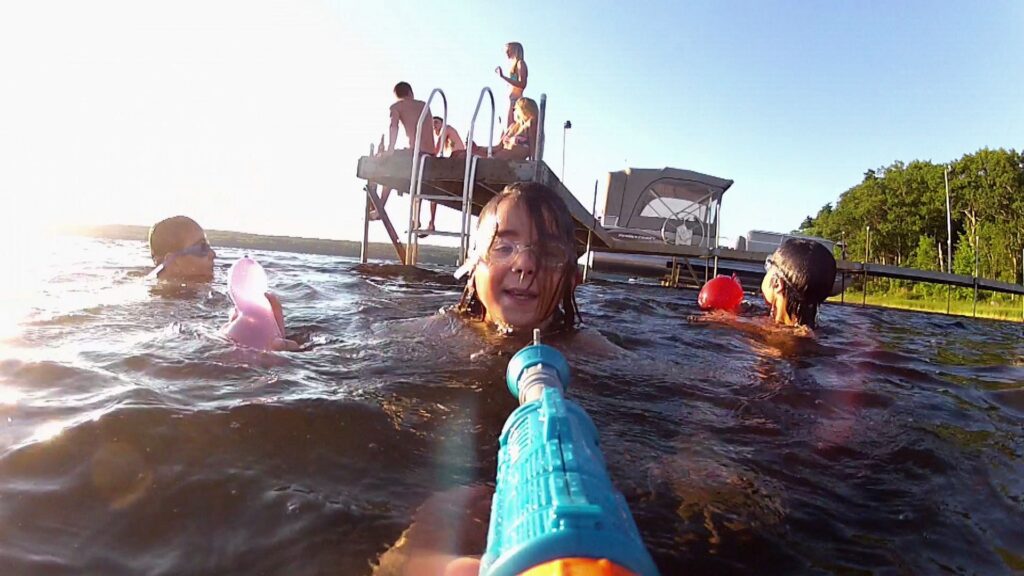
“Slumber Party Alien Abduction” shows the youthful shenanigans of two younger brothers and their friends as they team up to terrorise their older sister and her boyfriend while their parents are away for the weekend. One of the boyfriend’s revenge plans involves strapping a camera to the family dog, Tank.
Then comes a noise that shakes the whole house, followed by a flash of light revealing aliens outside the door. And considering this is ultimately a story about kids, these aliens are really, really mean.
The effects in “Slumber Party Alien Abduction” are simple but effective. I definitely prefer the aliens here to the CGI creatures in “Live and Let Dive”, even if I know they’re just dudes in rubber suits. The fact that we see them only in short flashes also adds to their sense of menace.
My only real issue with “Slumber Party Alien Abduction” is that the action can sometimes be difficult to follow. But considering how fondly this segment is regarded, especially given that it had to follow “Safe Haven”, that’s a minor gripe. The dog-camera perspective, nasty aliens and relentless escalation ultimately make this one of the franchise’s most effective uses of found footage.
But be warned, that last death is one of the saddest in the franchise.
13. The Empty Wake — V/H/S/94
Simple, suspenseful and surprisingly satisfying.
Director Simon Barrett returns to the franchise to deliver one of the V/H/S franchise’s scariest segments. The fact that it comes after “Storm Drain”, another legitimately frightening entry, and still manages to deliver is pretty impressive. No wonder I like V/H/S/94 so much.
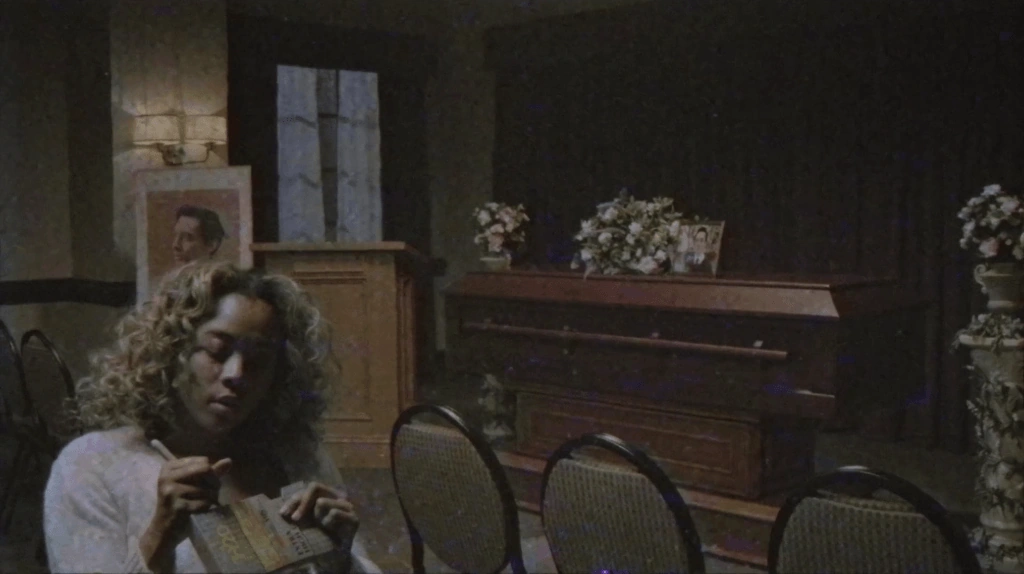
Haily, who is new to the funeral home business, is tasked by her boss with recording a wake, but nobody shows up. As the night wears on and a thunderstorm rolls in, Haily begins to hear strange sounds coming from inside the coffin.
“The Empty Wake” brings all the slow-building tension and foreboding atmosphere of a classic ghost story. It is essentially a bottle episode, taking place entirely in the funeral home and relying mostly on a single character, yet Barrett wrings an impressive amount of suspense from such a confined setting.
And when our ghoul finally does emerge from his coffin, he does not disappoint.
It is proof that you don’t always need the flashiest visuals or the biggest budget to make a good V/H/S segment. Sometimes, all you need is a good idea and the ability to execute it.
12. Home Haunt — V/H/S/Halloween
The back half of V/H/S/Halloween gets pretty dark, so the horror-comedy spectacle of Micheline Pitt-Norman and R.H. Norman’s “Home Haunt” comes as a much-needed palette cleanser.
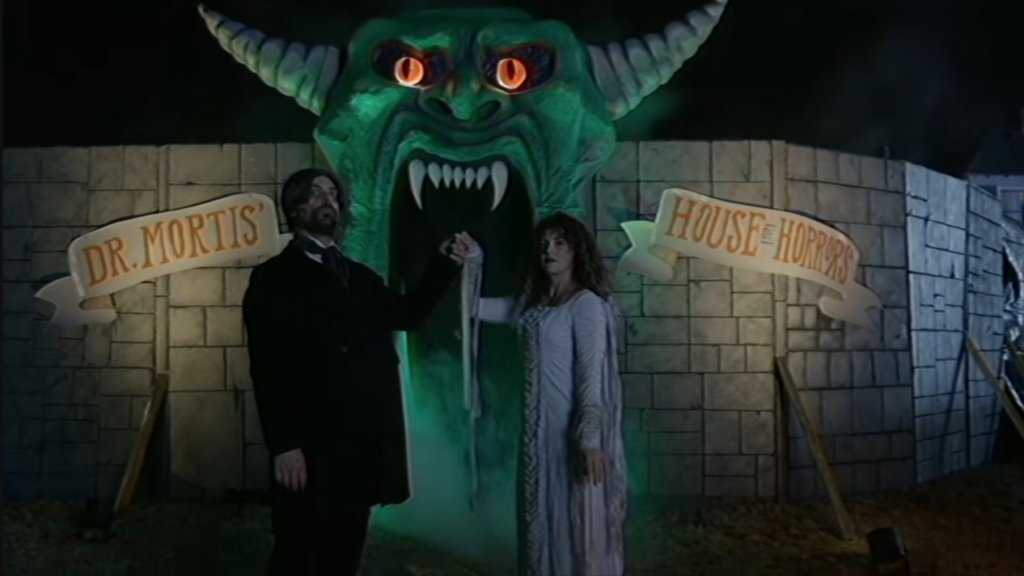
Every Halloween, Keith and his son, Zack, build a haunted house for the neighbourhood to enjoy. The attraction is clearly a labour of love for Keith, who has created a variety of classic monsters out of papier-mâché and household materials. It’s a bit dorky, much like Keith himself, and fairly tame, but it seems fun enough that if I lived in Keith’s neighbourhood, I’d totally support it.
The problem is that Zack has grown into a moody teenager who is embarrassed by the attraction and no longer wants to help his father keep the tradition alive. Things take a turn when Keith steals a vinyl record from the back room of an antique shop, believing it will give his haunted house the extra spice it needs to impress the neighbourhood and win back Zack’s interest.
But the stolen record is cursed, and after Keith plays it, his homemade monsters come to life, putting everyone in the neighbourhood in danger.
“Home Haunt” works in part because the horror is directly tied to the main character’s hubris. Keith is so obsessed with his Halloween attraction and his fictional persona, Dr. Mortis, that he fails to recognise how others perceive his creation or how his son has outgrown their tradition. His desire to keep making his attraction more frightening ultimately brings about his undoing.
Despite his flaws, it’s easy to feel for Keith in a way that isn’t always possible with other V/H/S protagonists. Deep down, he doesn’t seem like a bad guy. He simply wants to put on a good show for the neighbourhood. The fact that his efforts end up making him responsible for so many horrific deaths is as funny as it is mortifying.
The segment also benefits from the sheer variety of monsters on display: ghosts, zombies, torturers and even a witch. It’s the kind of horror-comedy spectacle that’s intended to send V/H/S/Halloween out on a high not
11. Ozzy’s Dungeon — V/H/S/99
You can accuse “Ozzy’s Dungeon” of a lot of things, but it is never boring. It is also the only V/H/S segment that has ever made me look away, but that’s because I have a quick gag reflex when human faeces gets anywhere near a person’s mouth.
The story begins as a parody of a ’90s kids’ game show. You know the kind: the ones that loved dumping green slime on kids while they attempted increasingly ridiculous athletic feats. In “Ozzy’s Dungeon”, the slime isn’t green, but plenty of the other classic characteristics of this type of show remain intact. Obnoxious host? Gross-out challenges? Little regard for the kids’ safety? Check. Check. Check. It’s all there.
Flying Lotus does an interesting job of mixing surrealist storytelling with a hyper-real garage torture chamber to create a darkly comedic revenge fantasy. While competing on “Ozzy’s Dungeon”, a girl named Donna suffers a devastating leg injury that leaves her unable to walk. A year later, the show is abruptly cancelled, but that doesn’t stop Donna’s family from kidnapping the host and getting all Jigsaw on his ass.
There is also a racial element to the story that Flying Lotus draws attention to while simultaneously leaning into it. It is rather audacious. And that’s ultimately what makes “Ozzy’s Dungeon” so compelling. It has a willingness to offend that somehow ends up being one of its most endearing qualities.
And the ending is a trip.
10. Parallel Monsters — V/H/S: Viral
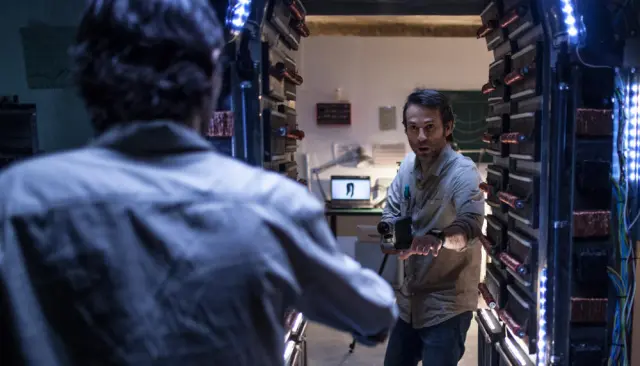
Nacho Vigalondo’s “Parallel Monsters” is easily one of the franchise’s best fusions of horror and dark humour.
The premise is remarkably simple. A man builds a portal to a parallel universe and tries to open it at the exact same time that his double has done the same thing. From their brief interaction, it appears that the two are living remarkably similar lives. Through the portal, they can see that they live in nearly identical houses, and they even discover that their wives have the same name. So they agree to spend fifteen minutes exploring each other’s worlds before meeting back at the portal. What could go wrong?
It’s too bad this segment is attached to the widely panned V/H/S: Viral, because it’s one I appreciate more every time I watch it. There’s a reason “Parallel Monsters” is often considered Viral’s one bright spot. (Imagine how it might have been received had it replaced say…“Fur Babies”…in Beyond.)
Sadly, discussions of “Parallel Monsters” doesn’t help, as the images of parallel-universe genitalia often overshadow some genuinely intelligent world-building.
I personally love how the segment cleverly cuts back and forth between the footage from each man’s camera. It means that every horror discovered in the parallel universe recontextualizes how we perceive the visitor in our universe.
Yet even as the two universes begin to diverge, Vigalondo never loses sight of the men’s parallel paths, with both ultimately suffering remarkably similar fates despite going on very different journeys. It’s smart writing that knows how to make the most of its core premise.
9. Storm Drain/ Veggie Masher — V/H/S/94
Found footage has a unique ability to scare. It is a style of filmmaking that should play with the limits of the camera frame, giving us an increased sense of unease because anything could pop into view at any second.
I feel like more than any other V/H/S segment, Chloe Okuno’s “Storm Drain” takes full advantage of this. Its unique setting and the degraded quality of VHS footage create the perfect conditions for some old-fashioned scares.
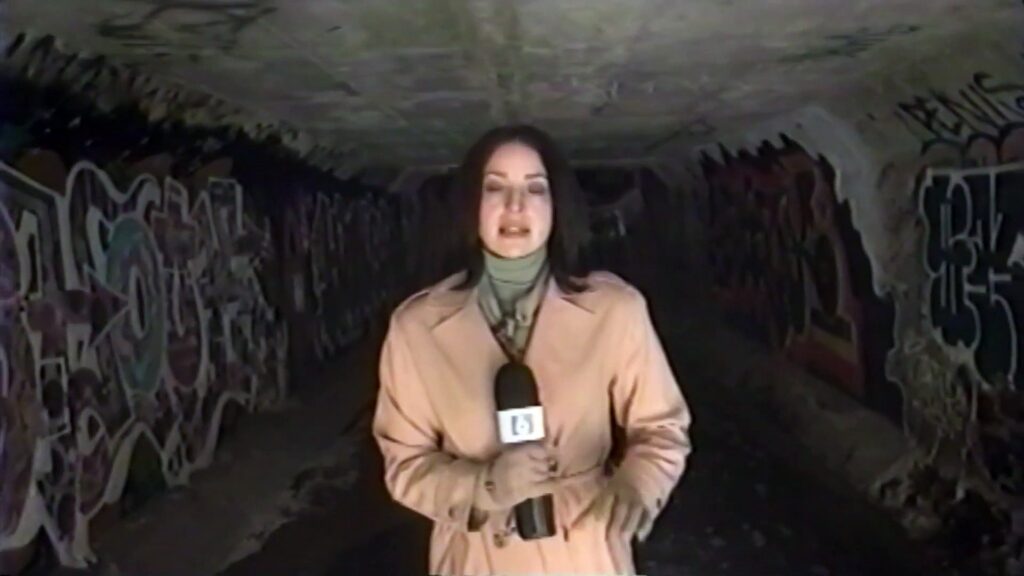
“Storm Drain” follows Holly, a reporter investigating a local urban legend about the elusive Rat Man, whose trail leads her deep into an underground drainage tunnel. I like that Holly’s misguided, ambitious optimism makes her want to turn what she believes to be a fluff piece into a story about the homeless people living within the storm drain. It gives the story a wonderful tinge of irony.
But between our reveal and epilogue comes a fun little “Slap Chop” parody directed by Steven Kostanski for the “Veggie Masher”, a machine specifically designed to obliterate vegetables. It’s played completely straight, which is the funniest thing about it.
“Storm Drain” is an interesting blend of dark humour and effective found-footage horror. It knows how to deliver scares without ever taking itself too seriously. And though it never quite gives us a Rat Man, we do get a Raatma, one of the franchise’s most renowned monsters.
8. The Subject — V/H/S/94
“The Subject” is the segment that comes after “The Empty Wake”, and I can’t think of two more different segments. While “The Empty Wake” is a simple, slow, deliberate build towards a climax, “The Subject” goes pretty much balls-to-the-wall right through to its bitter end.
But I love it.
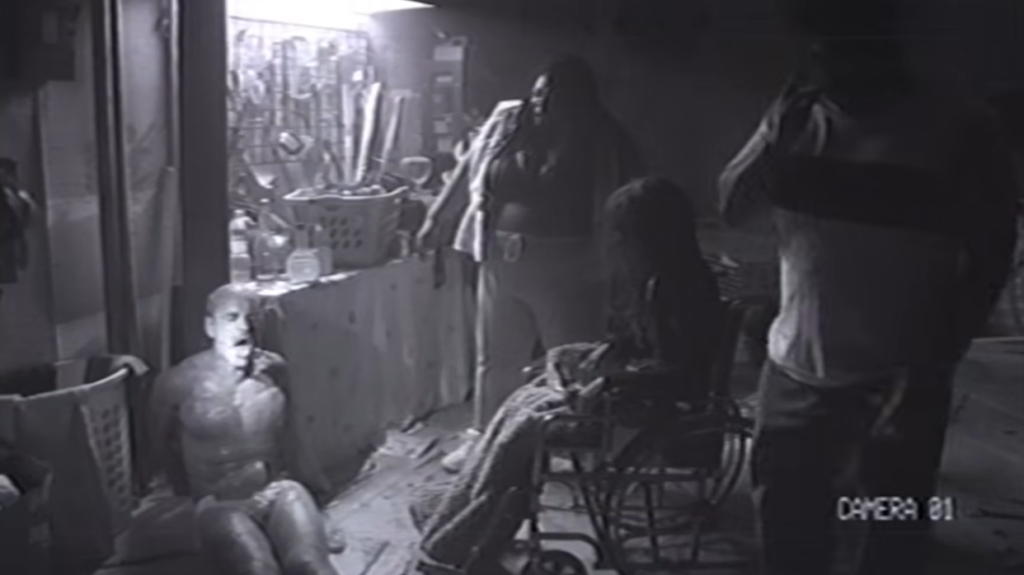
The first clip of “The Subject” shows a detached human head attached to mechanical spider legs, with chains holding the mechanical spider-man up by the head. The head is alive, but not for long. The base connecting the head to the legs suddenly bursts into flames, and as the man screams, the whole mad-science monstrosity comes crashing to the ground.
Timo Tjahjanto, one half of the team that brought us “Safe Haven”, is back to direct “The Subject”. And man, does he ever go for broke.
The story is about a mad prosthetics expert who has been abducting people in an attempt to create cyborg monstrosities that he considers the next stage of human evolution. But the story isn’t told from the scientist’s point of view. Instead, it is told through the eyes of one of his female victims.
One day, when she is activated, the police raid the scientist’s compound, and a whole series of crazy events follows.
There’s so much that works here. For one thing, we get the mystery of what our first-person protagonist actually looks like. And considering how the police initially react to her, it can’t be good. Then there’s the Subject interacting with hostile police, sympathetic police, and the other subjects, one of whom goes on a violent rampage while the others are simply heartbreaking. And then there are the police cameras, which show us what is happening on their end, and it isn’t pretty.
Of course, all of this takes place in an environment that feels grim and grimy, yet industrial and mechanical at the same time. In fact, the setting becomes almost as important to the story as the chaos itself.
I don’t really have much more to say about Tjahjanto’s increasingly insane spectacle, except that it needs to be seen to be believed. This one’s a wild ride.
7. Fun Size — V/H/S/Halloween
If this ranking says anything about me, it is that I am deeply invested in how each segment works, why I find some more effective than others, and which ones I know I will remember.
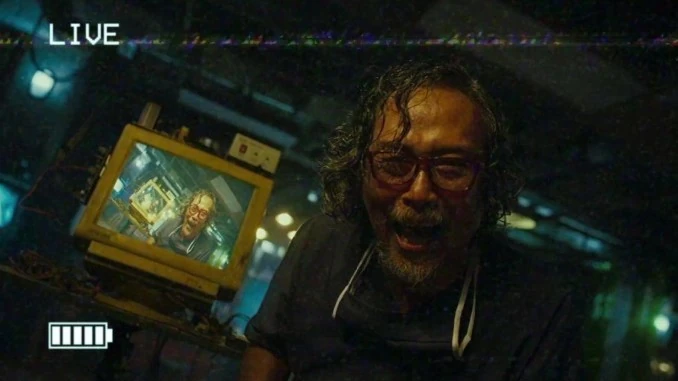
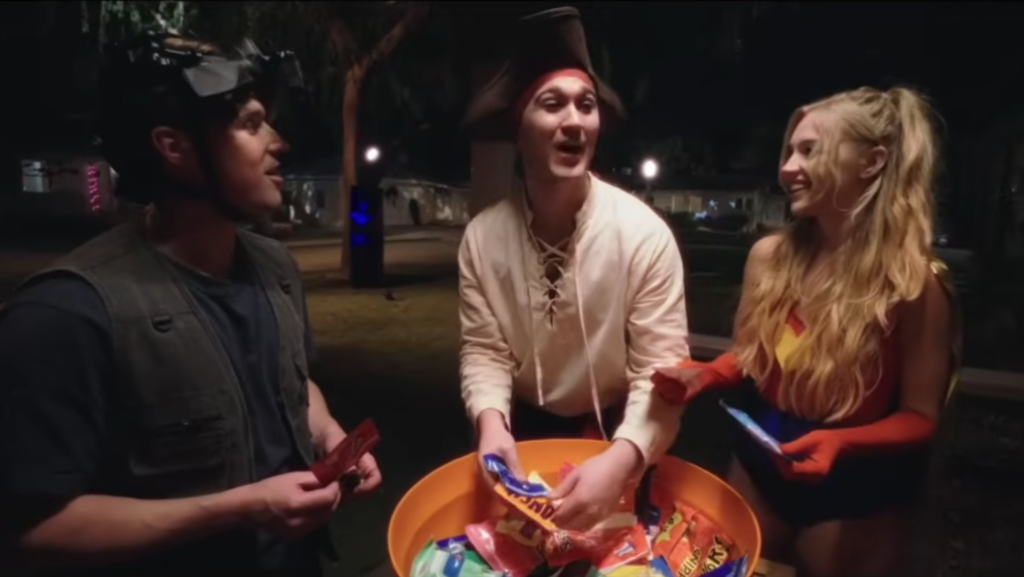
It is going to be a long time before I forget Casper Kelly’s “Fun Size”. It has the audacity of “Ozzy’s Dungeon”, but it is even more subversive, recontextualising found-footage horror into something that feels like a dark parody of itself.
The story follows four twenty-somethings who leave a Halloween party disappointed by the lack of candy. Already in costume, they decide to go trick-or-treating, eventually coming across a bowl outside one house with a sign reading “one candy per person”. Confused by the bizarre names on the candy, like Larry Find and Snippers, they open one and discover that it is shaped like a phallus. Amused by the absurdity of it all, one of them takes a second bar.
Big mistake.
A hand suddenly emerges from the bowl, pulling him and then his friends into a surreal candy factory, where they are chased by what I can only describe as a candy-company mascot operating under the same laws of physics as a Looney Tunes character.
What I love about “Fun Size” is that Kelly rarely seems to be saying, “Wink, wink, nudge, nudge… look how cleverly I am satirising found-footage horror tropes.” Instead, he drops an extraordinarily goofy slasher villain into a legitimate found-footage horror story and lets him announce, “I’m here. Deal with me.”
Well, actually, he mostly says, “Fun size!” in a squeaky voice, but you get my point. This is a legitimate slasher villain, not just a parody of one, and the threat he represents is real. It is a unique approach to horror comedy that remains remarkably respectful of the horror itself.
Admittedly, the dark factory in which the characters find themselves helps enormously, providing an iconic horror setting that acts as a counterbalance to the killer’s brutal absurdity. That is, until the setting begins to follow its own absurd rules.
Oh yeah! Fun Size even has a little sidekick to help him.
Interestingly enough, the general plot of “Fun Size” really isn’t that far removed from that of “Coochie Coochie Coo”. In both, people who are too old to be trick-or-treating are lured into an evil house, become trapped in a supernatural world, and discover that their fate has essentially been sealed. The fact that both stories appear in the same film should, in theory, make them feel redundant. Instead, their radically different approaches to horror end up complementing each other surprisingly well.
What makes the pairing work is that the two segments approach essentially the same premise, adults violating the boundaries of childhood, from different directions. The horror of “Coochie Coochie Coo” comes from the threat of permanent infantilisation. “Fun Size”, on the other hand, infantilises the environment itself, turning the group’s predicament into something resembling a Sunday morning cartoon nightmare.
That’s not something you forget.
6. To Hell and Back — V/H/S/99
When I saw V/H/S/99 at TIFF, the “Midnight Madness” curator made a point of touting “To Hell and Back” in particular, saying he thought Joseph and Vanessa Winter had done something special. When the film ended, I could hardly disagree.
Full disclosure: I am always curious about creative depictions of Hell in visual media. And “To Hell and Back”, directed by Vanessa and Joseph Winter, literally delivers on its namesake. But that doesn’t mean anything that depicts Hell gets an automatic pass. You’ve actually got to live up to the conceit.
Fortunately, V/H/S/99 really dis save its most spectacular segment for the very end, and I’m really glad they did. Its placement after the wraparound finale shows just how much faith the producers had in it.
(I know, “Gawkers” technically gets about 15 more seconds afterwards to close out with, but that barely counts for anything.)
“To Hell and Back” follows Troy and Nate, two videographers hired to film a coven of witches hoping to summon a spirit named Ukabon on New Year’s Eve. The men have their doubts that the ritual will do anything, that is until an uninvited lesser demon appears and disrupts the ceremony. In anger, the witches cast the demon back to Hell, but Troy and Nate are dragged there with it.
And so begins an improbable race against the clock to find Ukabon by midnight, knowing that’s the exact moment the witches intend to bring him to Earth, and hopefully Troy and Nate back too.
In the meantime, viewers are treated to a depiction of Hell that includes demons of all sizes, deformed humans of all shapes, terrible traps and Mabel the Skull Biter.
The segment is a horror comedy, with most of the comedy coming from the banter between Troy and Nate as they try to navigate their way through a nightmarish situation. The monstrosities they encounter along the way all look truly awful, and the Winters certainly didn’t skimp on the creature designs. Hell looks every bit as horrific as it should, yet the way these men react in this world is good for a few laughs.
“To Hell and Back” is a lot of chaotic fun and well worth the experience. In particular, I appreciate the ending and how hard Troy works to honour a pledge he probably had no intention of keeping when he made it. It just goes to show that the Winters keep developing their characters right up until the very end.
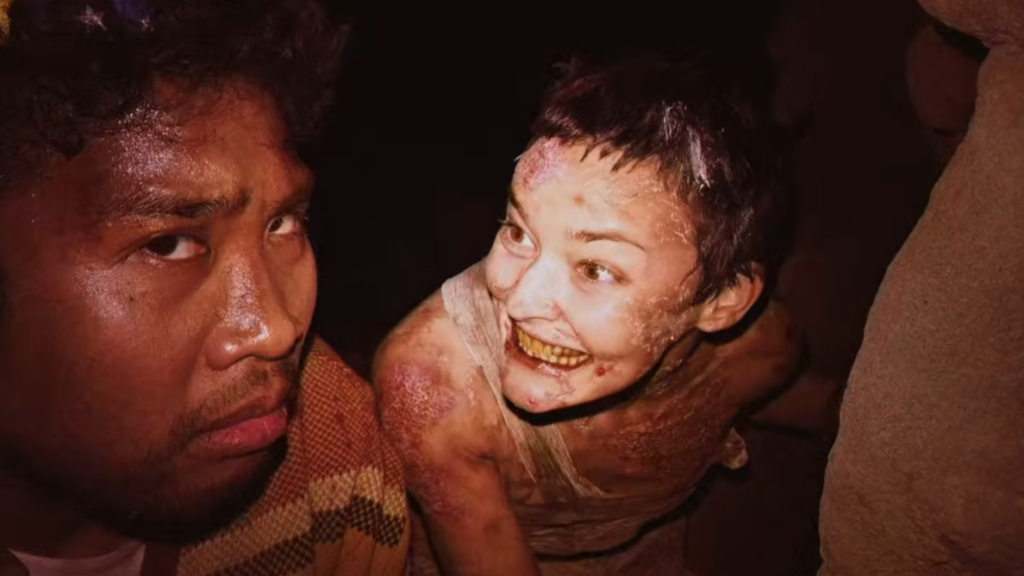
5. A Ride in the Park — V/H/S/2
Zombies were extremely popular in 2013, so if you wanted to go the zombie route, you had to have a plan to make your story stand out. Fortunately, Eduardo Sánchez and Gregg Hale had an idea that would knock this zombie segment out of the literal park.
The gimmick for “A Ride in the Park” is such simple genius that it’s a wonder it had never been done before. A cyclist with a GoPro camera comes across a bloodied woman begging for help. It turns out her pursuers are zombies, and when he goes back to help the woman, she bites him. He gets away, but it’s too late. Before long, he turns into a zombie himself.
From here on out, we get a first-person found-footage story told from the perspective of a zombie who has joined the herd and is ready to find more victims throughout the park.
“A Ride in the Park” is a whole lot of gory fun, with an undertone of dark humour. It has many of the features of the spectacle segments, but allows more room to breathe. After all, in many ways, it’s really just a slice-of-life segment whose protagonist happens to be a monster.
But Sánchez and Hale don’t completely abandon any sense of empathy we might feel for this unfortunate zombie, who started the day simply wanting to ride his mountain bike down the park trail. He retains a shred of his humanity, and that makes the whole thing all the more heartbreaking.
Its placement as the second segment in V/H/S/2 also works beautifully. It kicks off the strongest three-segment run in the franchise’s history, with “Safe Haven” and “Slumber Party Alien Abduction” still to come.
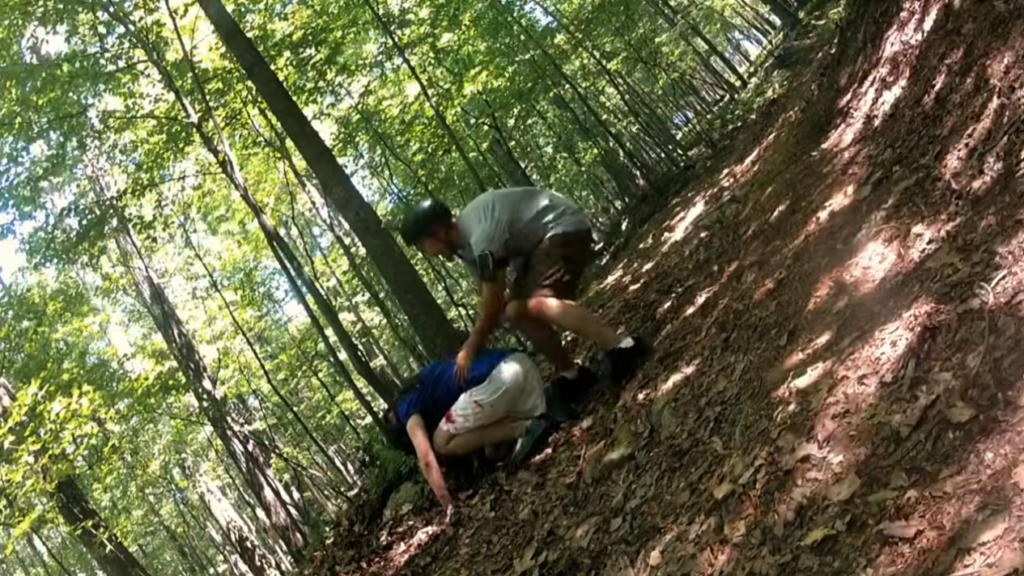
4. Kidprint — V/H/S/Halloween
I worry about what it says about me that I ranked Alex Ross Perry’s “Kidprint” so high. This is the V/H/S franchise’s darkest segment, and I’ve even seen people online argue that it crosses a line.
“Kidprint” might be the only V/H/S segment that can legitimately be described as extreme. The implications of what is happening to the abducted children are horrific, even though most of the abuse is never explicitly shown. But I don’t keep coming back to this franchise because I want it to play things safe.
It also presents a very human kind of horror, something the V/H/S franchise hadn’t really attempted since “Second Honeymoon” in the original V/H/S. Like “Second Honeymoon,” “Kidprint” toys with the audience’s expectations, using our assumptions about the characters to make the eventual reveal even more disturbing.
“Kidprint” is set in a small American town in 1992 that is dealing with a series of child and teenage disappearances. We’re also told that police have found the mutilated corpses of some of the abductees throughout the town.
Tim Kaplan, the local video store owner, has been earning extra money by making videos of children in the community whose parents want recordings to give to the police in case their child goes missing next. The whole affair is deeply uncomfortable even before any onscreen horror is shown.
The story also intuitively demands audience participation. As we follow Tim home to his wife and watch him interact with his daughters, we instinctively start looking for signs of something sinister. He’s awkward, overly optimistic, and just strange enough that his behavior could easily be hiding something. After all, for all his claims of doing a public service, he is clearly profiting from the town’s tragedy. He’s also the only one questioning the caution this year around trick-or-treating. And those tapes he is making of the kids could easily have a devious purpose in a pedophile’s hands.
So no matter how unassuming his own video document makes him seem, there still seems to be something off about this guy, even if we can’t put our finger on what.
When “Kidprint” finally does get into the horror, it does everything it can to make us squirm. It shows us older teens as victims, but interspersed in these scenes is footage of younger children being questioned by an unseen tormentor. It is a hard watch and I wouldn’t fault anybody for wanting to skip this one. In fact, I almost feel like the addition of children in the epilogue of “Fun Size” and the exploding kid in the “Diet Phantasma” segment are intentionally there to condition us for this segment.
But I wouldn’t put “Kidprint” at number four if it couldn’t stick the landing, and this one is chock-full of irony and pathos. It is a horror experience unlike any other segment in the V/H/S catalogue.
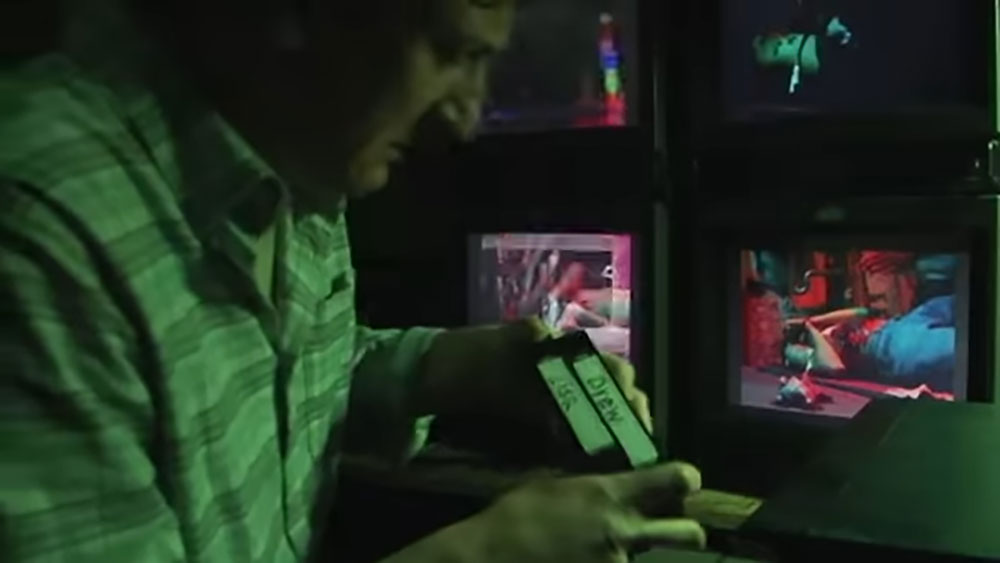
3. Stowaway — V/H/S/Beyond
The truth about V/H/S/Beyond, as with most horror science fiction, is that it’s really just horror with some sci-fi elements. “Stowaway” is the only segment in Beyond, with the exception of the frame narrative, that I would consider as much science fiction as it is horror. Why? Well, it really comes down to its premise, which is rooted in speculative science, and its treatment of aliens.
Not that there isn’t horror. The ending is particularly heavy on body horror. But the jeopardy our protagonist finds herself in isn’t necessarily because the aliens have malicious intent. In fact, much of the tension comes from the uncertainty surrounding their intentions and from Hailey’s own decisions.
“Stowaway”, directed by Kate Siegel and written by Mike Flanagan, follows Hailey, a woman working on a documentary about a U.F.O. sighting that was witnessed and reported by at least twenty people. She interviews several of the people who saw it until, one night, she sees it for herself: six lights in the sky, with one breaking away from the group and heading towards the Mojave Desert.
She sets off in the direction she saw the light travel and, to her excitement, finds and enters the spaceship.
The build-up for “Stowaway” is extremely patient and well executed. It is one of the few segments that leaves you guessing where it’s heading until very late in the game. The found-footage format adds an extra layer of authenticity, making the whole thing feel like a genuine documentary that has taken an unexpected turn.
Hailey’s own motivation is fascinating too. She’s not just somebody who wants to make a documentary; she’s a recently single mother trying to prove to herself and others that she’s capable of doing something of value on her own. She’s reckless because she feels she has something to prove.
The world-building is also pretty impressive in this one. We gain an understanding of the aliens almost solely through what we see on their ship, but there isn’t anything as visually clichéd as humans floating in pods. Instead, the film gradually reveals an alien environment that feels genuinely unfamiliar.
With “Stowaway”, Siegel deserves credit for trading horror spectacle for an intelligent sci-fi mystery and trusting that V/H/S fans will still come on board for the ride.
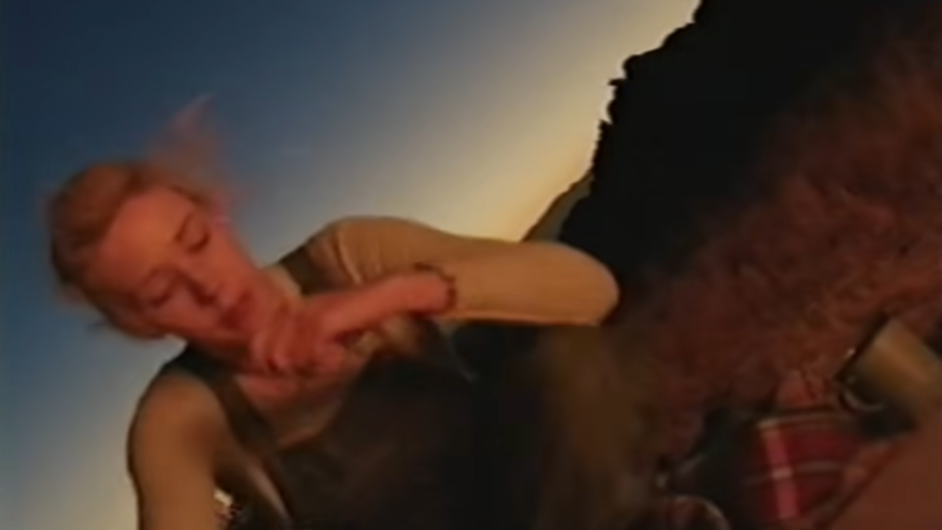
2. Amateur Night — V/H/S
Giving David Bruckner’s “Amateur Night” the next-to-top spot is not particularly original, but it’s honest. If you’re a fan of adult horror, and “Amateur Night” is very much “for adults”, then it’s possible to make a case that this is one of the best anthology segments in any horror anthology, not just the V/H/S franchise.
“Amateur Night” follows three friends experimenting with a tiny camera hidden inside a pair of glasses. Their hope is to use the technology to film an amateur porn video, so they head out clubbing, looking for any girl who might be willing to come home with them.
But moving in and out of the background of the camera is a pale, petite woman with unusually large eyes who has caught the attention of the man wearing the camera. The credits list her as Lily, but the film never gives her a name. Since “Amateur Night”, Lily has become a minor horror icon, even inspiring her own spinoff feature called SiREN, so I’m just going to call her that from here on out.
There is a rawness to the first V/H/S film that the later instalments have never quite recaptured, and “Amateur Night” feels completely at ease in this sleazy environment. It uncomfortably toys with the possibility of sexual assault before shifting into the possibility of group sex with a weird girl who has barely said a word. The whole thing is intentionally uncomfortable.
Being placed first in the anthology, “Amateur Night” has the element of surprise on its side in a way no other V/H/S segment did, not that it needs that to be considered the best. Still, it’s worth noting that the first segment of the frame narrative has an equally borderline-extreme feel to it, but nothing supernatural has actually happened in the series yet. So those watching without prior knowledge were in for a real treat.
And then there is a quick glimpse of Lily’s foot, and everything changes. Even then, “Amateur Night” remains patient in revealing what Lily really is.
Bruckner nails the casting in this one. Hannah Fierman’s Lily, for sure. She has already received plenty of recognition for the role, and I don’t feel any need to add to it. Less discussed, but almost equally important, is the trio of morally questionable bros who round out what feels like an archetypal group dynamic: the Alpha, the Jock-Stoner and the Follower. They are perfectly cast. These men feel like real people rather than characters created simply to move the story along, making it much easier to suspend disbelief and get pulled into their world.
But Lily herself is a complicated concoction of tension and dark humour. She looks vulnerable, but those whispered words of “I like you” trigger unease. Like a predator that has marked its prey. And it is this wondrous turning of the tables that makes “Amateur Night” something unforgettable.
And Bruckner’s commitment to the found-footage format is admirable. In many ways, this is found-footage horror at its best. The camera isn’t just there to document what happens; Bruckner uses the limited perspective to control what we see, what we don’t see and, most importantly, when we see it. It adds to the tension and scares that make “Amateur Night” so effective.
And let’s not forget the gradual changes to Lily’s appearance throughout the segment, continuing right through to the end and culminating in a finale that still manages to surprise.
“Amateur Night” has scares, body horror, slow-building tension, dark humour, borderline-extreme content, nudity, a found footage format that actually has a purpose and an iconic horror creature. If you are a fan of modern horror, “Amateur Night” is must-see material.
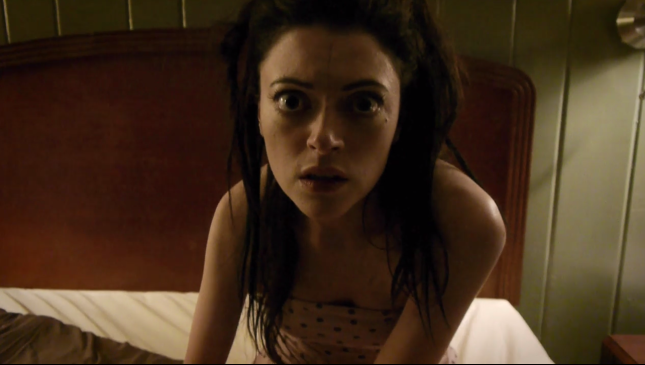
1. Safe Haven — V/H/S/2
After rewatching all of the V/H/S films, I have concluded that the most obvious pick for the number one spot is also the right one. Anyone who says otherwise is deliberately being contrarian. Do not trust them.
“Safe Haven”, co-directed by Timo Tjahjanto and Gareth Huw Evans, is not only the best segment in the V/H/S franchise, but the best segment in any horror anthology. I know that’s a bold claim, but I stand by it. It packs a feature film’s worth of ideas into a 30-minute-and-19-second segment without ever feeling rushed.
“Safe Haven” follows a four-person documentary crew who gain special permission to enter the compound of a mysterious Indonesian cult known as Paradise Gates to interview its leader. Once inside, it becomes increasingly clear that the leader, known as the “Father”, is likely abusing many of the young girls living there while maintaining absolute control over the other members of the cult.
On their way to meet the Father, the crew pass bizarre symbols, a classroom and numerous women dressed in white. So far, nothing we see or hear falls outside what one might expect to find in a compound dedicated to a strange religion, but that doesn’t make these sights any less fascinating.
When the crew arrives to conduct the interview, two members split off following separate, unforeseen incidents, one personal and the other mechanical, leaving the remaining crew member to continue with the interview. Then, suddenly, a bell rings and the Father announces that the “time of reckoning” has arrived.
And that’s when the segment delivers one of the greatest found-footage horror spectacles ever caught on camera.
There are many things that make “Safe Haven” great, but one of the most important is its use of space within the compound. The initial tour gives us a sense of the layout before the bell tolls, making the changes to these environments all the more meaningful when we see them again after the reckoning begins.
Adding another layer to the spectacle is a hidden love triangle involving members of the documentary crew, an affair that has repercussions within the larger story of the reckoning.
The reckoning itself is a wonderful mix of grounded human horror and supernatural occurrences, all of which contribute to the segment’s lore. We don’t need to understand everything the cult is attempting to accomplish, but we understand enough that each chaotic moment doesn’t feel random. This all feels like the masterplan of a lunatic being executed with horrific precision.
The use of multiple hidden cameras, one on each crew member, makes excellent use of the found-footage format. As the separated crew members struggle to find their way back to one another, we jump from one horrific situation to the next, each perspective revealing another piece of the unfolding nightmare.
It all patiently culminates in the reveal of one of the V/H/S franchise’s most revered monsters.
“Safe Haven” is the perfect fit for the V/H/S franchise. It has a strong standalone premise, a distinctive visual identity, an escalating sense of dread, outrageous horror imagery and a conclusion that feels like a complete horror experience. It also demonstrates how much story and atmosphere can be packed into a relatively short running time.
Seven V/H/S films have been released since V/H/S/2, yet “Safe Haven” remains the gold standard against which the franchise’s other segments are measured, and by a considerable margin. Honestly, they could make another nine V/H/S films and I still doubt anything would dethrone it.
But it’s the hope that some future filmmaker might recapture the thrill of watching the horrors unfold behind the walls of Paradise Gates that keeps so many horror fans returning back to the franchise year after year.