Ranking Every Season 1 Episode of
from a Modern Horror Perspective
“That’s the signpost up ahead!”
Most of us already know where that next stop goes.
The Twilight Zone aired for five seasons between 1959 and 1964, but its influence still has echoes in modern horror today. Creator Rod Serling was a master of dark irony, often using the show as a platform for sharp social commentary.
The show was not strictly a horror anthology, though that’s how it’s often remembered. In reality, the only consistent thread was that something unusual or uncanny was bound to happen. In truth, the show was fairly eclectic, with Serling often revealing a sentimental side. Some episodes of The Twilight Zone contain no horror at all. Yet, people often remember The Twilight Zone as a horror anthology because so many of the show’s most iconic episodes scared the bejesus out of us in ways that last a lifetime.
Another common thread in the show was its deep interest in psychological themes. The scripts—mostly written by Serling, Matheson, and Beaumont—explored fear of the unknown, paranoia, lingering trauma, moral dilemmas, and the fragility of identity and reality.
I still have fond memories of The Twilight Zone as a child. I was nine when the 1980s film came out and eleven during the first attempt to remake the show for a new generation. I remember both, but not nearly as well as those episodes from the original series that aired regularly in syndication during the late hours. Today, those homages from the eighties feel dated, especially when compared to the original series which was loaded with near-timeless stories often brought to life by prominent, capable actors.
But it’s only watching these episodes now, as an adult, that I truly get a sense of The Twilight Zone’s lasting legacy. So I thought it might be worthwhile to go through the seasons in order to rank each episode from the perspective of both a cinephile and a fan of modern horror.
Of all the seasons of The Twilight Zone, season one is generally considered the best in terms of consistency and quality. It doesn’t contain many of the series’ most iconic episodes, but it definitely contains the most underrated and underappreciated episodes.
Watching these episodes in the order they chronologically aired makes you appreciate how much they often play off each other. An episode like “A Stop at Willoughby” might reinforce the real-world psychological delusions of “Nightmare as a Child” while simultaneously subverting many aspects of “A World of Difference”. In fact, most of the episodes have a conceptual counterpart that tries to run an idea in a different direction.
In my opinion, thirty-four of the thirty-six episodes are good enough to justify their existence. (I really don’t think it was a coincidence that the two duds were buried deep within the back half of a long inaugural year.) And a few of the episodes I put near the bottom of this list, like “Walking Distance” and “I Shot an Arrow Into the Air”, are considered fan favourites.
So let’s go into that “middle ground between light and shadow, science and superstition”.
“A dimension not only of sight and sound but of mind.”
“Your next stop, the twilight zone.”
NUMBER THIRTY-SIX
S1.E35 ∙ The Mighty Casey
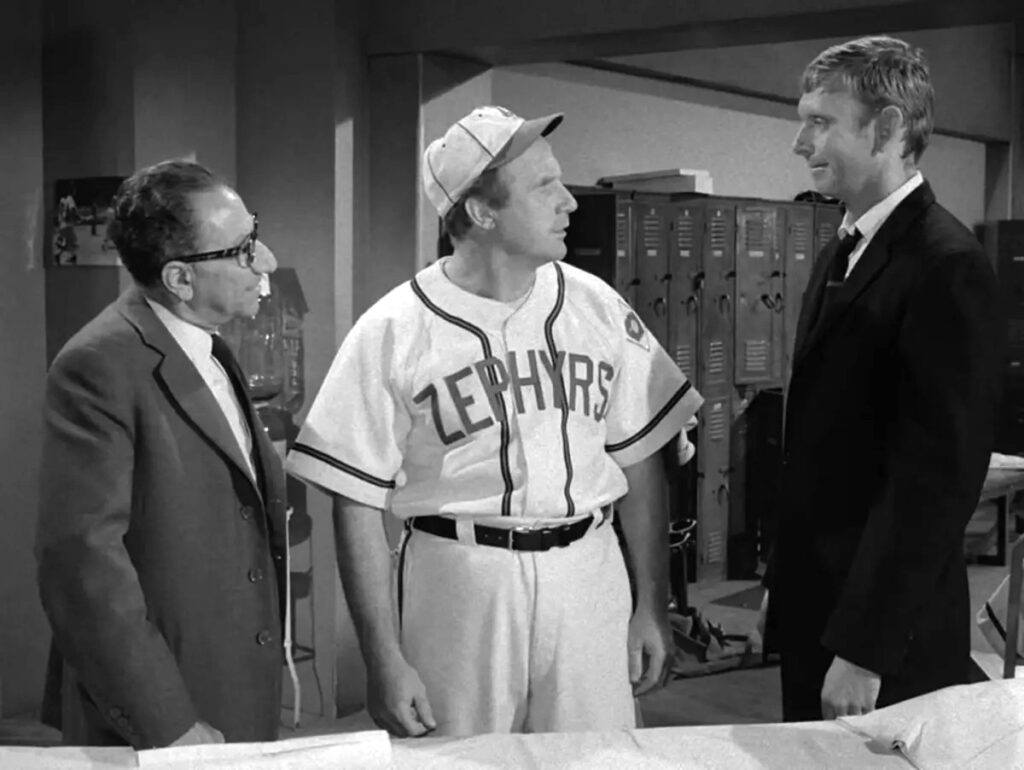
A troubled episode marred by a tragic production history, “The Mighty Casey” was doomed long before it aired. Paul Douglas, originally cast as team manager “Mouth” McGarry, died of a heart attack the day after filming. Rumor has it that his declining health is visible in his performance, prompting Rod Serling to request a reshoot. Serling didn’t want to broadcast what could be perceived as the final moments of a dying man. When CBS refused, he personally funded a reshoot with Jack Warden stepping into the role.
But let’s be honest: no amount of reshoots was ever going to save “The Mighty Casey”. The episode’s goofy premise and forced comedic tone were baked in from the start. In fact, the only redeeming quality here is Jack Warden himself.
The plot follows McGarry, the manager of a hopelessly bad baseball team. With his job on the line, he’s desperate for anything that can turn the season around. Enter Casey, a mysterious new player introduced by a peculiar caretaker, Dr. Stillman. Casey turns out to be a robot—capable of pitching that is beyond what a human should be able to do.
The episode is absurd, but it never manages to turn that absurdity into anything meaningful. One might be tempted to read it as a satire on the dehumanization of professional athletes, but even that interpretation feels like a reach. At least the other season one comedic misfire, “Mr. Bevis”, has a clear thematic direction. “The Mighty Casey” never seems to know what it wants to say.
Fun fact, albeit a grim one: Robert Sorrells, who played Casey, was sentenced in 2005 to thirty-two years in prison for the murder of two people.
Frankly, the legacy of The Mighty Casey is as much of a mess as the episode itself.
NUMBER THIRTY-FIVE
S1.E33 ∙ Mr. Bevis
By the time you reach episode 33 of season 1, it starts to feel like The Twilight Zone might be running low on fresh ideas. The previous episode, “A Passage for Trumpet,” struggled to stick its landing — but “Mr. Bevis” outright crashes.
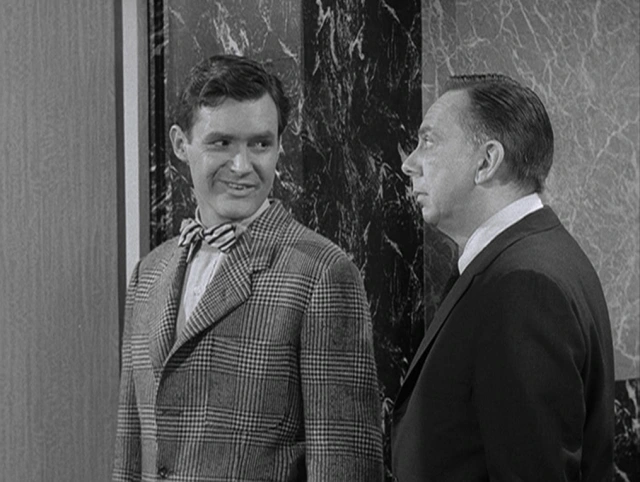
Orson Bean portrays James B. W. Bevis, an eccentric odd-ball who has a rough day. After losing his job, watching his car get wretched, and getting evicted, James gets a visit by a guardian angel offering him a do-over.
It’s clear what Serling was aiming for here. “Mr. Bevis” is essentially a subversive counterpart to “A Nice Place to Visit,” an episode that will be discussed much, much further down this list. It replaces that episode’s immoral protagonist with a kind-hearted one, a devil with an angel, and a world where every desire is fulfilled with one where individuality is constrained by a divine force.
Humour isn’t foreign to The Twilight Zone, but this is the first episode that leans more heavily into slapstick and straight-up comedy than the show’s trademark dark irony. Serling wants us to sympathize with Bevis as a charming misfit, but his bumbling incompetence left me wondering if at least some of his troubles aren’t entirely undeserved.
NUMBER THIRTY-FOUR
S1.E15 ∙ I Shot An Arrow Into the Air
Look, I know there are people that really like this episode. On most lists, this episode will be ranked much, much higher. Some people even consider this to be one of the best episodes of season one. But for the life of me, I can’t figure out why.
One common issue with The Twilight Zone is that the stories are often too ambitious for the constraints of a 25-minute format. “I Shot an Arrow into the Air” suffers from the opposite problem—its plot is too thin. It’s an episode so padded with filler that even Rod Serling’s mid-episode voice-over can’t inject energy into the proceedings. Hell, the first three minutes is even wasted introducing us to characters at NASA headquarters that are never even circled back to.
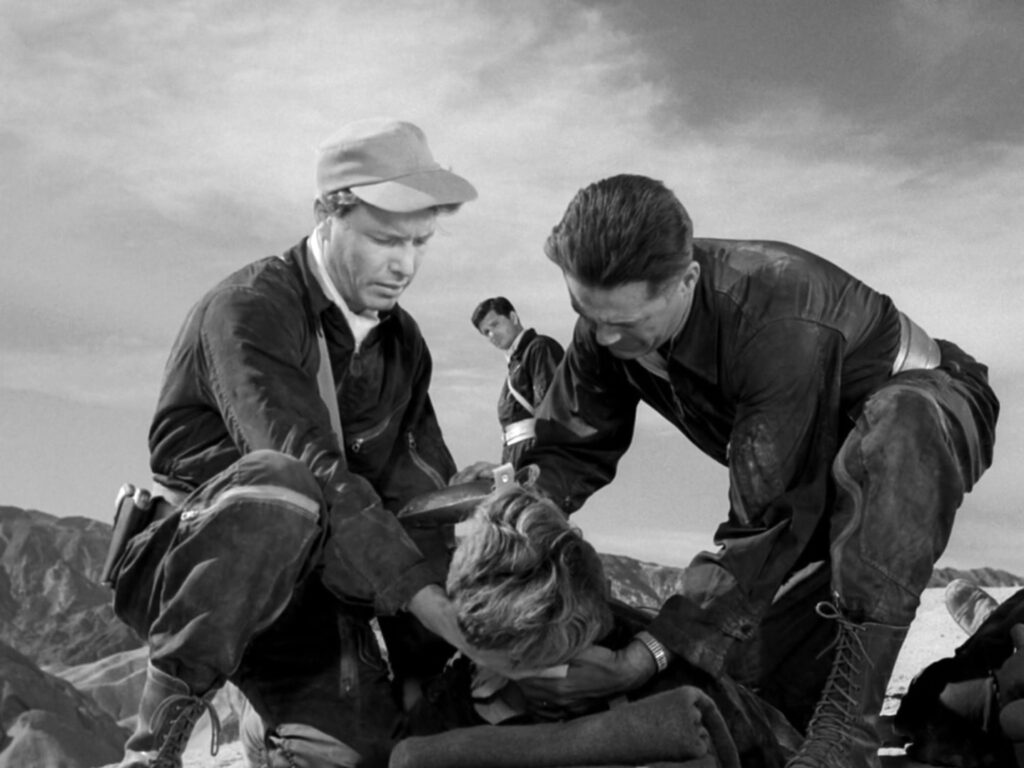
The story follows a shuttle carrying an eight-man crew that crash-lands on what appears to be a barren meteor. Four crew members die in the crash, and a fifth is critically injured. As resources dwindle, one surviving crewman begins to prioritize his own survival.
There’s a moment where the episode hints at a more intriguing direction—and it could have explored paranoia, turning an apparent hero into a villain. Unfortunately, the episode lacks the imagination to pursue this path. Instead, it settles into straightforward moralizing, and its twist ending, especially coming right after “Third from the Sun,” is just too predictable.
NUMBER THIRTY-THREE
S1.E10 ∙ Judgement Night
Conceptually, this one should have been a winner. It has time loops, doppelgangers and depictions of Hell, all set on a British cargo ship during World War II.
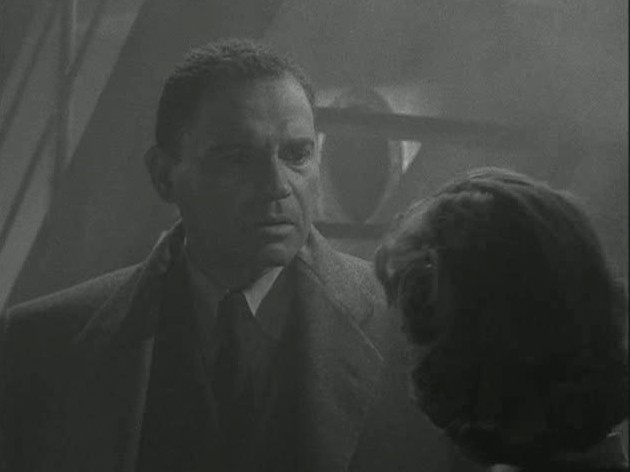
The story starts out simple enough. Carl Lanser is a German passenger on a British liner, but he doesn’t remember how he got there and details about the last few years of his life are hazy at best. When exploring the boat, he overhears the other passengers on board talk of the threat of German U-boats in the water and he becomes triggered into a terrified rage. He’s German, but his presence on the boat suggests he’s not a Nazi. So then, why is he so familiar with a U-boat’s capabilities? And why does he feel an encounter with a U-boat is imminent?
There are some memorable moments in this one, like the passengers that stare blankly at Lanser as he pleads for them to abandon the ship or the woman screaming behind a pothole while a fire rages before her.
But the episode’s pacing is slow, the narrative clunky and Nehemiah Persoff’s tormented protagonist just isn’t interesting enough be an anchor. The potential was there, but for whatever reason…this one just doesn’t sit like it should.
NUMBER THIRTY-TWO
S1.E32 ∙ A Passage for Trumpet
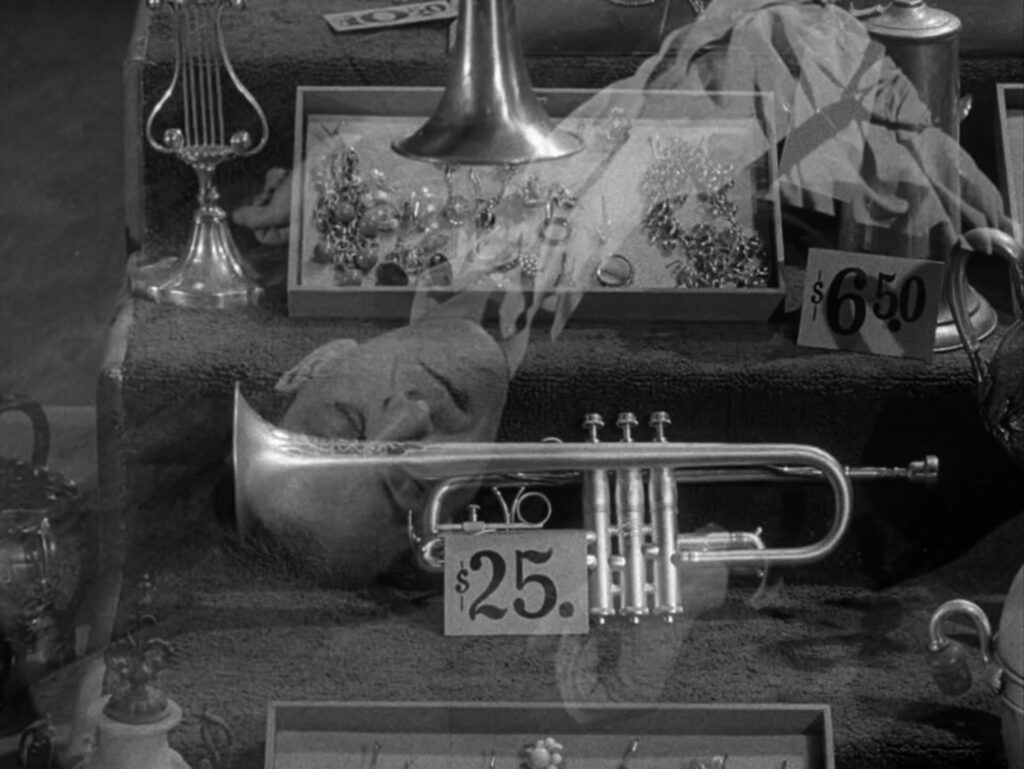
Quite a few episodes of The Twilight Zone have a jazzy soundtrack, but the music in this episode about a suicidal trumpet player is easily the best, You can hear emotion is some of the trumpet solos.
Jack Klugman delivers an emotional performance as Joey Crown, a musician that has burned a lot of bridges because of his binge drinking. Joey is an alcoholic and the booze has left him with next to nothing. Then one afternoon, Joey throws himself in front of a truck. Soon after, Joey finds himself in limbo, living in a world where nobody can see him.
Some of Serling’s dialogue in this episode is pure poetry. Joey is certainly flawed as a protagonist, but Klugman plays him in a way that keeps us empathetic to his plight. And I like that Joey doesn’t automatically despise his new reality.
I would have liked this episode more if it was extended another few minutes to help us better understand what leads Joey to his final epiphany. As is, “A Passage for Trumpet” feels like it is missing a key piece to the story.
NUMBER THIRTY-ONE
S1.E26 ∙ Execution
The best visual in “Execution” comes moments after Serling’s opening monologue, when the shadow of a hanging man disappears, leaving behind only the shadow of the empty rope.
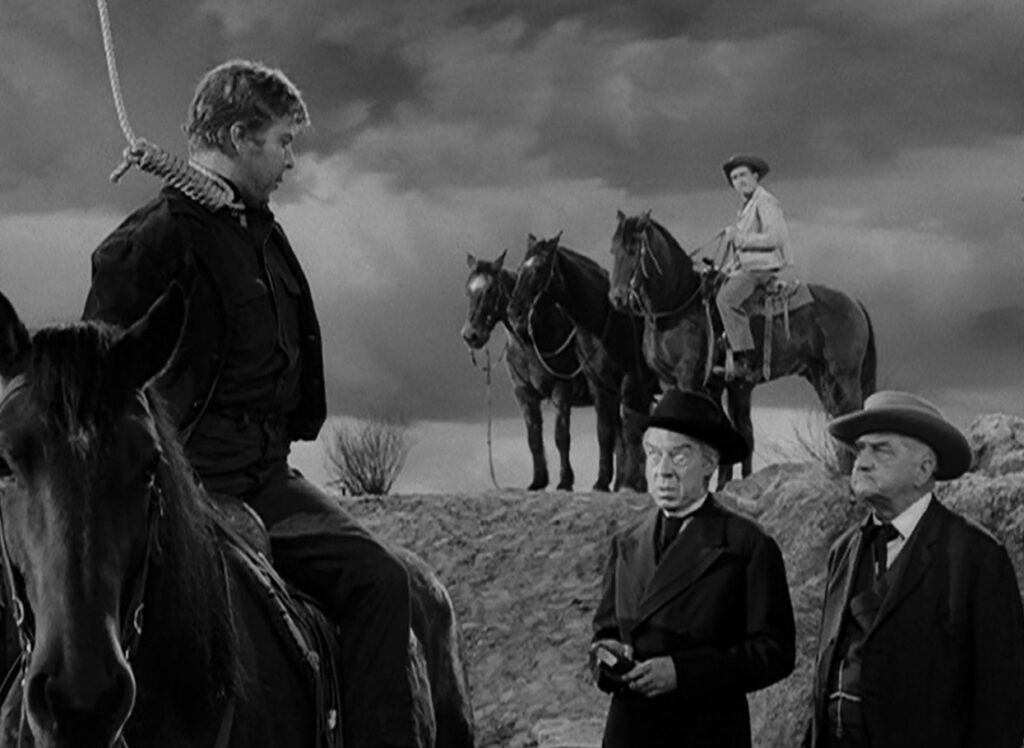
Joe Caswell, played by Albert Salmi, is snatched by a time machine the moment before his neck was about to snap. He is brought eighty years into the future, but the professor who randomly brought him through time understands that the rope burns around Caswell’s neck are too significant to overlook.
There are good moments in this episode, like when Joe discusses being born in poverty in his world as dog eats dog. Then there are moments when the writing lapses, like the professor choosing to get into an argument about justice with a known serial killer and then outright telling him he intends to send him back to the rope.
And I can’t say I’m a big fan of the way this episode ends. The impact of Caswell’s demise is diminished for the sake of an extra layer of irony that carries little emotional weight.
But you gotta hand it to the casting director. Albert Salmi looks the part of a killer—of course I might just be saying that cause I know Salmi actually did end up killing his estranged wife thirty years later. Hey, that’s the second time I mentioned that an actor on the show ended up being an actual murderer.
NUMBER THIRTY
S1.E17 ∙ The Fever
The first sixteen episodes of The Twilight Zone get the series off to a strong start—so much so that even the weaker entries don’t seem that terrible. Even I will admit that “I Shot An Arrow Into the Air” and “Judgement Night” have a certain respectability to their tone.
Then along comes “The Fever,” to finally show us just how goofy some of the lows can get.
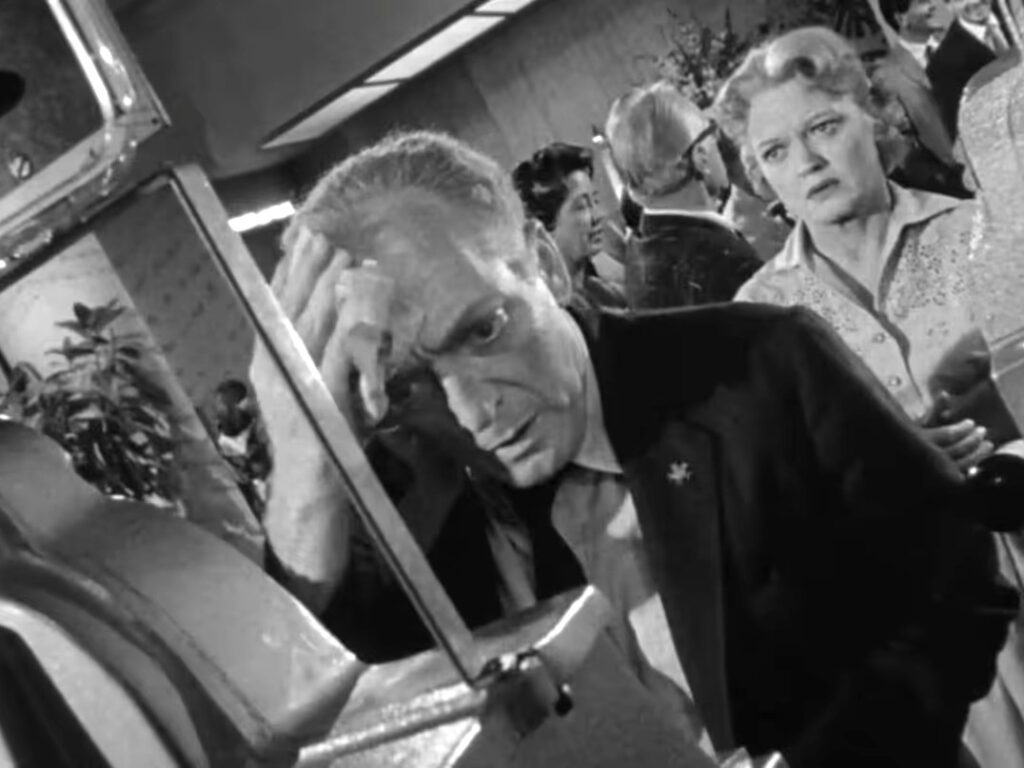
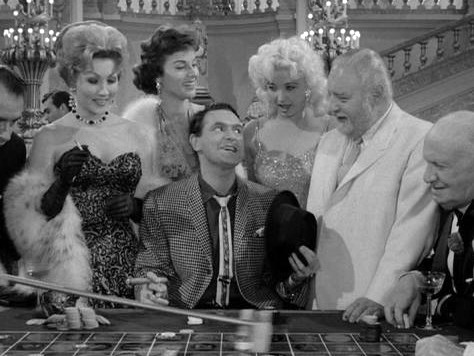
Franklin Gibbs finds himself in Las Vegas after his wife wins a free trip. Though he’s morally opposed to gambling, he’s coerced into taking a free pull on a slot machine—and hits the jackpot. From there, things spiral downward.
This episode carries a certain unintended campy charm that adds entertainment, so I don’t consider it a total misfire. The mysterious voice calling Franklin back to the machine manages to simultaniously be both eerie and hilarious, and the ending is gloriously absurd. The contrast between Everett Sloane’s anguished performance as Franklin and the grinning tormentor creates a jarring tonal clash, turning the episode into more of a surreal dark comedy than the psychological thriller it was striving to be.
And while I appreciate Serling’s critique of slot machines—I’m not a fan myself—the episode’s simplistic portrayal of gambling addiction ultimately weakens its message.
NUMBER TWENTY-NINE
S1.E5 ∙ Walking Distance
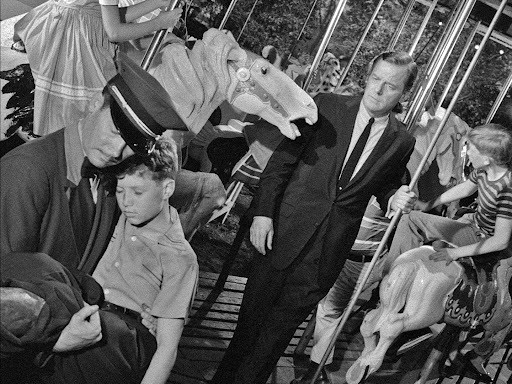
I was surprised to learn that many people consider this episode to be one of the best in the whole series when, for me, it was the first episode I found disappointing. And from what I’ve read, so did Serling.
Thematically, this one should be a winner. A man, Martin Sloan, goes back to his childhood town and gets transported 25 years into the past—but it sadly becomes increasingly apparent that he just doesn’t belong. The highlight comes from a conversation between the adult Martin and his father. The two men are similar in age, but Martin’s father, seeing his son has become so lost, still offers advice in a fatherly way. Unfortunately, this is the only part of the story where characters behave in a way that makes any sense.
My problem with this episode is that Martin’s character behaves so broken by his mid-life crisis that the story loses any potential at subtlety. Nearly all Martin’s actions either are too intense or too desperate to be believable. “Walking Distance” has a lot of artistry in the story’s direction, but it heightens drama at the expense of logic and realism.
NUMBER TWENTY-EIGHT
S1.E25 ∙ People Are Alike All Over
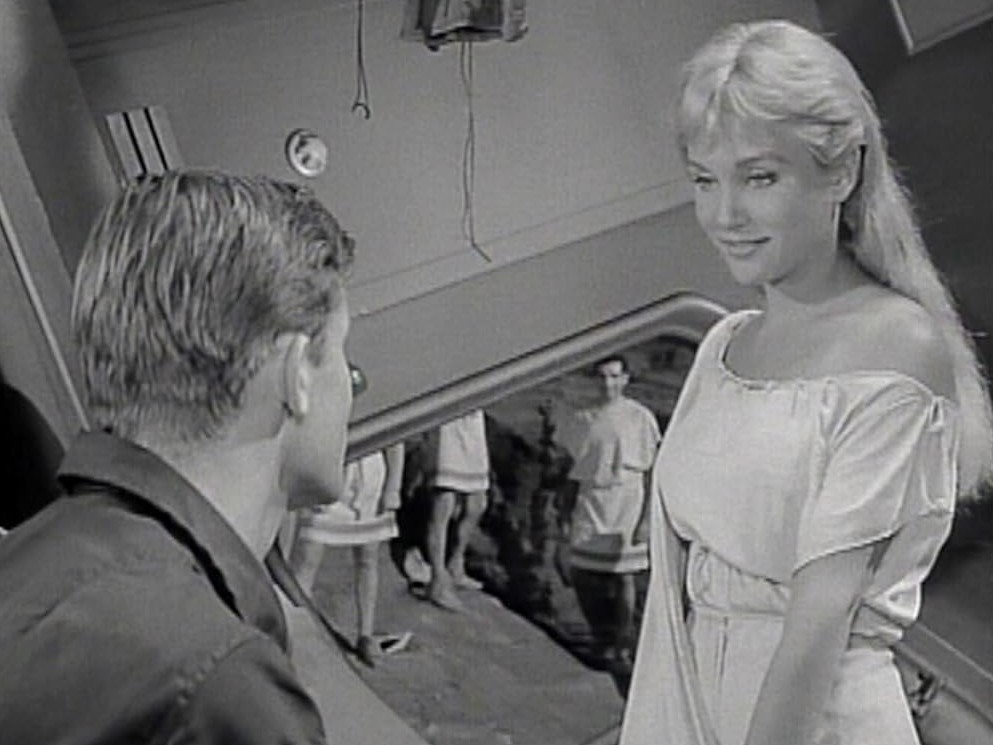
This episode has toga wearing martians, so yeah…it’s one of the goofier episodes. But it’s not all bad. (In fact, from this point on, I’d say all of the episodes on this list are really good.)
The concept is simple. Two astronauts embark on a mission to Mars. One, Marcusson, is a trained optimist and seasoned spacefarer. The other, Conrad, is a brilliant but cynical scientist chosen solely for his expertise. On the eve of their journey, Marcusson shares a provocative theory: if intelligent aliens exist, they would likely resemble humans—not just in form, but in nature.
Marcusso’s theory will be tested when the rocket crashes on Mars. Turns out, Mars has life—but what will it be like?
This episode is fondly remembered by many for the strength of its ending. But for me, the most haunting moment comes just after the crash, when a fatally injured Marcusso pleads with a terrified Conrad to open the door so he can meet the Martians before he dies—only for Conrad to refuse. The tension created by this scene, as we wonder if Conrad’s cowardness could be justified—and how these expectations get subverted—that is what will stay with me.
NUMBER TWENTY-SEVEN
S1.E27 ∙ The Big Tall Wish
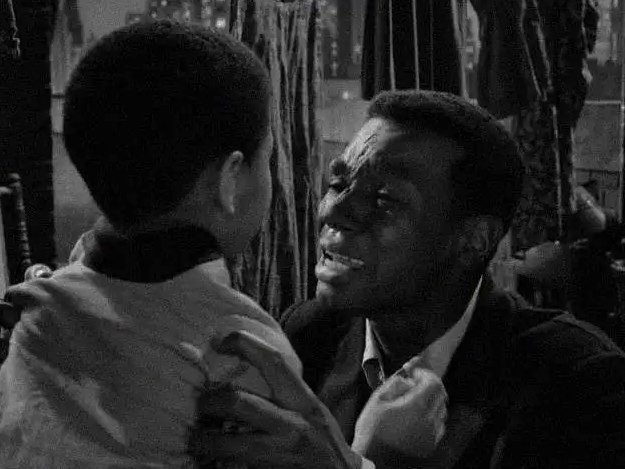
Bolie Jackson is an aging boxer whose best days are behind him. While banking on his comeback, Bolie has made friends with a six-year-old boy who believes in magic and wishes.
Despite winning awards and accolades for its nearly all black cast, this episode is not a fan favourite…but before you cry foul, understand that this episode about a boy with the power to make a wish that can change fate does not feel all that twilight zone-y. If this episode is overlooked, it’s mostly because it’s one of the more sentimental episodes.
But it’s also an episode that is smarter than it has any right to be, serving as an allegory of the conflict between black youth who wish for the power of change and the old cynics who have already been too beaten down by the world as it is.
The cinematography during the fight sequence is impressive and Ivan Dixon’s performance is one of the best in the series. Had there been a touch of horror or a satisfying Twilight Zone twist, this might have been considered a classic.
NUMBER TWENTY-SIX
S1.E13 ∙ The Four of Us are Dying
This is an unusual episode, even for an already weird show.
Sterling tells us in the opening monologue about Arch Hammer’s unique ability to change his face to look like somebody else. When we first meet Hammer, we are told that he has accomplished very little in his life, but now he has a plan to use his gift to his benefit.
Arch has concocted a plan to impersonate dead people for his personal gain. There is a steamy scene between Ross Martin and Beverly Garland that comes way too early because, unfortunately, nothing else in the episode can measure up. Arch’s plan to win the girl by pretending to be her lover returned from the dead is extremely dubious.
Four different actors portray the protagonist and each receive substantial screen time. This makes Arch Hammer a challenging figure to use as the narrative anchor. And the lack of connection between the storylines leaves the episode feeling somewhat disjointed.
But wow does that claustrophobic cinematography help heighten the drama.
NUMBER TWENTY-FIVE
S1.E3 ∙ Mr. Denton on Doomsday
Before I started this project, I watched an original promotional film that went out to potential advertisers explaining what The Twilight Zone intends to be and Serling, for whatever reason, completely spoils this episode.
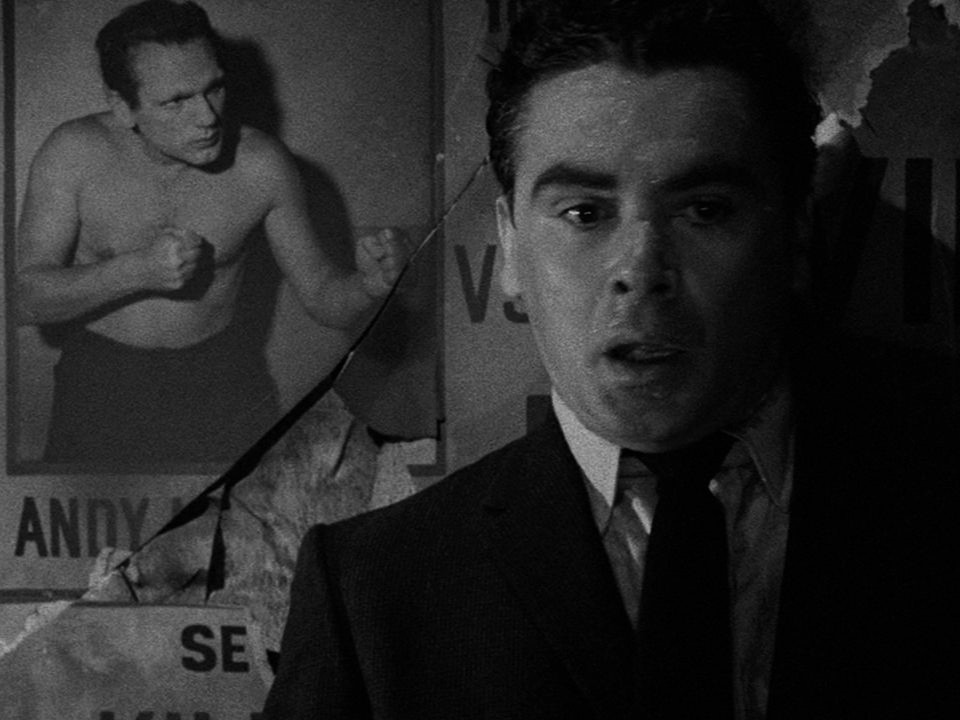
This one takes place in the Old West. A town drunk finds a gun that keeps accidentally going off at opportune times, making him appear to onlookers like a sharpshooter. But these freak chances of fate draw the attention of other gunslingers hoping to prove that they really are the fastest draw around.
The plot sounds comical, especially the way Serling tells it in the promo, but the actual episode contains a lot of drama. Our protagonist has a past that makes this newfound attention all the more unsettling. From a modern perspective, the story can be seen as a commentary on how toxic masculinity, with its emphasis on dominance and emotional repression, can ultimately lead to self-destruction.

NUMBER TWENTY-FOUR
S1.E18 ∙ The Last Flight
The strength of this episode lies in its intriguing premise.
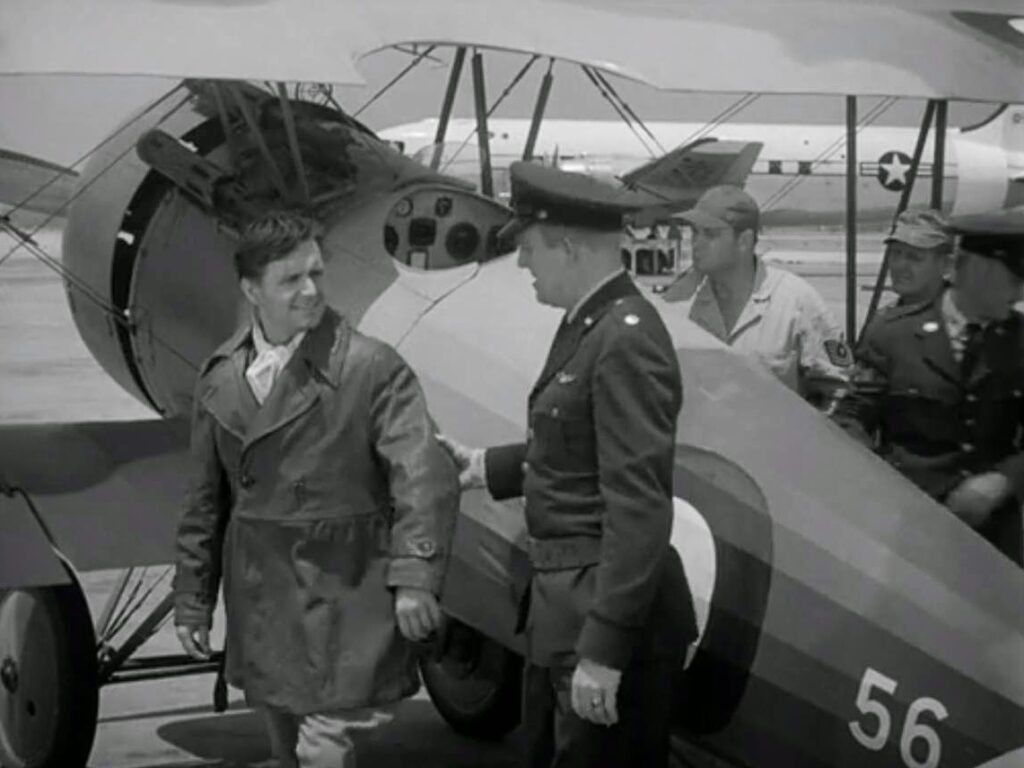
Lt. William Decker, a British WWI pilot, mysteriously lands at a modern American air force base in France—forty-two years in the future. The real turning point comes when Decker mentions a name that strikes a chord with the American Major General questioning him: Alexander Mackaye. The General reveals that Mackaye, now a high-ranking Vice Air Marshal, is scheduled to inspect the base. But Decker, who once flew patrols with him, insists that Mackaye is dead.
While watching, I feared that this episode might lose its impact by overindulging in sentimentality. Instead, the compelling drama and a steadily unfolding narrative ensure the emotional beats land. Decker’s final epiphany unfolds organically, and the script demonstrates a notable maturity in the writing—showing that The Twilight Zone doesn’t always need to rely on a twist at the end to deliver a powerful story.
NUMBER TWENTY-THREE
S1.E24 ∙ Long Live Walter Jameson
“Long Live Walter Jameson” is another fan favorite—an intriguing exploration of the consequences of immortality. The story follows a protagonist whose compromised morals add complexity to his eternal life, raising compelling questions about identity, ethics, and the cost of outliving everyone around you.
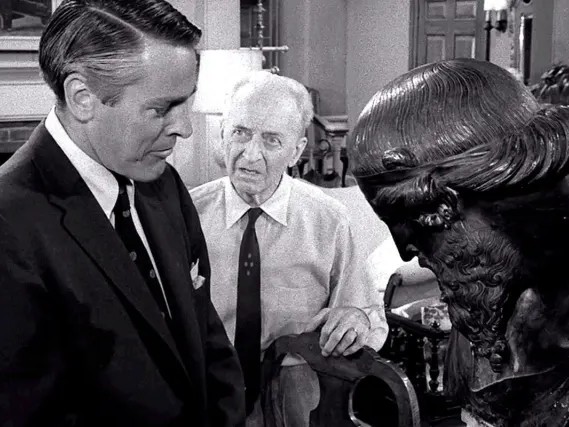
Walter Jameson is a history professor whose lectures are so vivid, his students joke it’s as if he actually lived through the events he describes. But after twelve years, his colleague and friend Sam Kittridge begins to suspect that there’s more to Walter than he’s letting on.
I might have ranked this episode higher had it aged better. It is hard to say whose attitude is more chauvinistic: Jameson or Kittridge. Either way, it’s hard not to feel for Susanna— Jameson’s love interest and Kittridges’s daughter. I also question the motives of some characters. After all, you’d think after two thousand years, Jameson would have learned to handle certain situations with a bit more finesse.
Still, the horror of the ending stands out as one of The Twilight Zone‘s most haunting and unforgettable moments.
NUMBER TWENTY-TWO
S1.E1 ∙ Where Is Everybody?
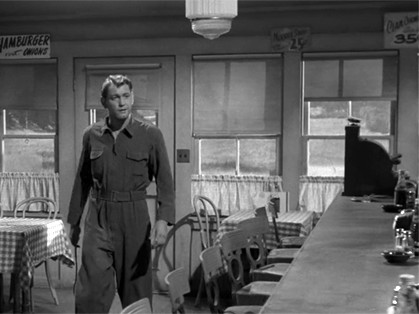
The first episode of the Twilight Zone was a pretty safe gamble. It’s the story of an amnesiac who finds himself wandering through a town without anybody around. The episode does a good job suggesting that there are signs of life, but it doesn’t commit the sin of showing another human.
This one could have easily been ranked higher if Earl Holliman’s performance was a bit stronger. I mean, he’s serviceable enough…but I bet there were a ton of actors who could have better delivered all those monologues.
But truth be told, how much you like this episode is going to depend much more on your acceptance of its big reveal. I had a few guesses about what was happening, but the ending went in a direction I did not expect—and I appreciated the episode all the more because of it.
NUMBER TWENTY-ONE
S1.E12 ∙ What You Need
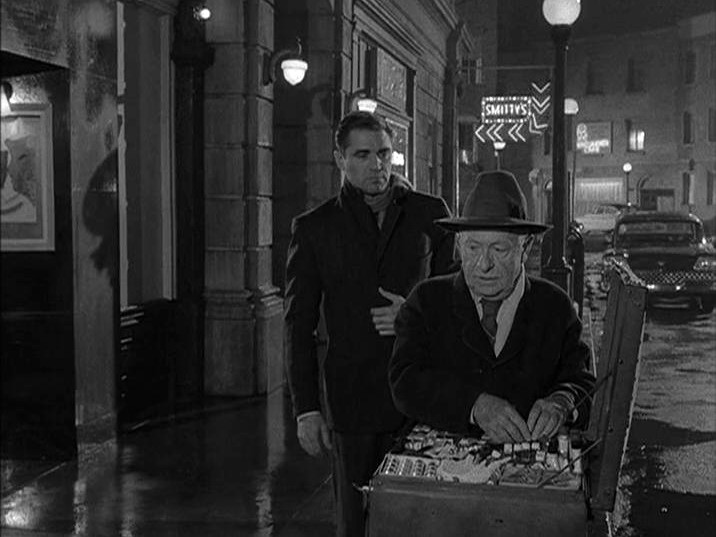
There is a simplicity to this episode that is well suited for the 25-minute time frame. Fred Renard, miserable thug, is nursing a drink at a bar when he observes a elderly salesman who sells an assortment of commonplace knick knacks out of a suitcase- each item being exactly what the person who receives it needs. Seeing an opportunity to get rich, Frank stalks the old man until the episode’s inevitable conclusion.
The sound made every time the salesman has his moment of discovery for what his customers need is priceless. So is an appearance by absolute bombshell, Arlene Martel.
This episode is a fan-favourite, but I’ve knocked it down a few spots because of its modest ambition. The mystery isn’t so much what will happen, it’s about what object is going to take us there.
NUMBER TWENTY
S1.E6 ∙ Escape Clause
Episode 2 introduces us to Mr. Death and episode 3 introduces us to a man that represents fate, so an early appearance from the Devil seemed inevitable.
Walter Bedeker is a hypochondriac that sells his soul for the opportunity to be invulnerable and immortal. But the devil insists on putting an escape clause into the deal that would allow Mr. Bedeker a quick death should he ask for it.
“Escape Clause” has its flaws. This is definitely an episode that would have benefited from season 4’s change to a 50-minute format. Bedeker’s character progression happens way too fast for the time that’s allotted.
But the episode’s dark humour is both sharp and welcome, with David Wayne perfectly cast in the role of worst-husband-on-earth. And the misogyny in this episode is hilarious: I’ll never look at potato pancakes the same.
NUMBER NINETEEN
S1.E2 ∙ One for the Angels
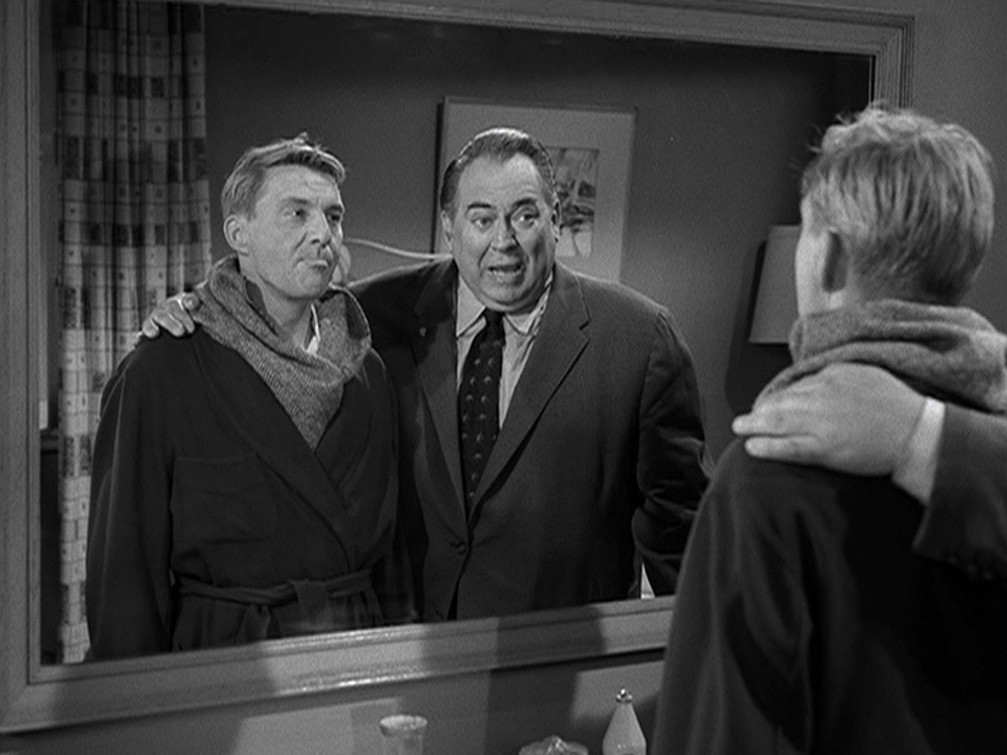
A pitchman is approached by Death and attempts to trick him into giving him more time in this world. But the man’s actions have unintended consequences.
This episode is definitely more of a lighthearted affair, so I’m actually surprised I regard it so highly. As long as you can get past the creepiness of a single old man who’s unusually fond of children—an idea that hasn’t aged particularly well—it’s a charming and poignant story. All the pieces fit neatly into the 25-minute format, and two competing, equally valid arguments can be made regarding Mr. Death’s awareness of Bookman’s attempted deceit. And I suspect this ambiguity was actually intentional.
Personally, I prefer to believe that Death wasn’t such a fool—which, ironically, is also the interpretation that turns out to probably be the most touching.
NUMBER EIGHTEEN
S1.E31 ∙ The Chaser
I know I rank “The Chaser” higher than others might, but its is an episode that knows exactly what it’s aiming for and hits the mark. It also serves as a reminder that The Twilight Zone was really good at dark comedy when it wanted to be.
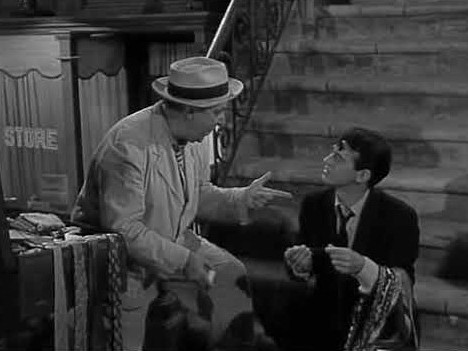
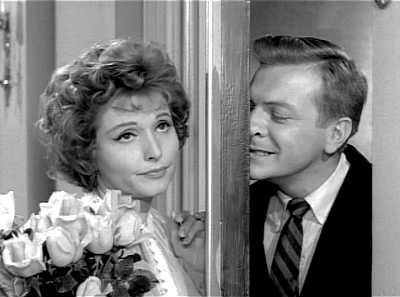
This one is a simple love potion story. Roger Shackelforth continually stocks a woman named Leila—though she’s made it clear she really doesn’t want anything to do with the man. After a chance encounter in a phone booth, Roger learns that there may be someone out there who could help him with his problem.
“The Chaser” is probably a bit overshadowed by the similar, yet philosophically superior episode, “A Nice Place to Visit”. Both are dark comedies of hubris where flawed characters are made to suffer by getting exactly what they want—with the only real string attached coming from their own inability to think through the consequences of their wish fulfillment for themselves.
Like “A Nice Place to Visit”, “The Chaser” also reveals most of its major plot beats upfront—so a lot of the entertainment comes from watching George Grizzard, Patricia Barry and John McIntire stellar performances. On top of being a great actress, Barry is a knock out and McIntire’s take on the librarian couldn’t be more inspired. The set pieces for the library are worth mentioning as well.
And I have to admit, the episode’s predictability made me put my guard down, so I was genuinely surprised by the final reveal.
NUMBER SEVENTEEN
S1.E4 ∙ The Sixteen-Millimeter Shrine
“The Sixteen-Millimeter Shrine” is the first female lead episode of The Twilight Zone—which is significant because there are so few of them. Of the thirty-six episodes of season one, only five have female leads.
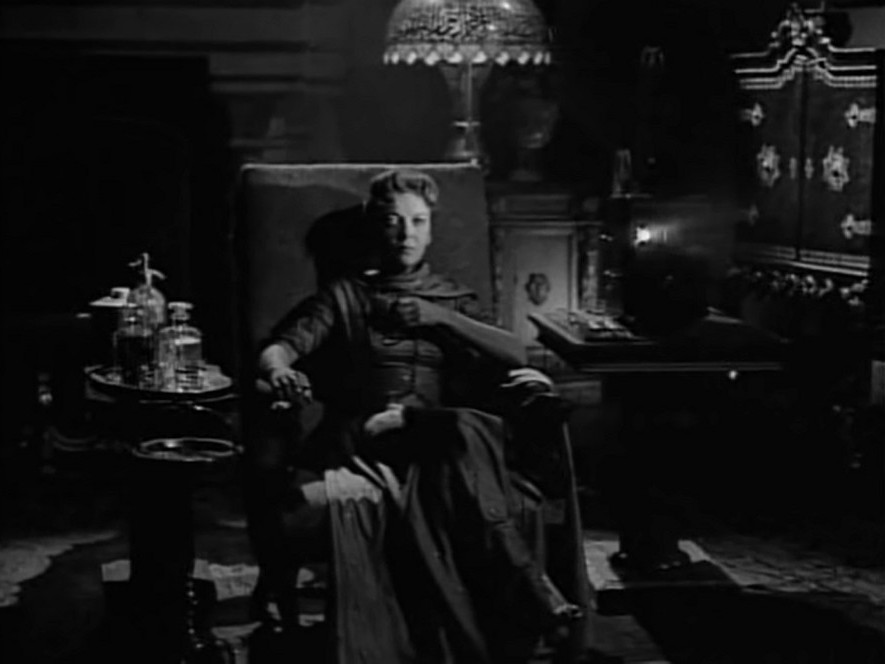
This episode has one of the best performances in the entire series. Ida Lupino plays Barabara Jean Trenton, an aging actress who spends her days alone in a dark room watching the movies she made twenty years prior.
This is not a scary episode, yet it was the first in the series to give me a genuine chill. When the onscreen Barbara looks with awareness beyond the film’s frame- it made me think of all the horror films that have incorporated a similar moment. A lot of people complain that the story, minus the Twilight Zone twist, is a rip-off of Sunset Boulevard—released nine years prior- but that isn’t a gripe of mine. My mind is more stuck on an end scene that has nothing to do with the Oscar winning film- and for me it seemed far ahead of its time.
NUMBER SIXTEEN
S1.E19 ∙ The Purple Testament
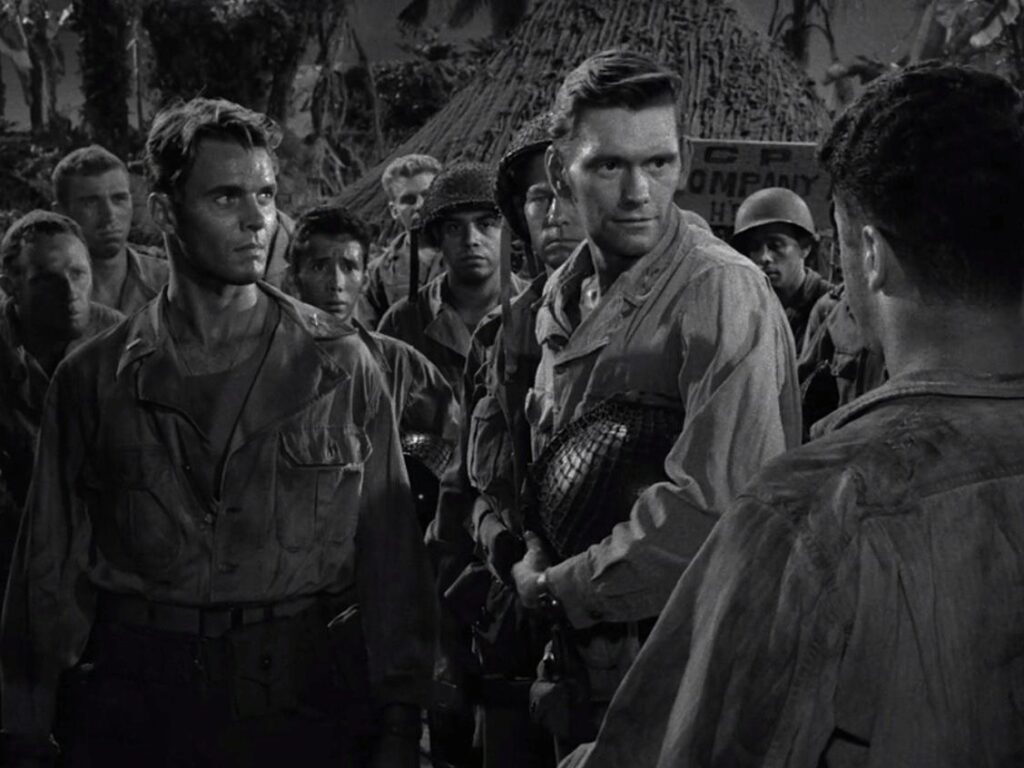
“The Purple Testament” is a solid, often overlooked, episode of The Twilight Zone. Set in the Philippine Islands during World War II, the story follows Lieutenant William Fitzgerald, who suddenly acquires a disturbing ability: he can see a strange glow on the faces of soldiers who are about to die. When he confides in his commanding officer, Captain Riker, he’s met with skepticism—Riker suspects the stress of war may be pushing Fitzgerald toward a breakdown.
William Reynolds delivers a strong performance as the haunted lieutenant, effectively conveying the psychological turmoil of this unwanted gift. In the brutal context of war, where death is expected, Fitzgerald’s ability is an absolute nightmare. Some might be disappointed that the episode doesn’t do much to explore the limits of Fitzgerald’s unwanted “gift”, but I, personally, appreciate the dark edge offered by its fatalistic tone—and believe the tight 25-minute runtime is stronger for it.
Adding a surreal twist to the episode’s legacy, Reynolds and “The Purple Testament” director Richard Bare were involved in a real-life plane crash in the Caribbean on the very day the episode aired. They were working on another series, The Islanders, when their plane went down. Though one man died in the crash, Reynolds and Bare managed to swim four miles to the Jamaican coast. The story goes that as the two men fought to survive, Bare reportedly referenced the episode, telling Reymond not to look into his face.
NUMBER FIFTEEN
S1.E29 ∙ Nightmare as a Child
After a while, the first season of The Twilight Zone didn’t try so hard to have unpredictable twists and I think that took a lot of pressure off Serling and the other writers. I mean, can you imagine trying to nail trick endings for all thirty-six episodes of a season when everyone expected it. The formula had to switch up from time to time.
A “Nightmare as a Child” telegraphs its story in advance, but I actually like many of the episodes where I’m waiting for that foreshadowed axe to fall just as much. It’s a different kind of storytelling that lends itself more towards suspense.
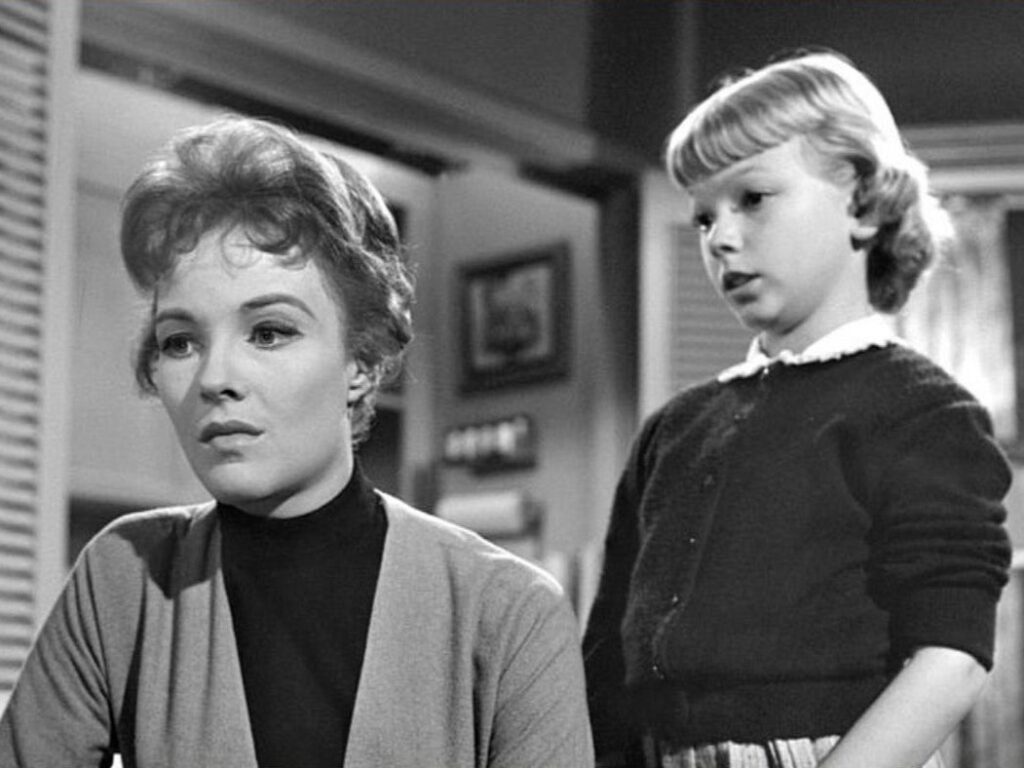
Helen, a school teacher, finds a girl sitting on the stairs outside her apartment. Out of kindness, Helen invites the girl inside for some hot chocolate, but there is something off. The girl behaves too maturely, too serious. And she knows too much about Helen. Who is she?
“Nightmare as a Child” is a compelling exploration of repressed memories, wrapped in a dreamlike and unsettling atmosphere from the very beginning. Serling was clearly in his element, delving into the psychological depths of trauma. Like a lot of the female-led episodes—of which this is only the fourth—it stands out as one of the darkest and most haunting.
NUMBER FOURTEEN
S1.E20 ∙ Elegy
‘Elegy’ is a must-see, Charles Beaumont-written, episode of The Twilight Zone, but it’s also one of the hardest to rank. It has some neat concepts, but the amount of twisty exposition needed to explain all the revelations makes it feel a bit convoluted at times.
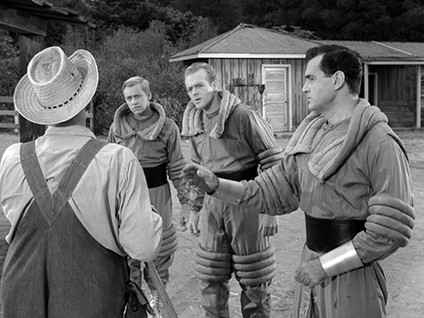
Three lost astronauts from a far off future land on a meteor that has an atmosphere similar to Earth. And when they get out of the vessel, it very well could be Earth—or at least the Earth from 200 years before their time.
But then they encounter another anomaly. The people of the planet all seem to be in a state of suspended animation. So what exactly is going on?
Many fans of the series rank “Elegy” amongst their favourite episodes. Underneath its lighter tone is an episode that is sneakily intelligent, cynical and a bit morbid. The pageant scene is particularly memorable and Cecil Kellway delivers a short, but impactful, performance. It’s not the tightest writing, but it is some of the most thought-provoking.
NUMBER THIRTEEN
S1.E14 ∙ Third from the Sun
This episode is a fan favourite, but I have to deduct some points because it definitely feels like a product of its time.
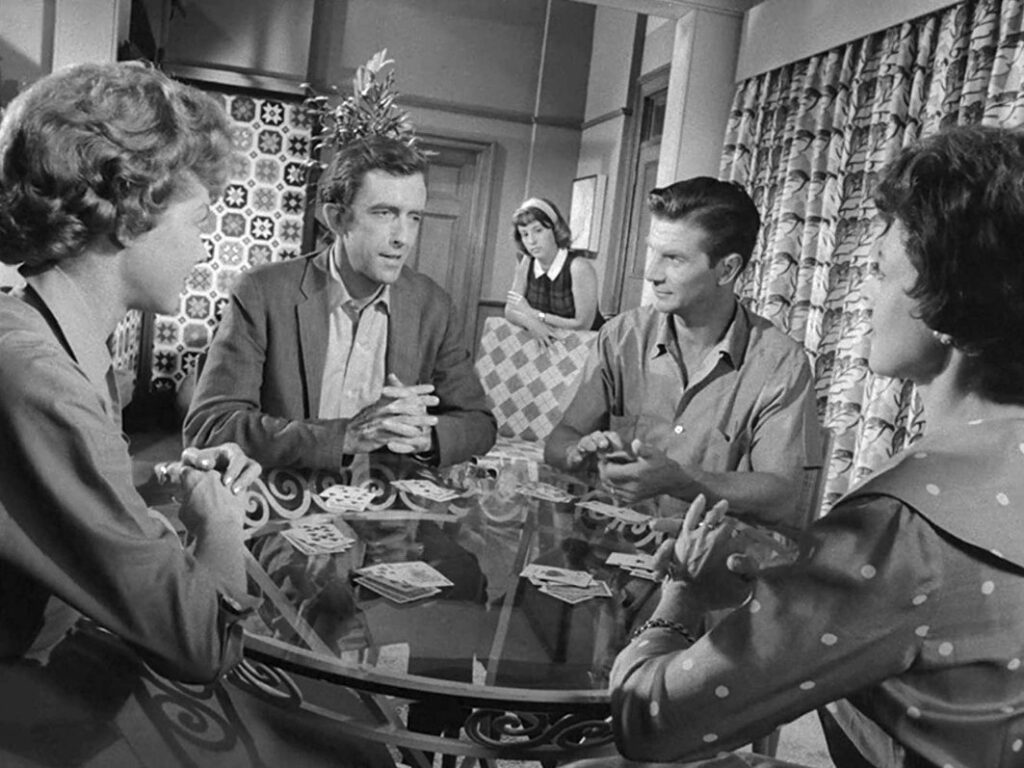
Fritz Weaver is a scientist that makes H-Bombs at a military facility. He is informed by a co-worker of rumours that nuclear war is likely to start in 48 hours. Fortunately, Weaver is resourceful. He has a plan to get his family off the planet before that happens.
The cinematography in this episode ranks among the best in the series, especially during the card game sequence. It excels at building tension and a palpable sense of paranoia. There are also a lot of nice subtle clues sprinkled throughout the episode that are easier to spot once you become aware of the twist.
And the twist is one that would have hit hard with all its Cold War irony back in 1960—though it has, admittedly, lost some of its resonance today.
NUMBER TWELVE
S1.E11 ∙ And When the Sky was Opened
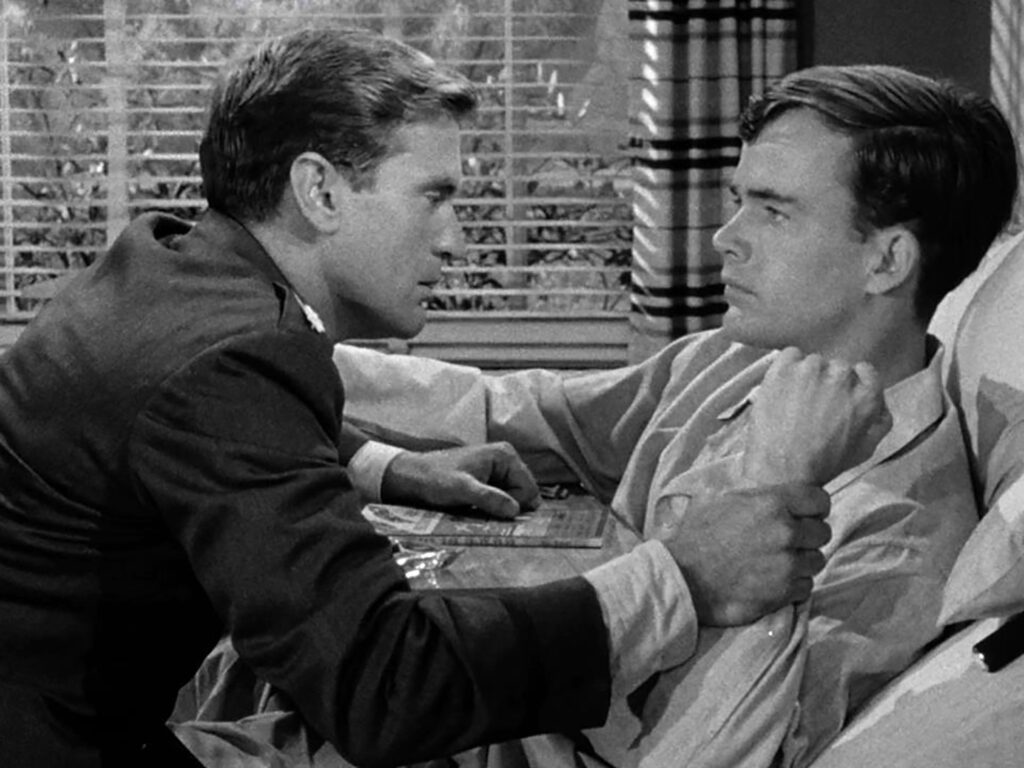
After watching one amnesiac after another drift through episodes it is nice to see the trope subverted. This one is about Lieutenant Colonel Clegg Forbes, an astronaut that is the only one who remembers his friend and fellow space companion Ed Harrington.
As the episode’s lead, Rod Taylor is a bit overdramatic, but the premise is solid and made more creepy by the fact that the astronauts spent 24 hours in space unaccounted for before being found inside a crashed vessel in the middle of the Mojave Desert. What happened out there?
With a compelling mystery, standout supporting performances from Forbes’ crewmates, and a gut-punch of an ending, this episode stands out as one of the most tense and conceptually terrifying.
NUMBER ELEVEN
S1.E7 ∙ The Lonely
In my opinion, the only anthology show that has ever come even remotely close to matching The Twilight Zone in terms of quality is Black Mirror. Obviously, the latter has a heightened focus on technology, but that gut-punching social critique and focus on psychological consequences is something both shows have in common.
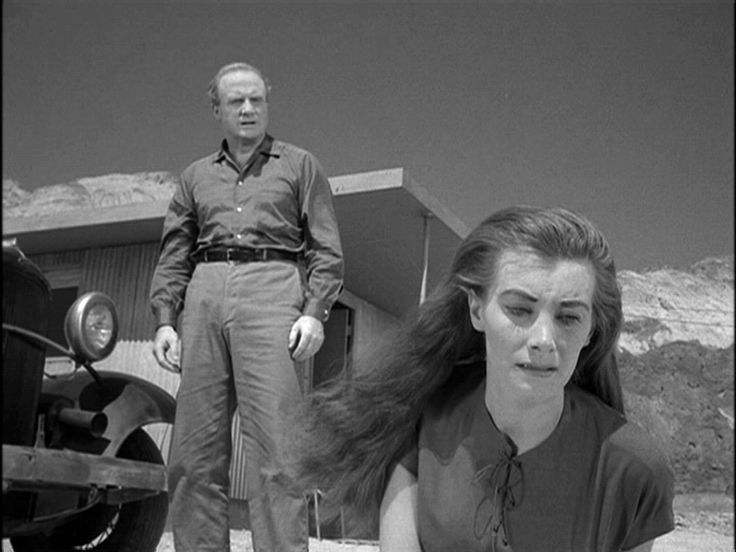
“The Lonely” is one episode of The Twilight Zone that could seamlessly fit into the Black Mirror catalogue. It follows a convicted murderer who is sentenced to live in total isolation on a distant asteroid. His only human contact comes during brief visits from a supply ship crew. One of the crew members takes pity on him and secretly brings him a robot designed to look and behave like a woman.
Given how close we are to creating realistic sex robots, the premise of this episode—space elements aside—feels like it could be just around the corner. And even with the constraints of the tight 25-minute format, the climax is still able to resonate on an emotional level.
NUMBER TEN
S1.E34 ∙ The After Hours
I have a memory of being freaked out by this episode as a kid. Is it odd that all five episodes with female protagonists in season one happen to be the creepiest as well?
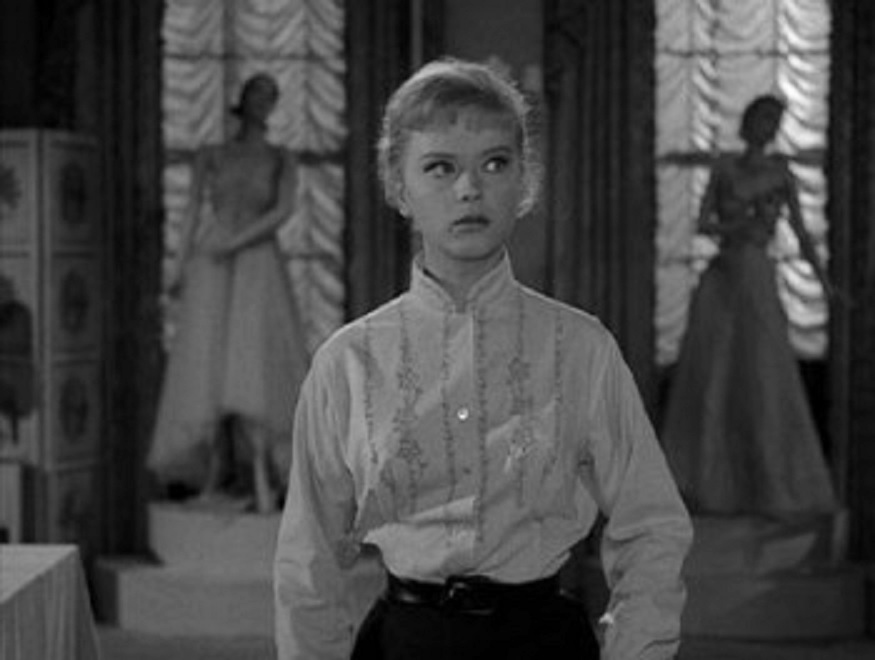
“The After Hours” tells the story of Masha White, played by the gorgeous Anne Francis. Mashe is looking for a gold thimble to give as a present to her mother. She gets into an elevator, where the operator takes her to the abandoned ninth floor. Masha assumes there’s been some kind of mistake, but is then greeted by the floor’s lone saleswoman, and she happens to have the item Masha’s looking for.
Then a whole lot of weirdness happens, mostly revolving around mannequins.
This episode has my favourite single shot of the season near its ending. You’ll know it when you see it—It’s pretty magical how well it turned out.
I’ll admit that “The After Hours” has a few plotholes and it asks you to suspend belief during its moment of fantasy world-building, but the deeply memorable story makes its flaws all forgivable.
NUMBER NINE
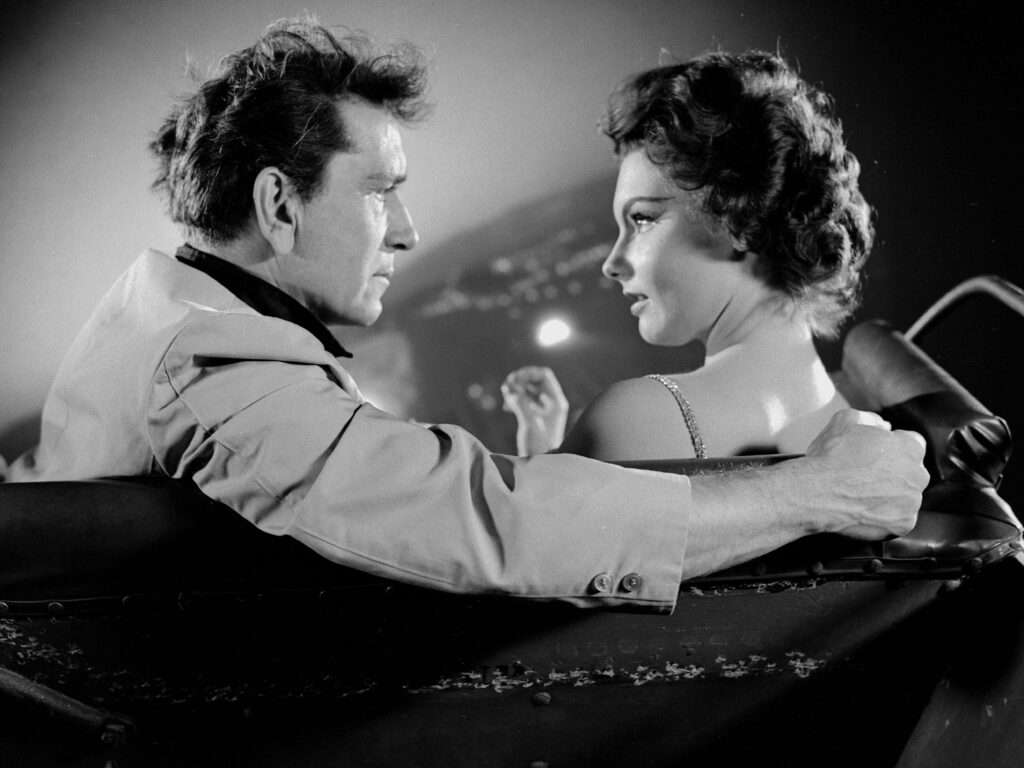
S1.E9 ∙ Perchance to Dream
Enter Charles Beaumont. “Perchance to Dream” is the first non-Sterling written episode and the contrast in writing styles can be seen immediately. This is the first Twilight Zone episode to really lean into horror. I’d even argue that the quick cut to the inside of the fun house is the show’s first legitimate jump scare, though one was definitely teased in the scene with the rearview mirror.
Edward Hall goes to a psychiatrist under orders from his doctor. Turns out, Edward hasn’t slept in four days. He has a weak heart and a strange sequential recurring nightmare has him convinced that the moment he next dreams he will die.
Of all the season one episodes, this one is probably the most underappreciated. The dream sequences are impressively atmospheric and the scenes on the rollercoaster are extremely well done. And though the ending is not terribly difficult to predict, it conjures just the right amount of ambiguity regarding Edward’s own understanding of his mental quirks to leave a second interpretation open for discussion.
NUMBER EIGHT
S1.E36 ∙ A World of His Own
The final episode of the season is a surprisingly meta piece written by Matheson drenched in dark humour.
Gregory West is a playwright caught by his wife, Victoria, with his mistress. Or is he? When the wife can’t seem to find the mistress in his study, Gregory makes a confession— but it’s not what Victoria was expecting. Gregory claims he has the power to make his characters come to life.
I love how this episode is always a little uncomfortable. Even if what Gregory says is true, he isn’t exactly guiltless. Fictional or not, he has created another woman to spend time with. But despite his broken moral compass the episode still manages to get the audience to empathize with him instead of uppity Victoria.
Keenan Wynn and Phyllis Kirk play beautifully off each other before Serling makes an unusual cameo. Had The Twilight Zone not been renewed for many more seasons, this would have been the perfect episode to go out on.
NUMBER SEVEN
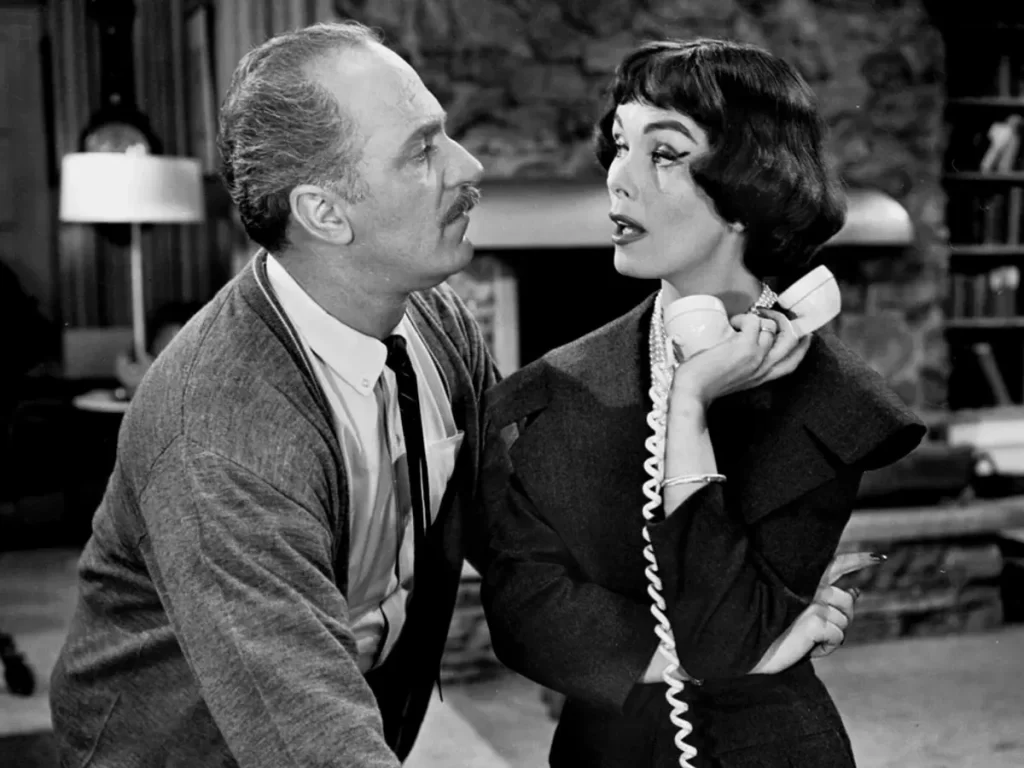
S1.E28 ∙ A Nice Place to Visit
As a horror fan, I find Charles Beaumont’s episodes of The Twilight Zone particularly compelling for how he uses—often subverts—classic horror elements.
There really is no twist to this one—at least not one that can’t be seen from a mile away—but that’s actually intentional. Sure, we all know how it’s going to end, but damn is it ever interesting watching it get there.
Rocky, a hard-core criminal and one of The Twilight Zone’s shadiest protagonists, is shot when fleeing the police after a robbery. Rocky is not a good man, so he is surprised to find himself in an afterlife with a guide named Pip who helps him to shape his new world in any direction he desires.
Larry Blyden, as Rocky, and Sebastian Cabot, as Pip, do a fantastic job breathing life into this episode. Blyden portrays Rocky with such wonderfully sleazy gusto. And I have to admit, I was surprised the 1960s censors allowed Rocky to call for “a broad…really cracked,” hand gestures and all.
A lot of Beaumont’s episodes mix philosophical ideas with psychological horror, so watching Rocky’s so-called heaven turn on him without the rules needing to change is actually quite brilliant. It is the kind of episode that stays with you long after it’s done.
NUMBER SIX
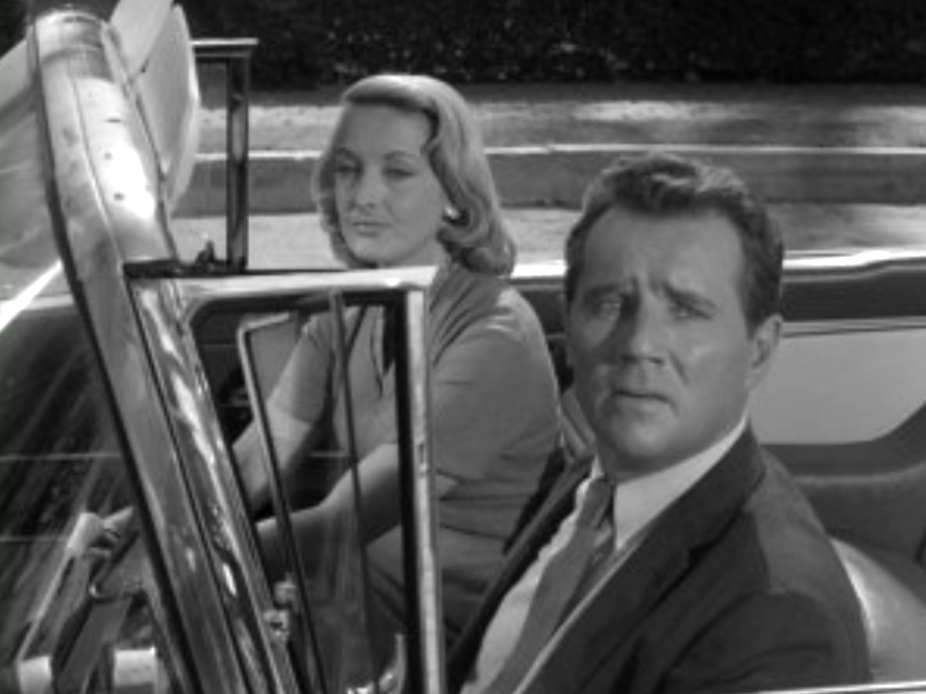
S1.E23 ∙ A World of Difference
An underrated episode written by the great Richard Matheson, who made many significant contributions to The Twilight Zone. This is an episode that left me on the edge of my seat.
Arthur Curtis is having a regular day in the office until he hears someone yells “cut”. Suddenly, he finds himself on a movie set designed to look like his office while a furious director approaches to chastise him for forgetting his lines.
So is Arthur who he believes he is, or is he really the down-on-his-luck actor Gerry Raigan, the man everyone thinks he is?
I love the setup of this episode—and the meta-aspects feel well ahead of their time. But it’s the genuinely earned tension that makes this episode a standout. Howard Duff delivers a compelling performance, capturing Arthur’s desperation to return to a life that may not even exist.
NUMBER FIVE
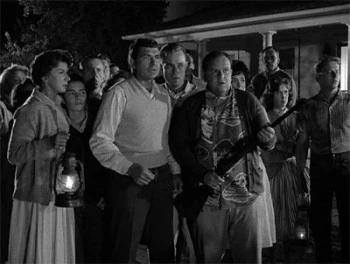
S1.E22 ∙ The Monsters are Due on Maple Street
By 1960, the era of McCarthyism and anti-communist paranoia had mostly come to an end, but with the Cold War still brewing it was far from a distant memory. No episode of The Twilight Zone better encapsulates this fear of an enemy hidden amongst us better than the satirical “The Monsters are Due on Maple Street”.
This is one of the two episodes of season regarded as a classic, the other being “Time Enough at Last”. Like a lot of the best episodes, the premise for this one is remarkably simple. One afternoon a strange object flies over a small American suburb. At first, people dismiss it as a meteor, but shortly after the electricity goes out and everything mechanical stops working.
In an attempt to make sense of the situation, the residents of Maple Street put a little too much faith in the imagination of a boy named Timmy, who remembers a book about alien invaders arriving disguised as ordinary people. The adults don’t necessarily believe him—but when Les Goodman’s car mysteriously starts on its own… well.
If any episode could be expanded into a full-length movie, it’s this one. Though it’s not disappointing, the twist ending arrives just as the tension has reached its peak. But the 25-minute is all the show has and a conclusion is required—so Serling delivers one steeped in his trademark cynicism.
NUMBER FOUR
S1.E30 ∙ A Stop at Willoughby
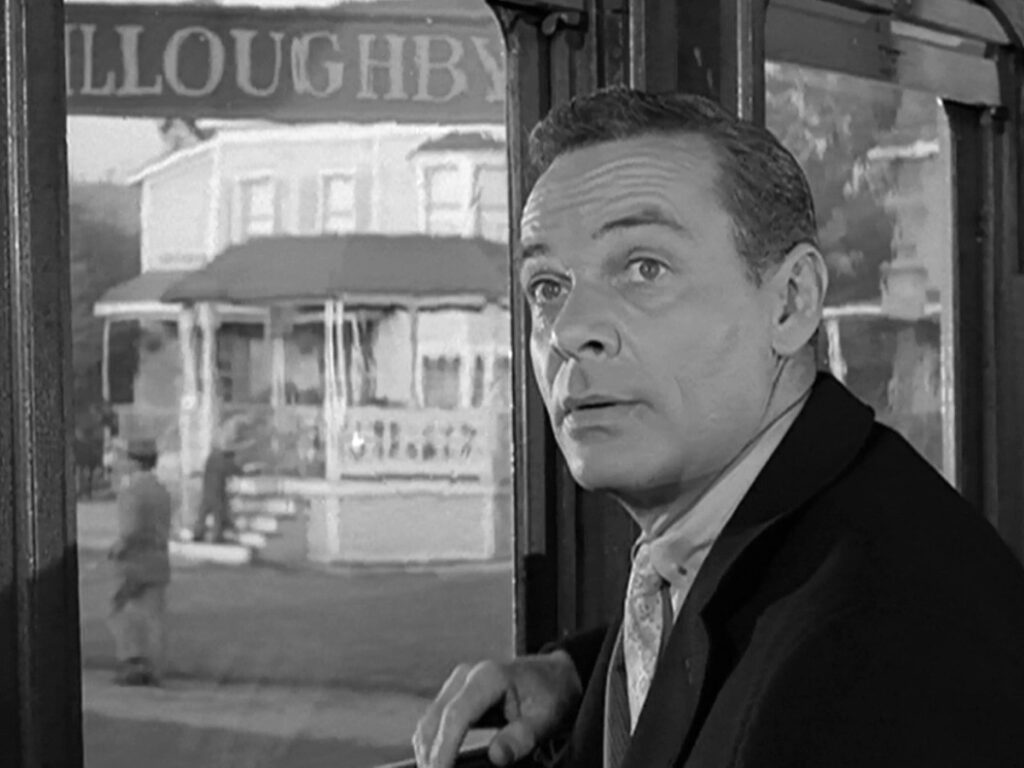
“A Stop at Willoughby” takes a simple, relatable concept and elevates it with truly inspired performances. It’s not just that James Daly owns the role of the exhausted protagonist—the supporting cast step up and deliver as well—making it easily one of the series best acted episodes. These are people who seem real.
Grant Williams is an ad executive who is embarrassed at an executives meeting after his protégé changes firms, taking a three million dollar client with him. While feeling the pressure of his career going sideways, Grant has a dream on the train ride home about a simple community from the past called Willoughby. Once in his head, Grant can’t seem to get the image out of his mind.
Daly is well casted for this role. He seems like he had been competent, maybe even passionate, at his job at one time—but his years caught in the hurly-burly of corporate America have clearly made him disillusioned. His only way out takes the form of a recurring dream.
Towards the end of the first season, Serling wrote his most poignant psychologically driven episodes. Like “Nightmare as a Child” two episodes before, this one has a grounded explanation for its inexplicable, seemingly supernatural, occurrences. Here, the end result is a story centered around one man’s declining mental health that feels miles ahead of its time.
NUMBER THREE
S1.E21 ∙ Mirror Image
Enter Vera Miles, renowned for her role in Psycho, as she delivers a chilling performance in one of the creepiest Twilight Zone episodes. (And no, she wasn’t the woman killed in the shower!)
I don’t blame anyone for drawing comparisons between “Mirror Image” and “The Hitch-Hiker”. After all, The Twilight Zone features so few episodes with female leads, and both stories rely heavily on escalating tension and psychological horror. And, honestly, both episodes are peak Twilight Zone.
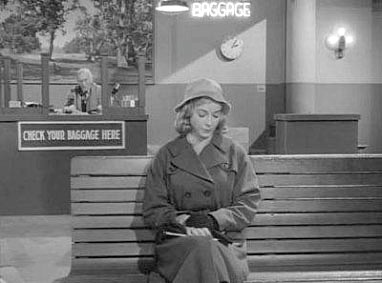
On a stormy night, Millicent Barnes is waiting at a near empty bus station for a bus that is already half an hour late. But when she asks the clerk when the bus might arrive, he is short with her for frequently bothering him. The trouble is, Millicent’s sure this is the first time she’s spoken to him.
The episode uses the unsettling possibility of a doppelgänger to cast doubt on Millicent’s sanity. Is she truly seeing what she believes, or is her mind unraveling? The doubles appear only briefly on the screen, but their scenes stick with you—their behavior disturbingly gleeful and eerily alien. This is easily amongst the creepiest episodes.
NUMBER TWO
S1.E8 ∙ Time Enough at Last
The oldest episode of The Twilight Zone that would go on to be considered a classic. It’s the story of Henry Bemis, a man who loves to read trapped in a world that tries to stop him at every turn. His boss at the bank threatens to fire him. His wife inks out the pages of poetry he hides in the house. Even his clients seem against him.
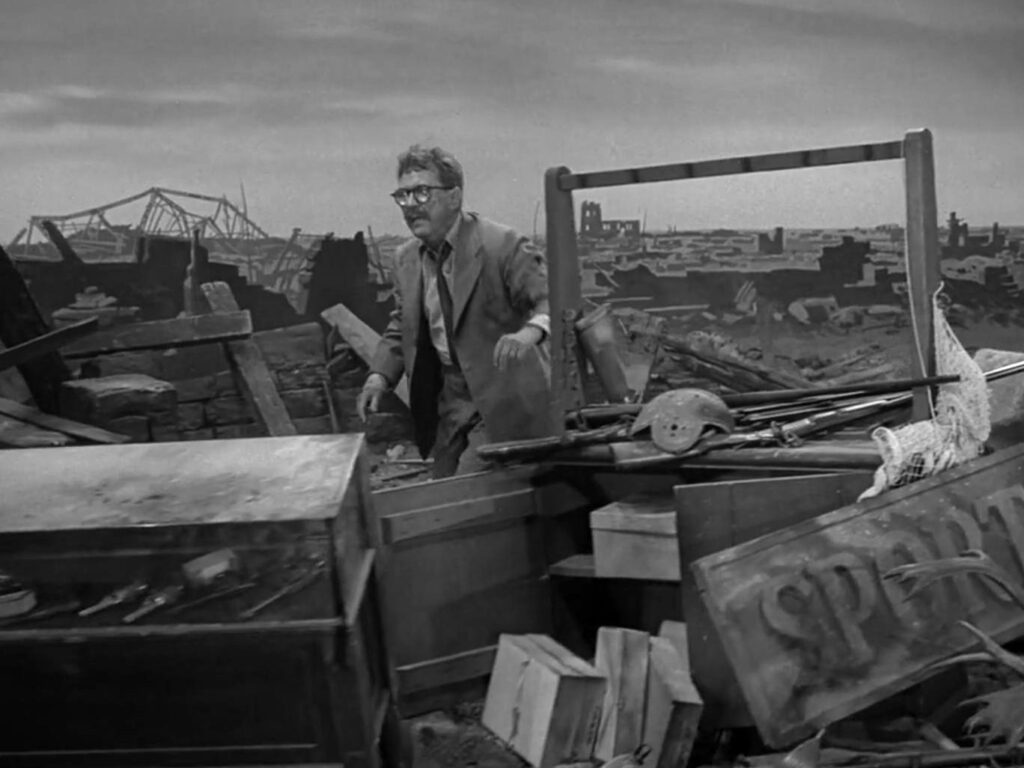
But Bemis is persistent. One day at lunch, he sneaks into the vault to read a few pages and then- BANG- an atomic bomb goes off.
“Time Enough to Last” is a masterclass in irony. We’re only eight episodes into the series, and this is already the second “sole survivor” story—but the incorporation of dark humour makes it feel very different from “Where is Everybody?”. The landscape Bemis wanders through after the blast is haunting, and I’m honestly surprised the show had the budget to pull it off so effectively. Still, it’s the ending that everyone remembers. There is a subtle, escalating cruelty to it that lingers in the psyche long after the episode is over.
NUMBER ONE
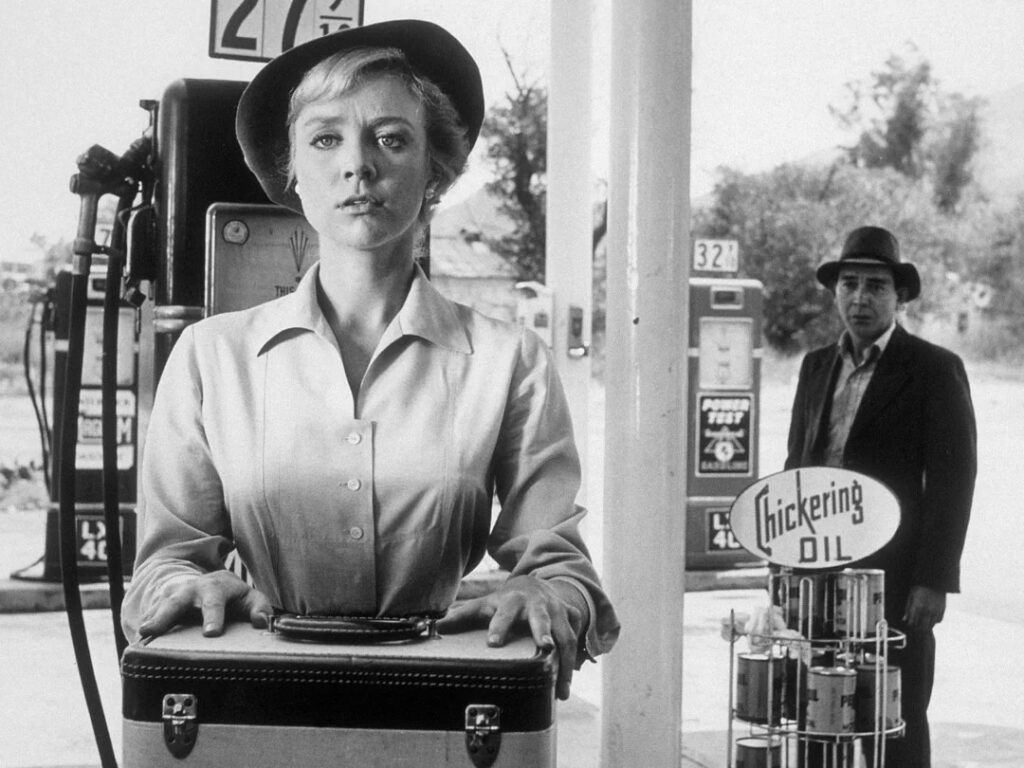
S1.E16 ∙ The Hitch-Hiker
“The Hitchhiker” is only the second episode of The Twilight Zone with a female protagonist. The first is, “Sixteen Millimeter Shrine”. It’s a shame the series leans so heavily toward male-centric stories, especially since, when Rod Serling writes female leads, they’re often portrayed with as much depth as their male counterparts. Maybe more, even.
Though it’s a fan favorite, “The Hitch-Hiker” often gets downgraded on ranked lists because its twist is fairly transparent. But I actually see that as one of the episode’s greatest strengths. Knowing where it’s headed lets you sit back and simply enjoy watching director Alvin Ganzer work his magic on one of Sterling’s most suspenseful teleplays.
Nan Adams is trying to get from New York to Los Angeles by car, but she keeps seeing the exact same hitchhiker on the road over and over again. Even she admits, in an early voice-over, that there is nothing seemingly menacing about the man, but his repeated presence, especially when she has to stop, becomes increasingly unnerving.
The escalating tension in this episode is masterfully handled, with the train scene standing out as especially memorable. Yet what lingers most for me is Nan’s raw desperation as she pleads with a sailor she hopes might help her. Put plainly, “The Hitch-Hiker” is one of The Twilight Zone‘s finest examples of what it does best: psychological horror.